
Estse Pavilion
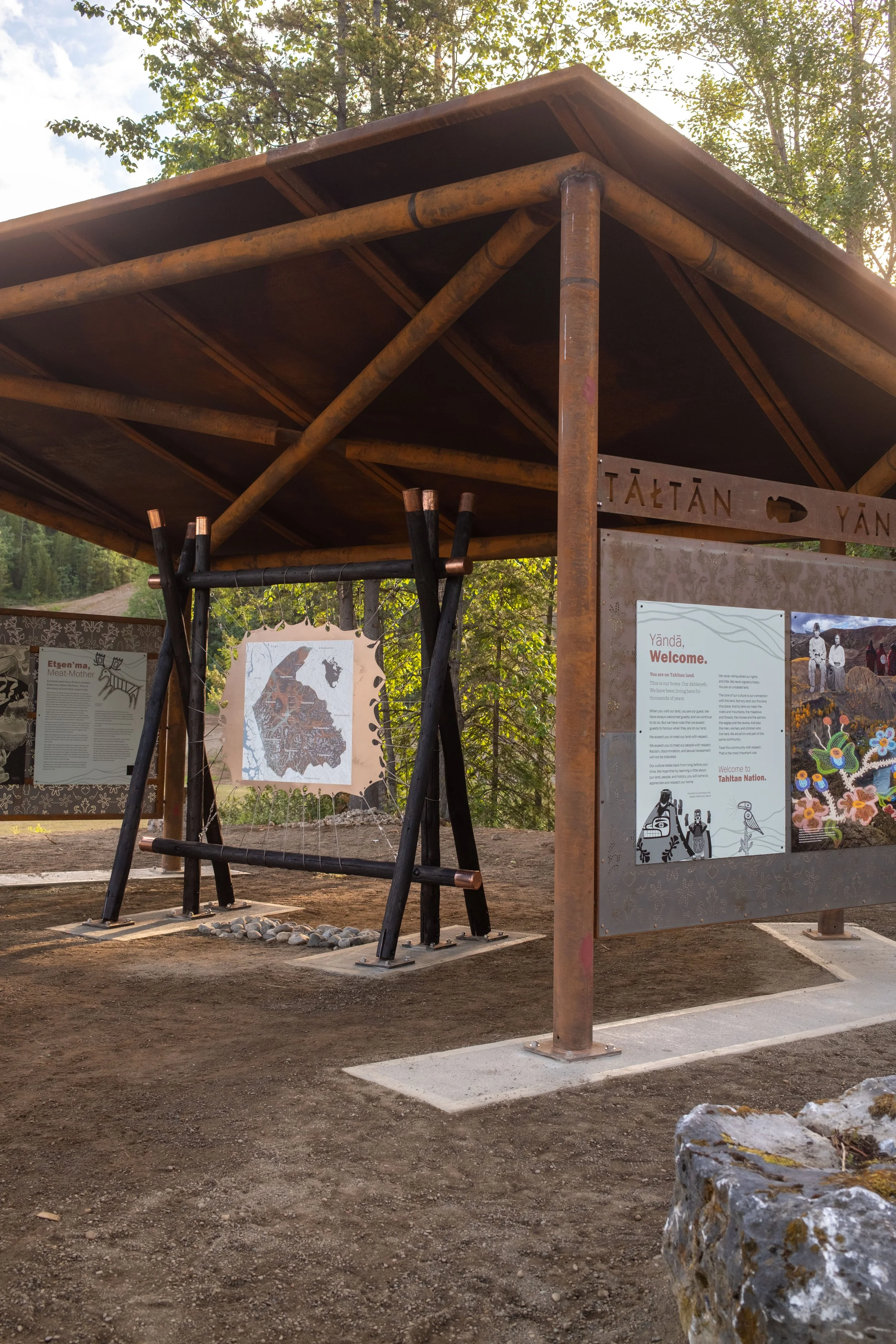
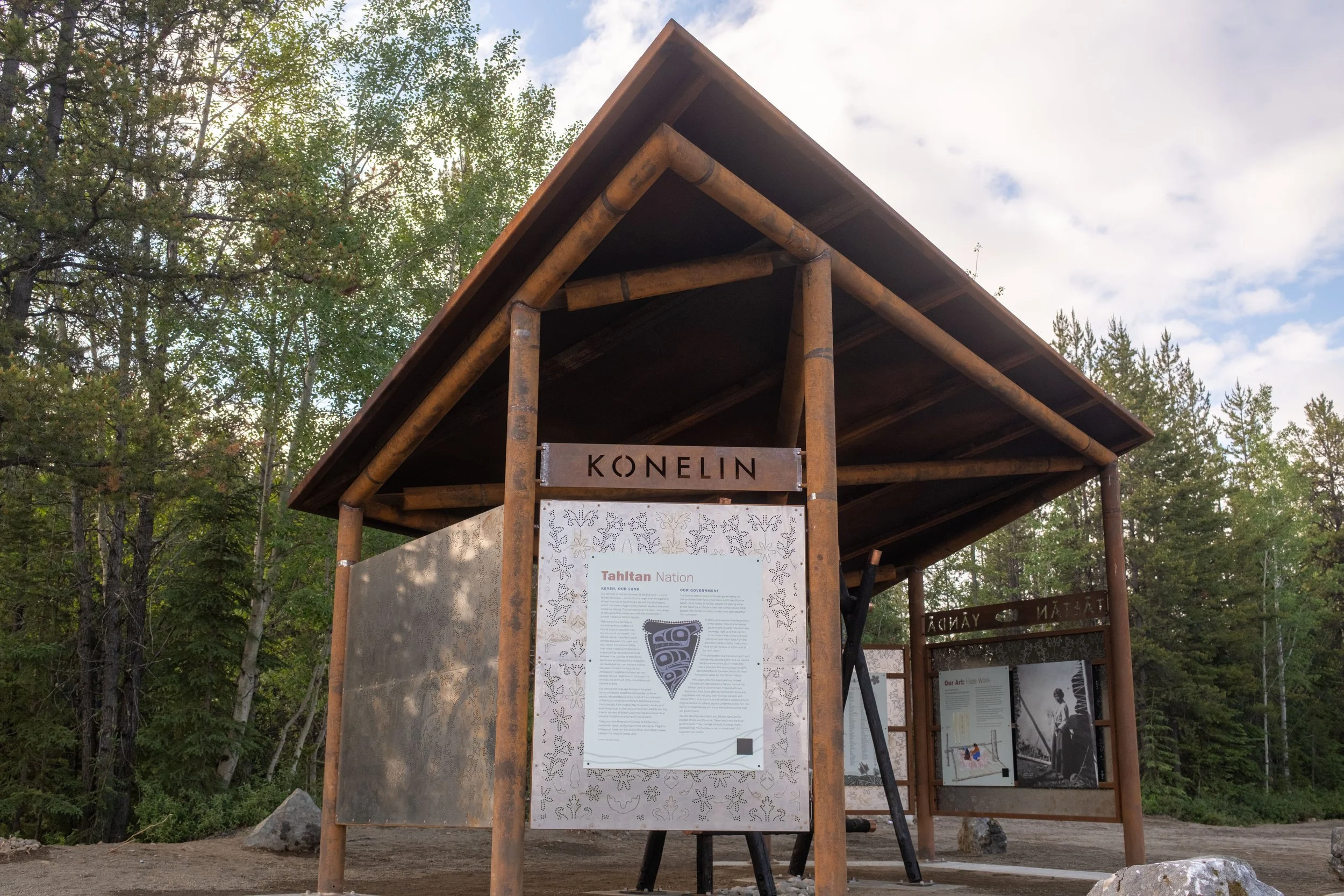
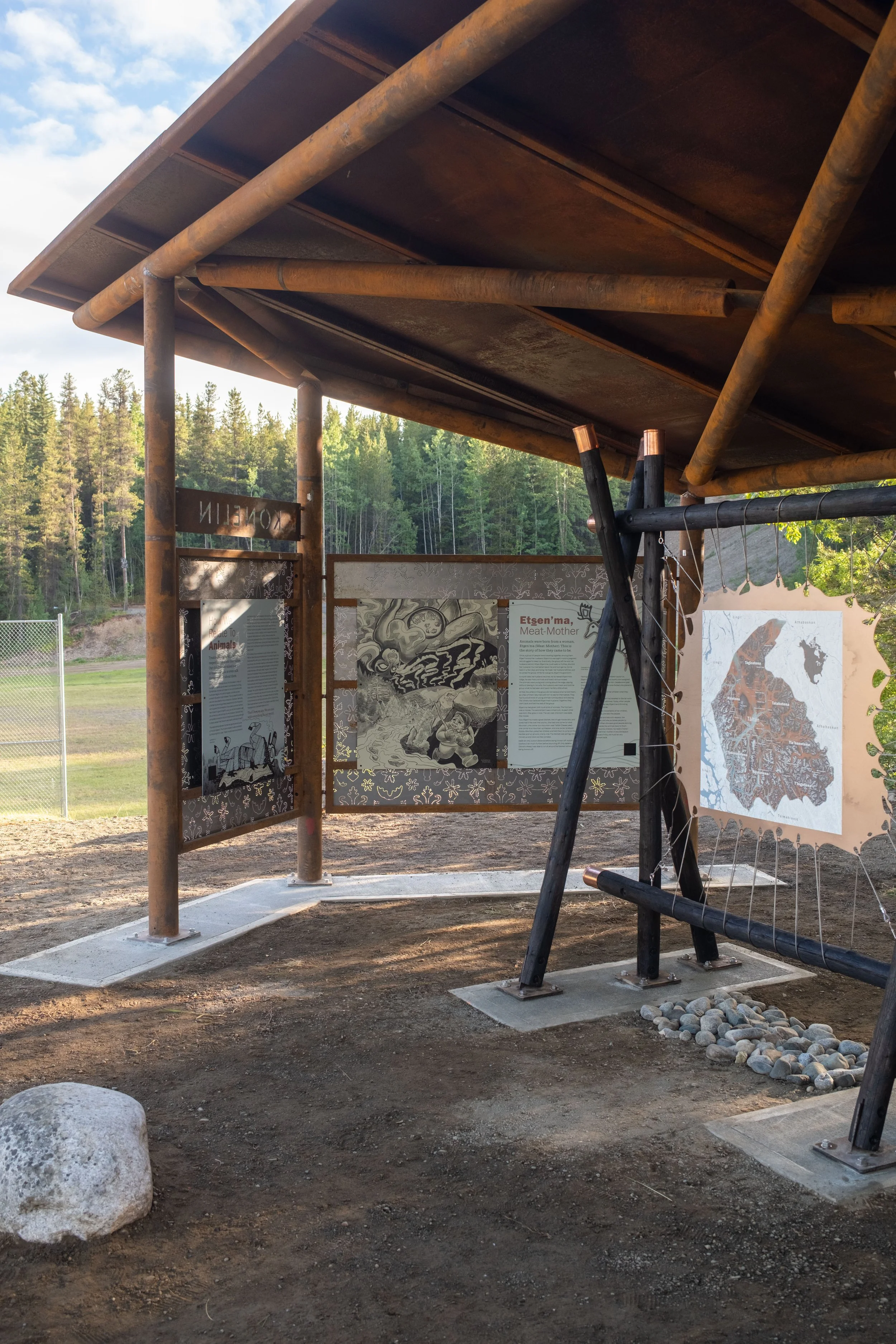
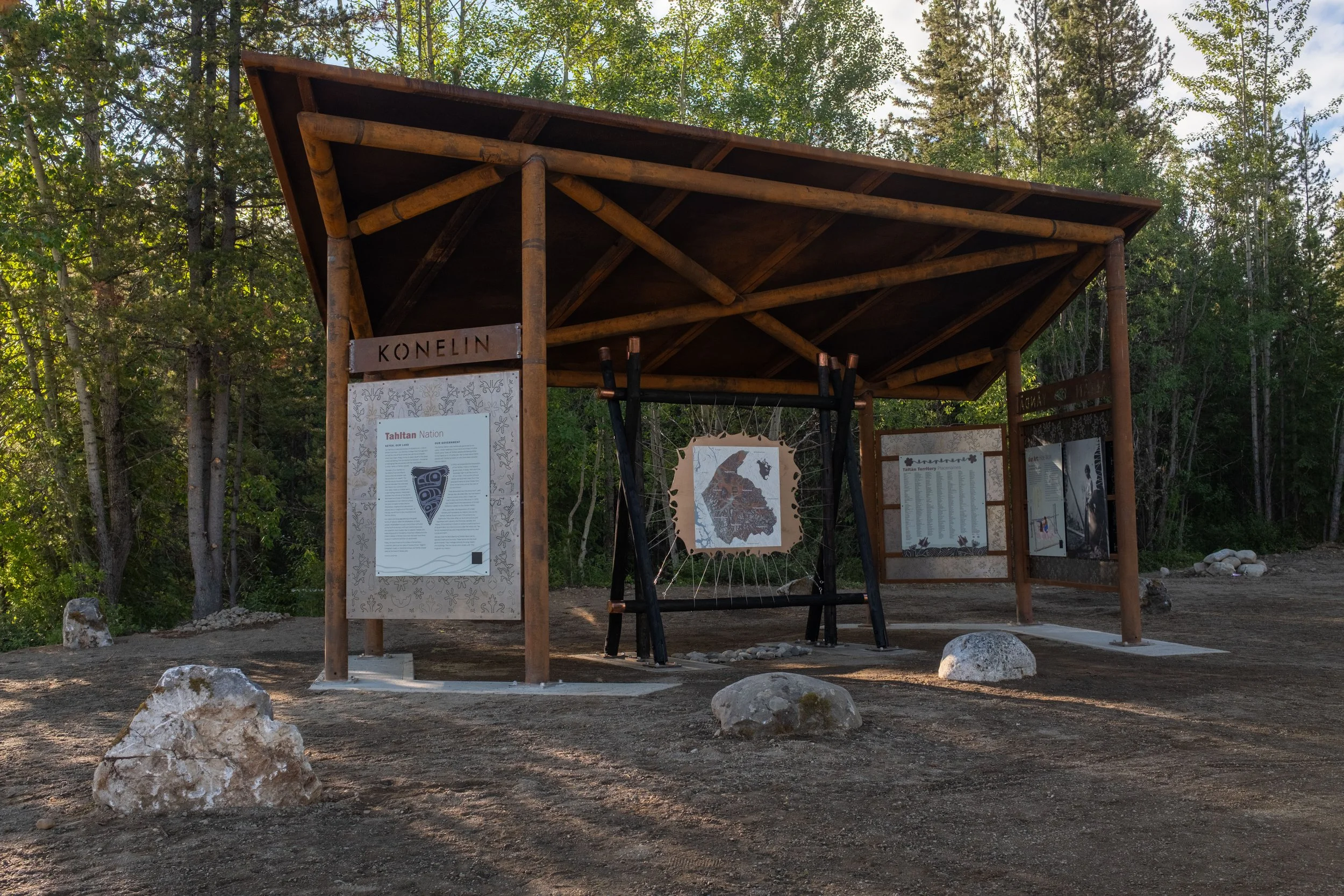
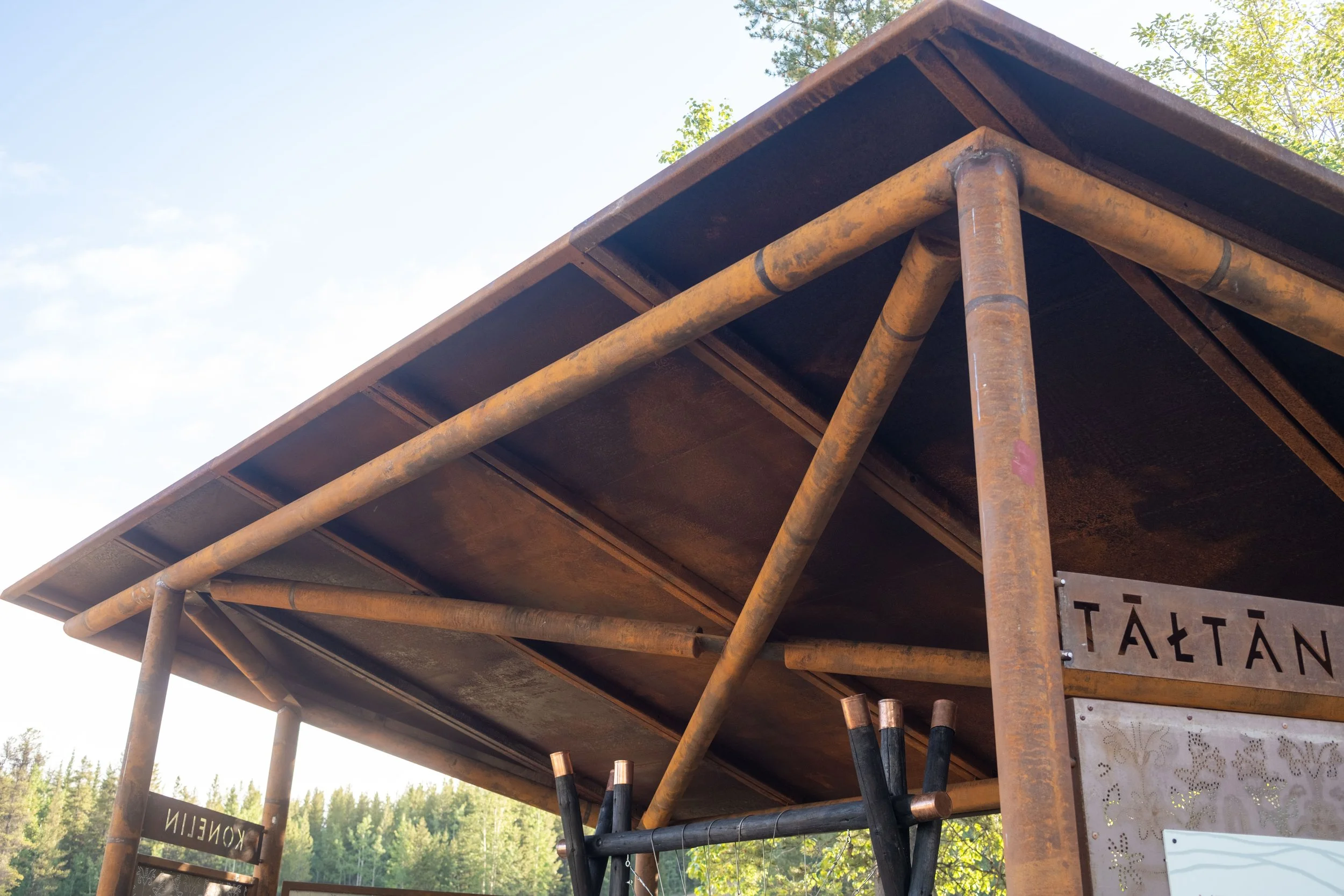
The Estse “Hide-Tanning” Pavilion design is guided by the architecture of Tāłtān nomadic land-bound lean-to structures and celebrates the deep respect held for the land and animals.
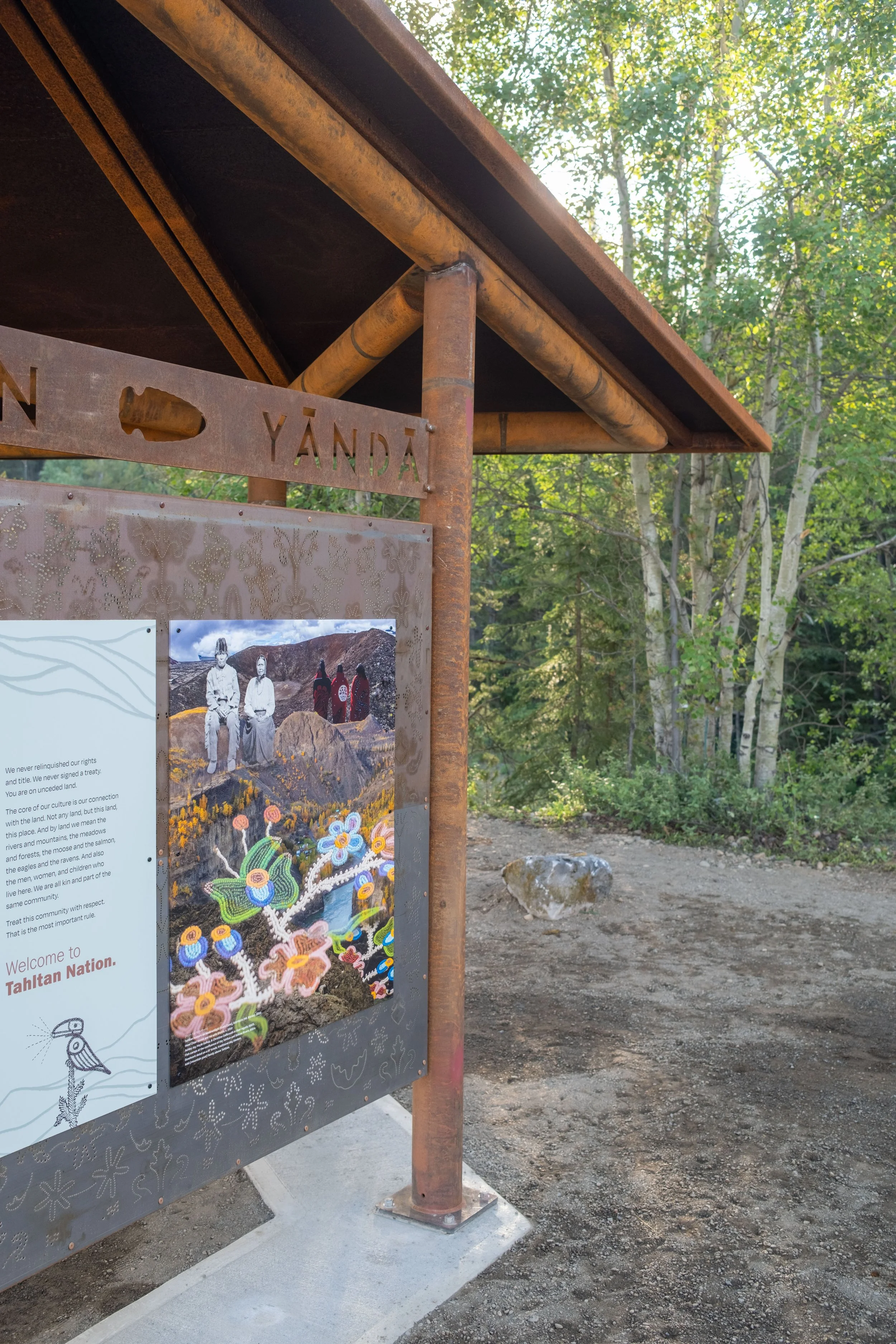
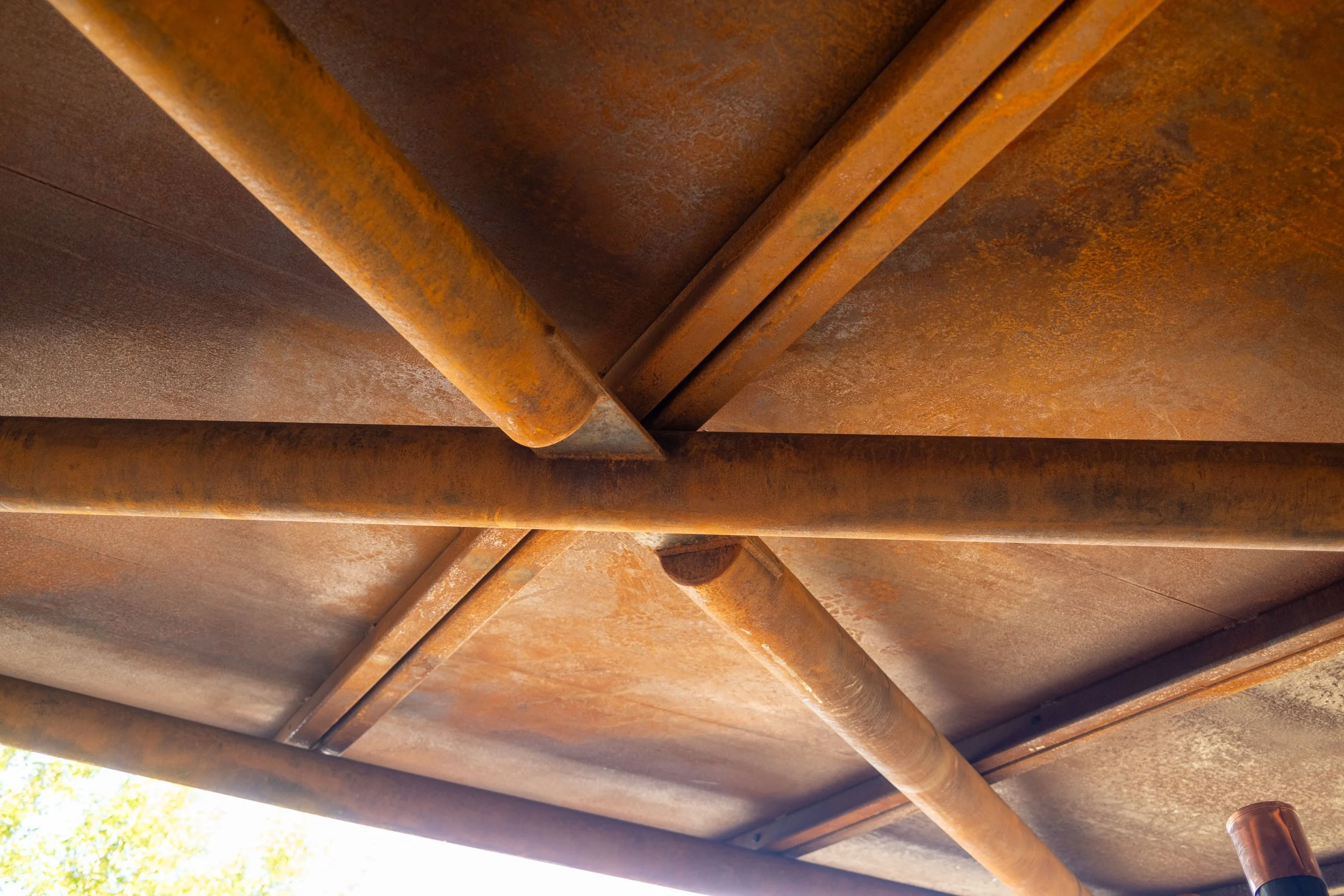
Every aspect is considered, using materials from Tāłtān land and design inspired by Tāłtān culture. This is exemplified in the use of rusted steel, used for its durability and low-maintenance appeal, and chosen for its beauty and use in traditional art practice. For instance, Tāłtān Ancestors used iron oxide to make red paint. In Tsēma’s art theory, she shows the iron oxide rust that makes our mountains red is the same mineral that colours blood.
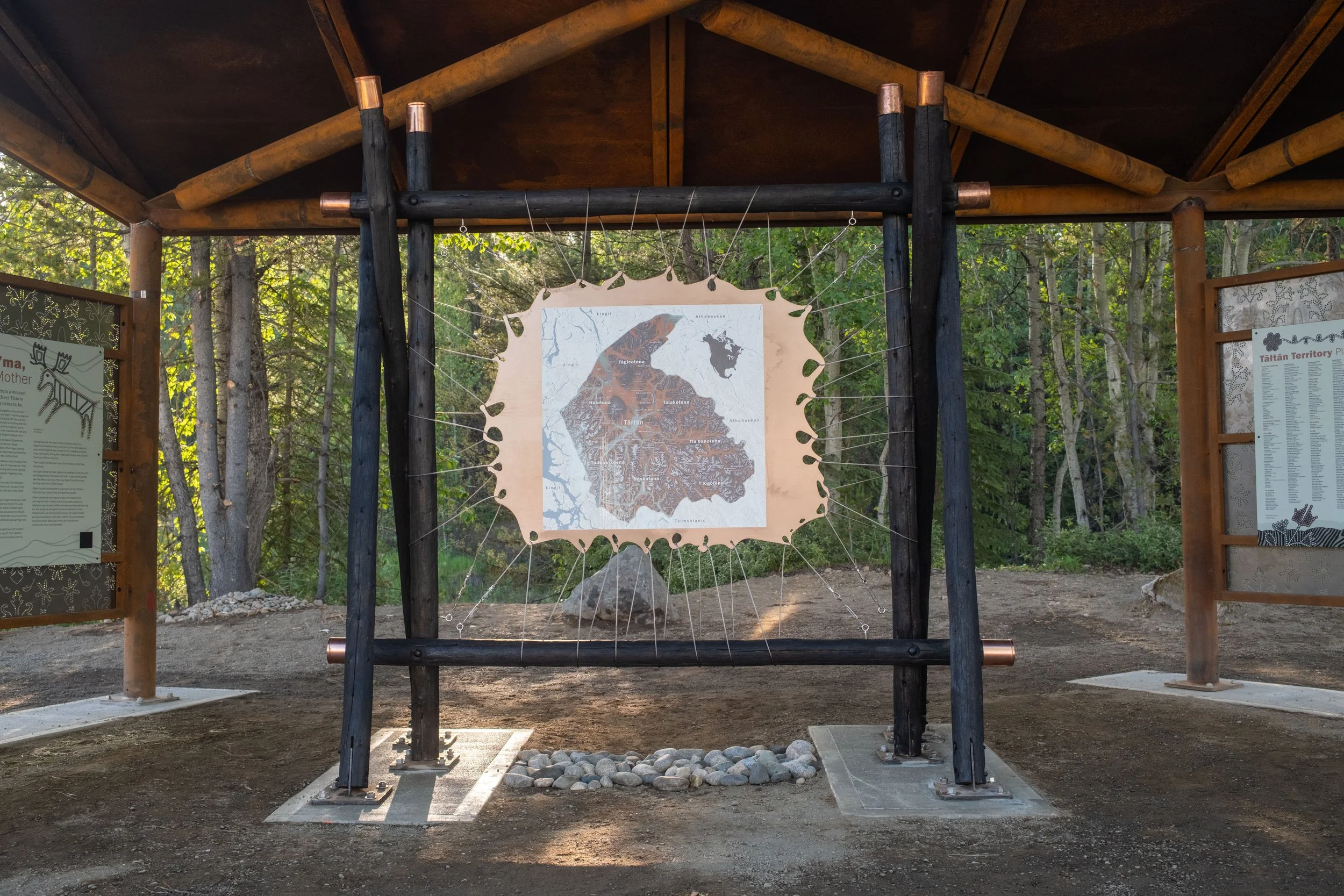
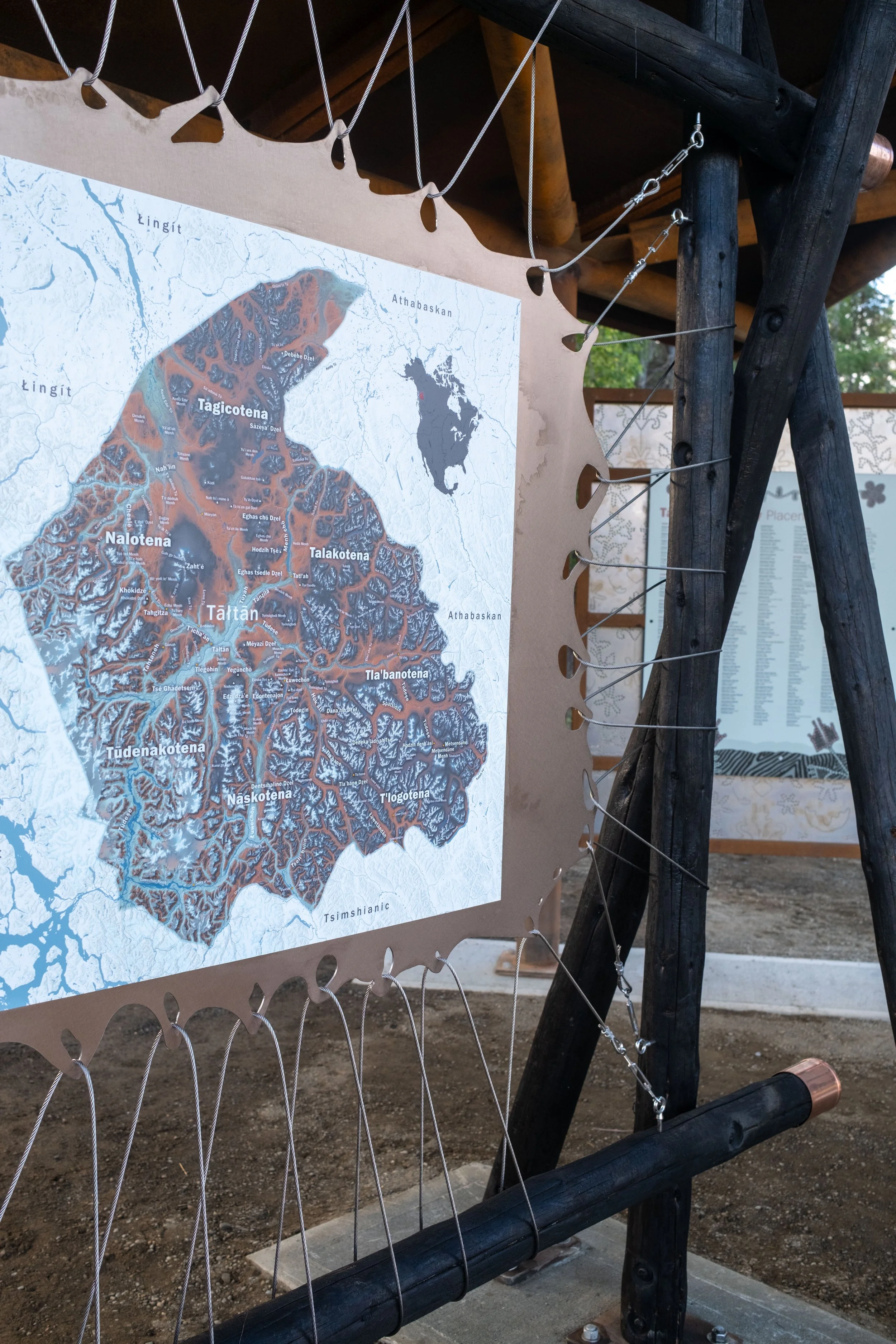
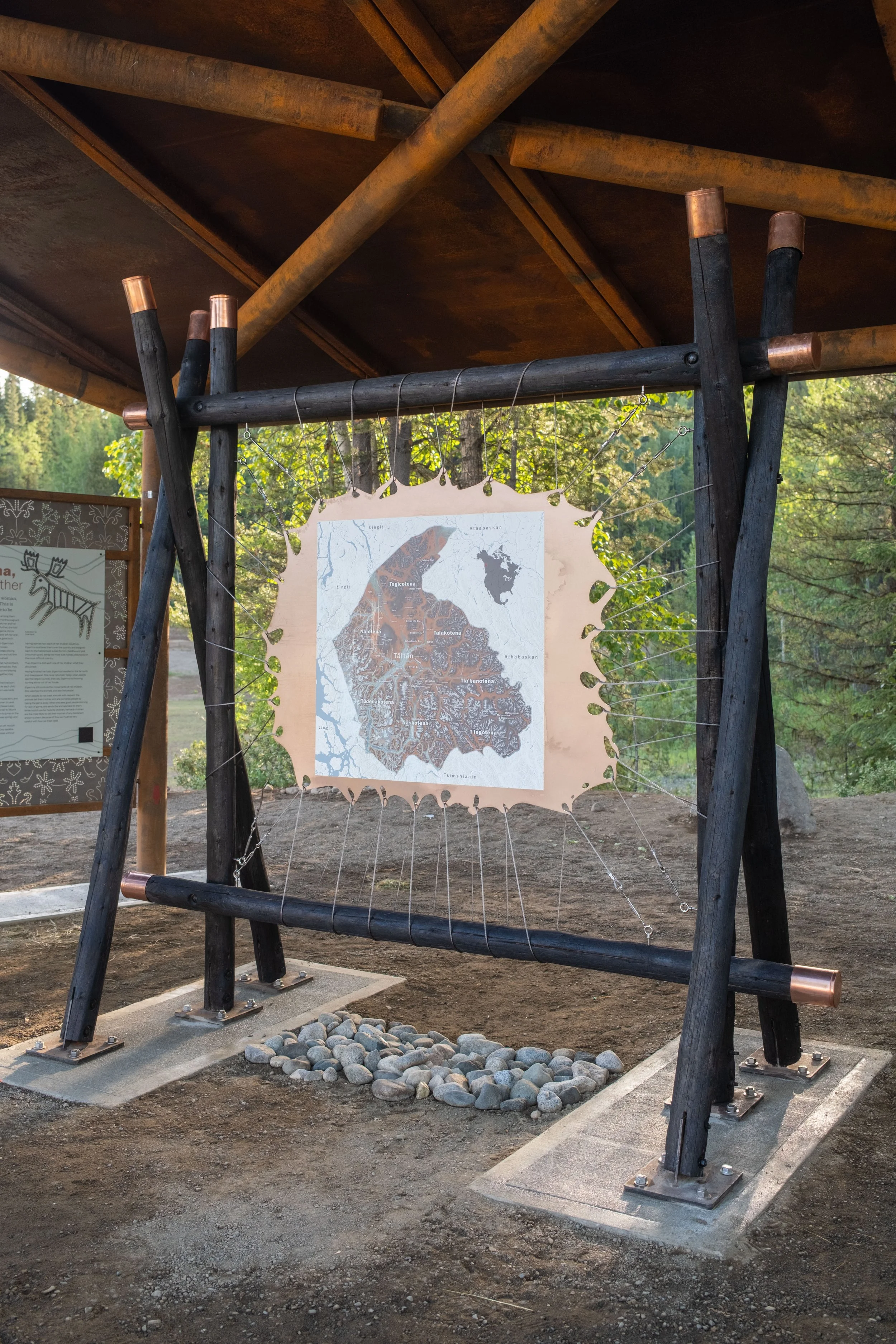
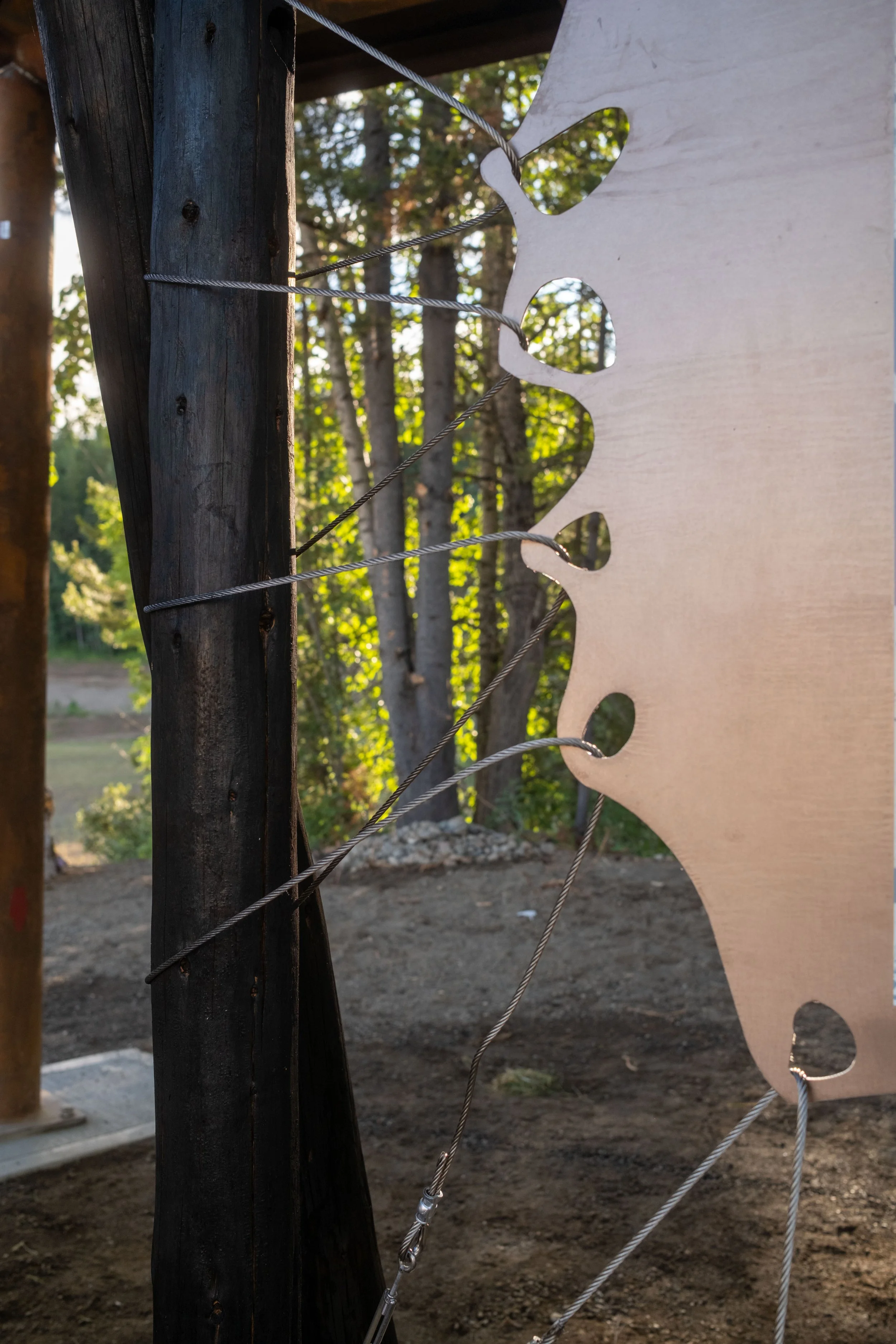
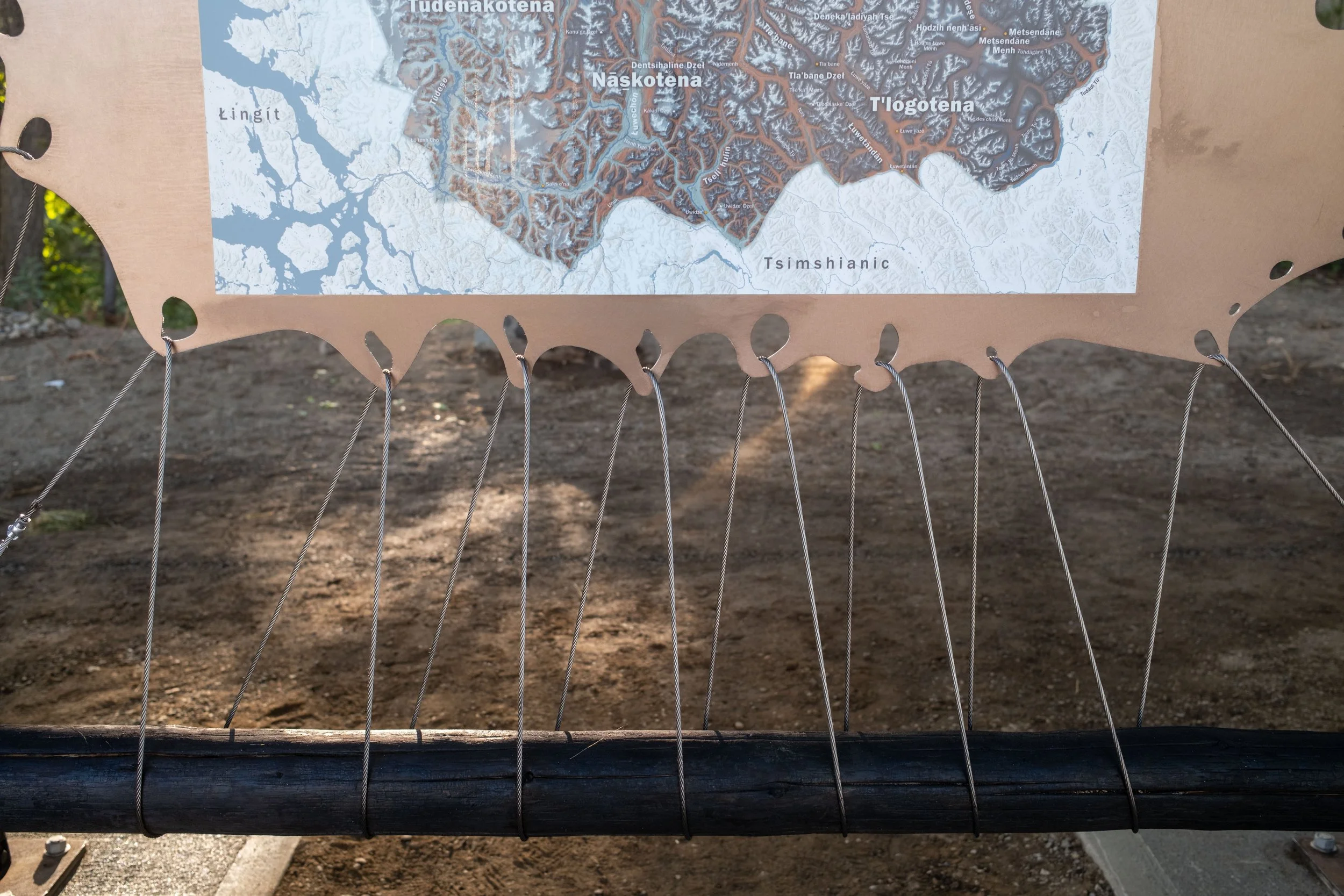
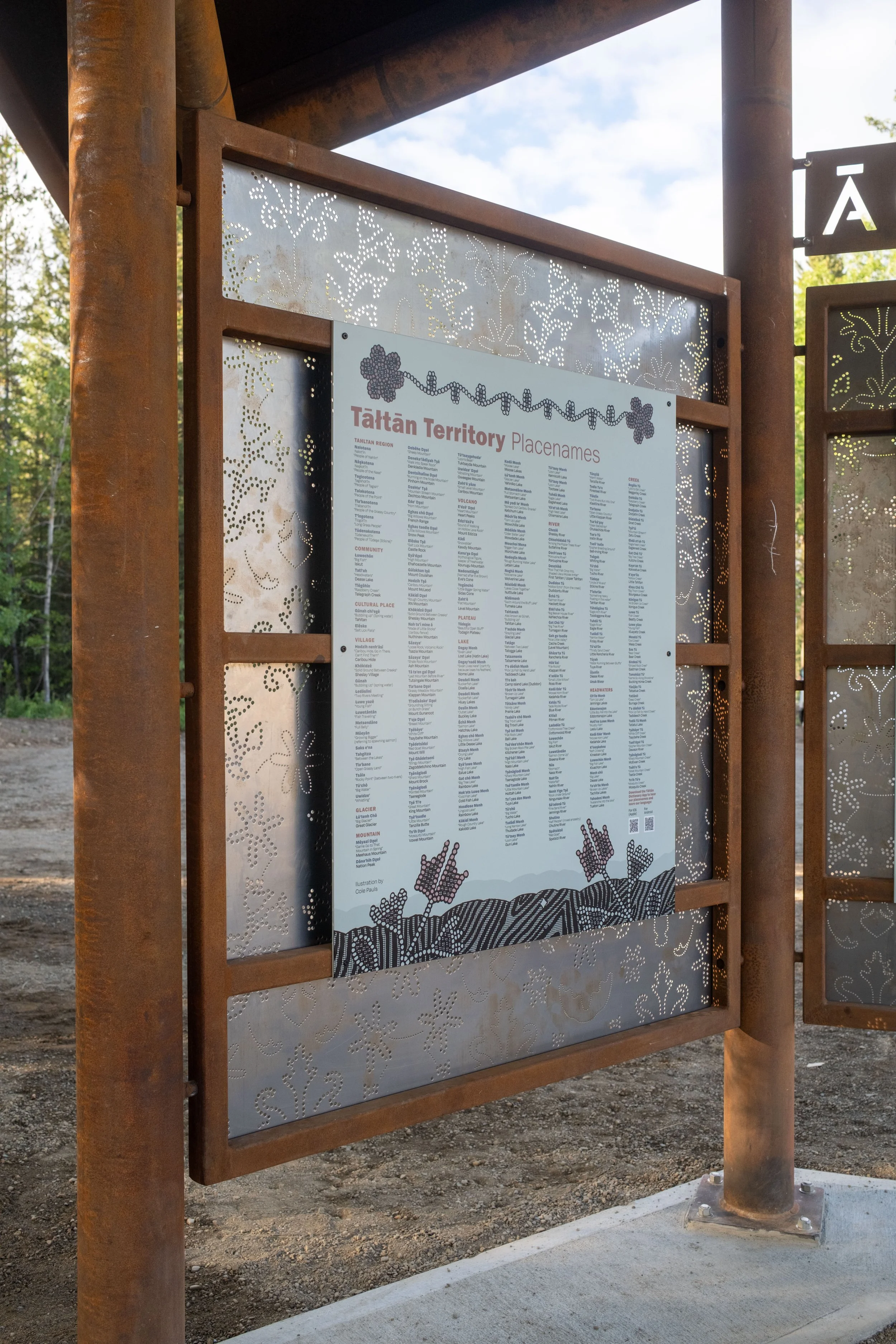
The centerpiece of Estse Pavilion is a custom-designed topographical map of Tāłtān territory placenames mounted to a hide-shaped panel, stretched onto a tanning frame.
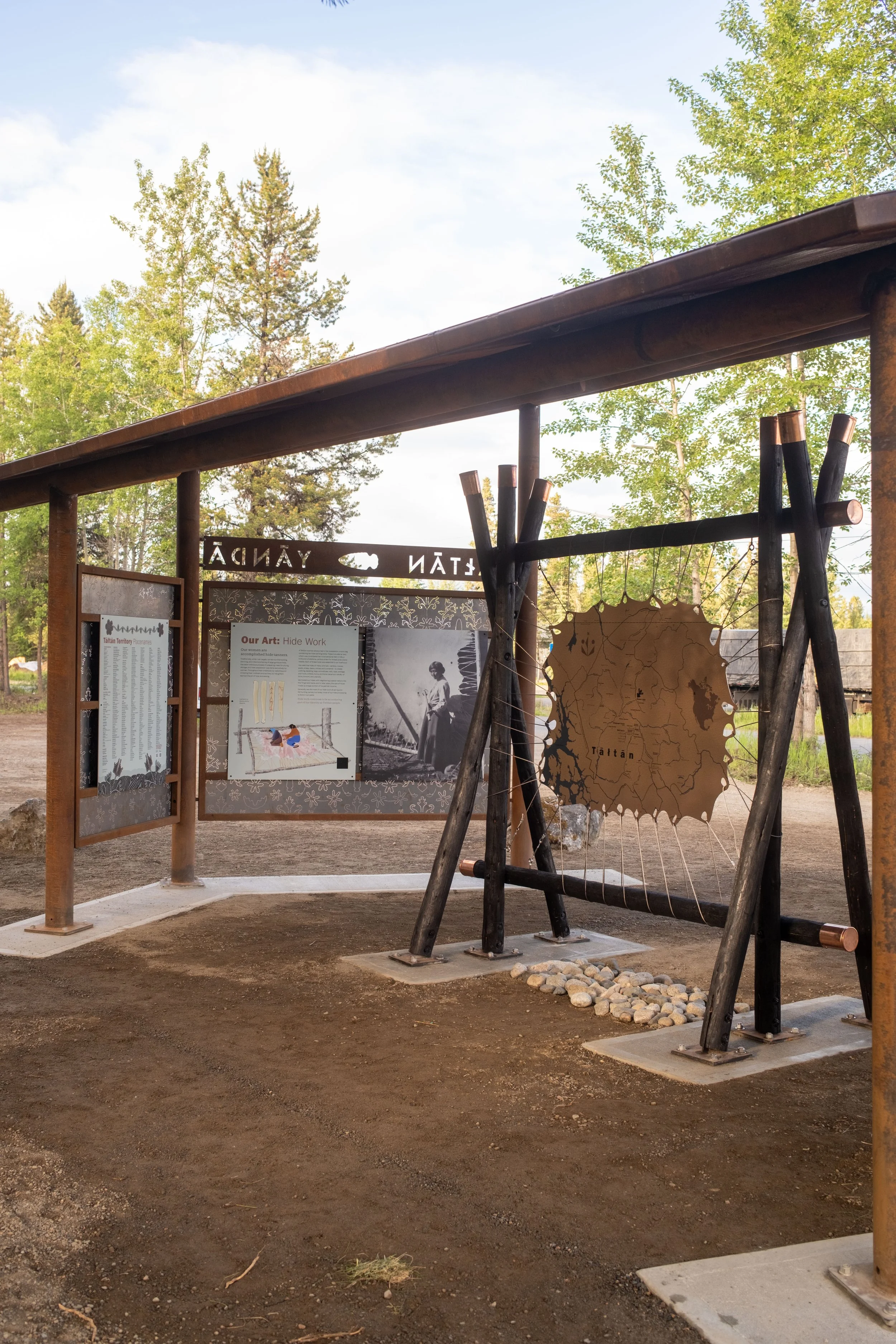
The back of the hide shows a road map placing the tourist along Highway 16 and identifies known places of interest.
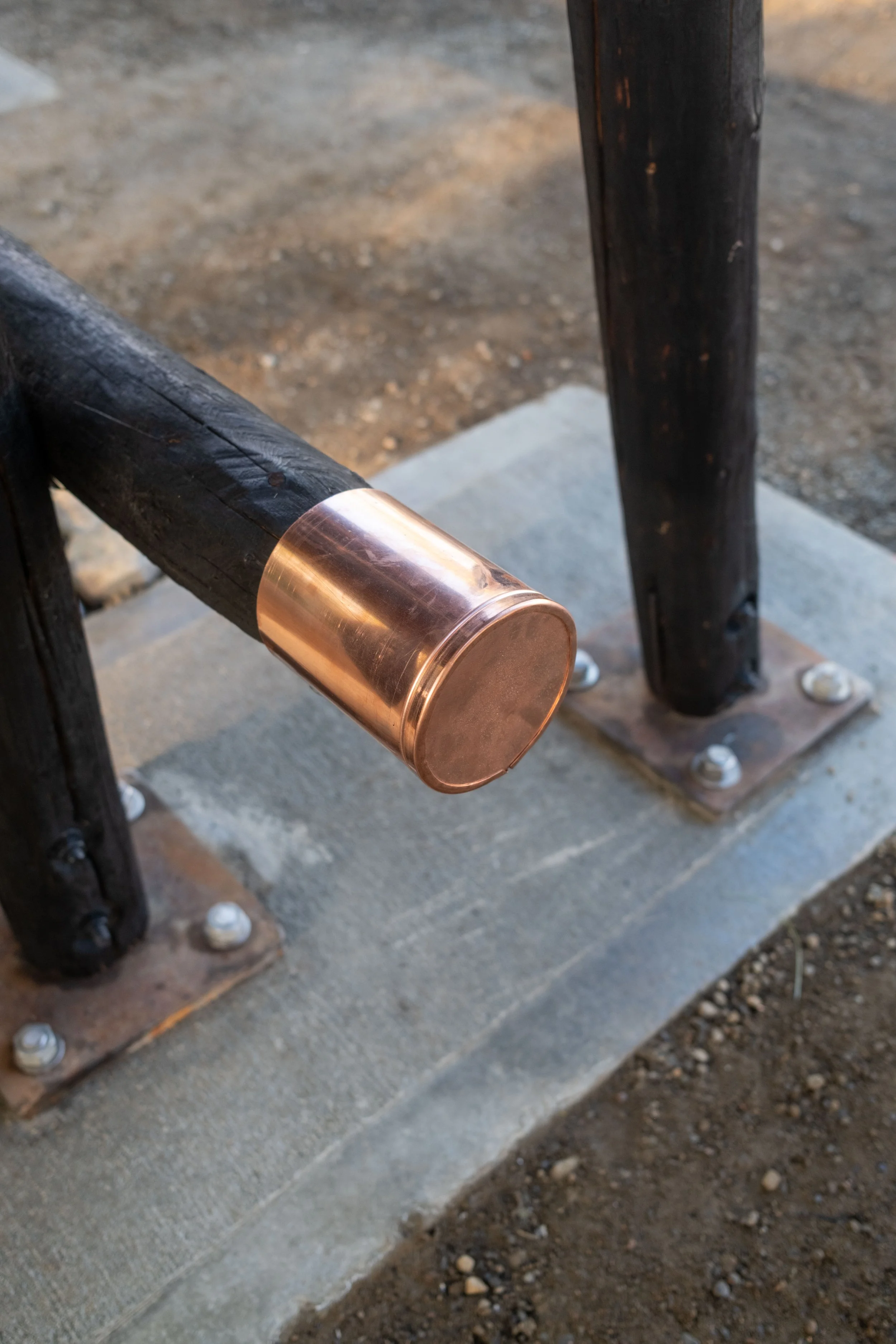
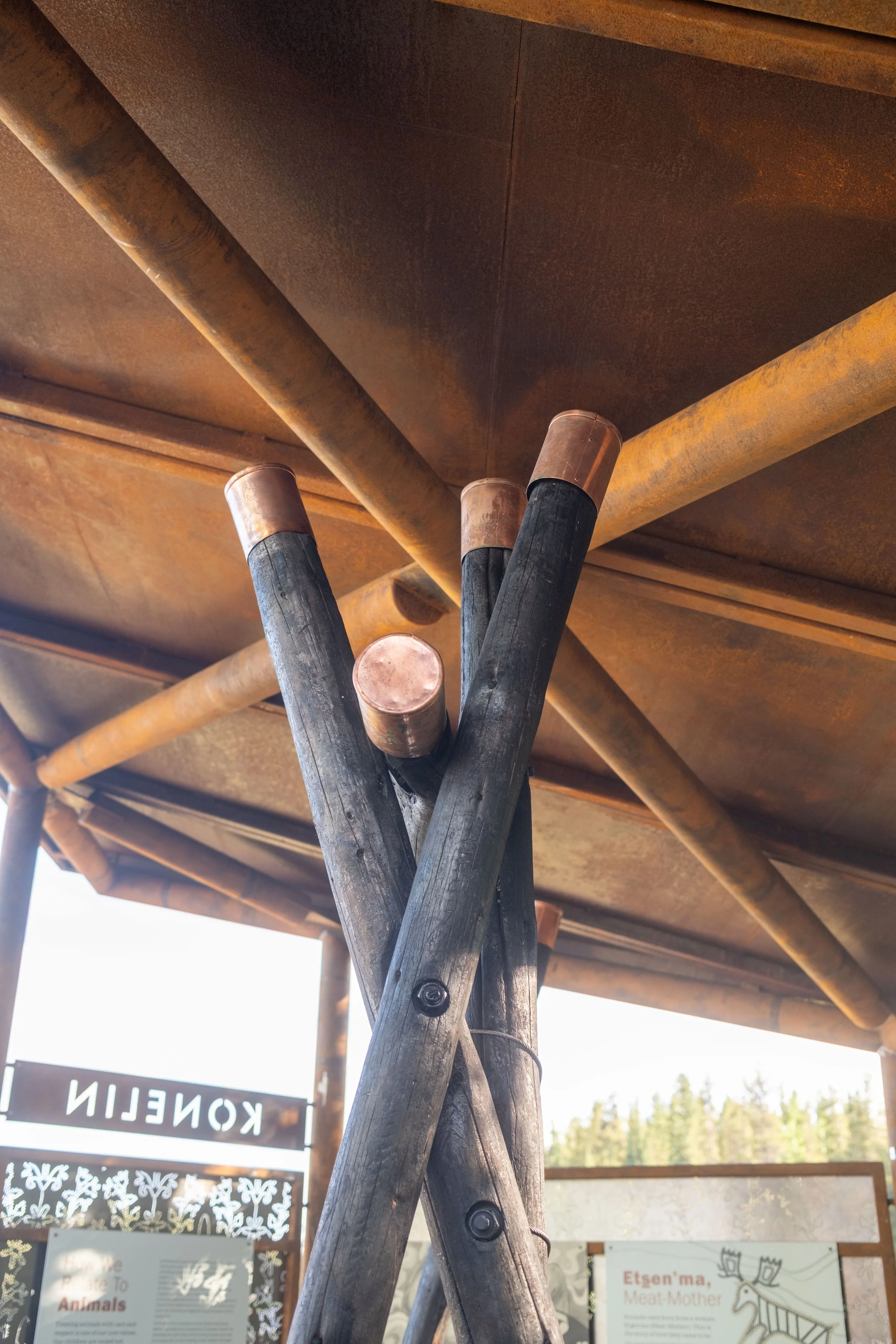
The hide frame is inspired by traditional hide processing frames and is made of copper-capped reclaimed burnwood from the 2018 Alkali Lake forest fire. As rust gave the ancestors red, burnt wood gave Tahltans carbon black. The frame endwood is capped in copper to protect it from the elements and as a medium that may have been mined in local mineral-rich territory.
The material choices, the stories, and the keystone map, bring the land into the structure itself, creating a physical relationship between place, material, and memory.
Placeholder description

Placeholder description
And, in using this material and colour, the Estse structure exemplifies the physical and spiritual connection Tahltans have to the land and animals that sustain us.
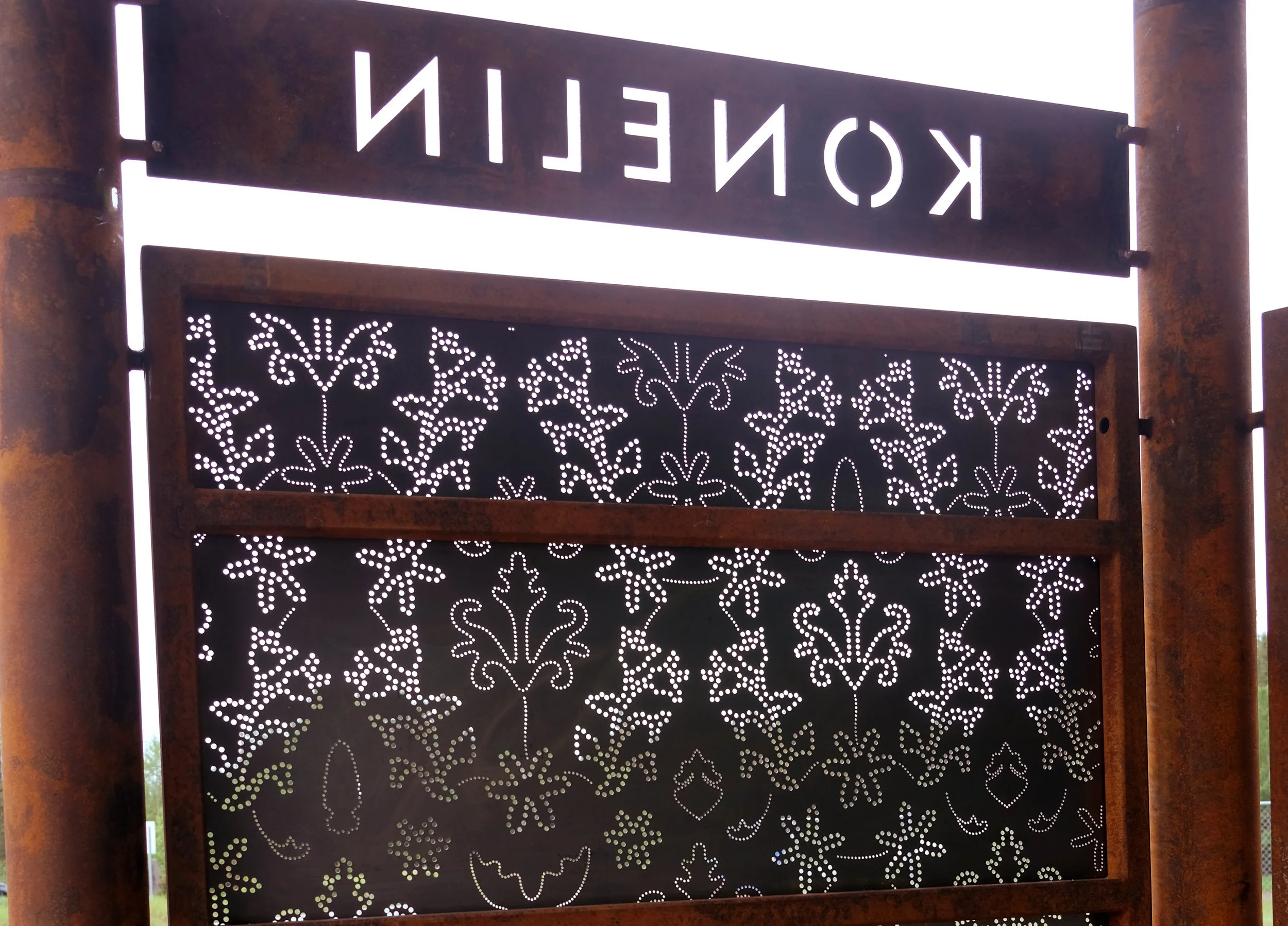
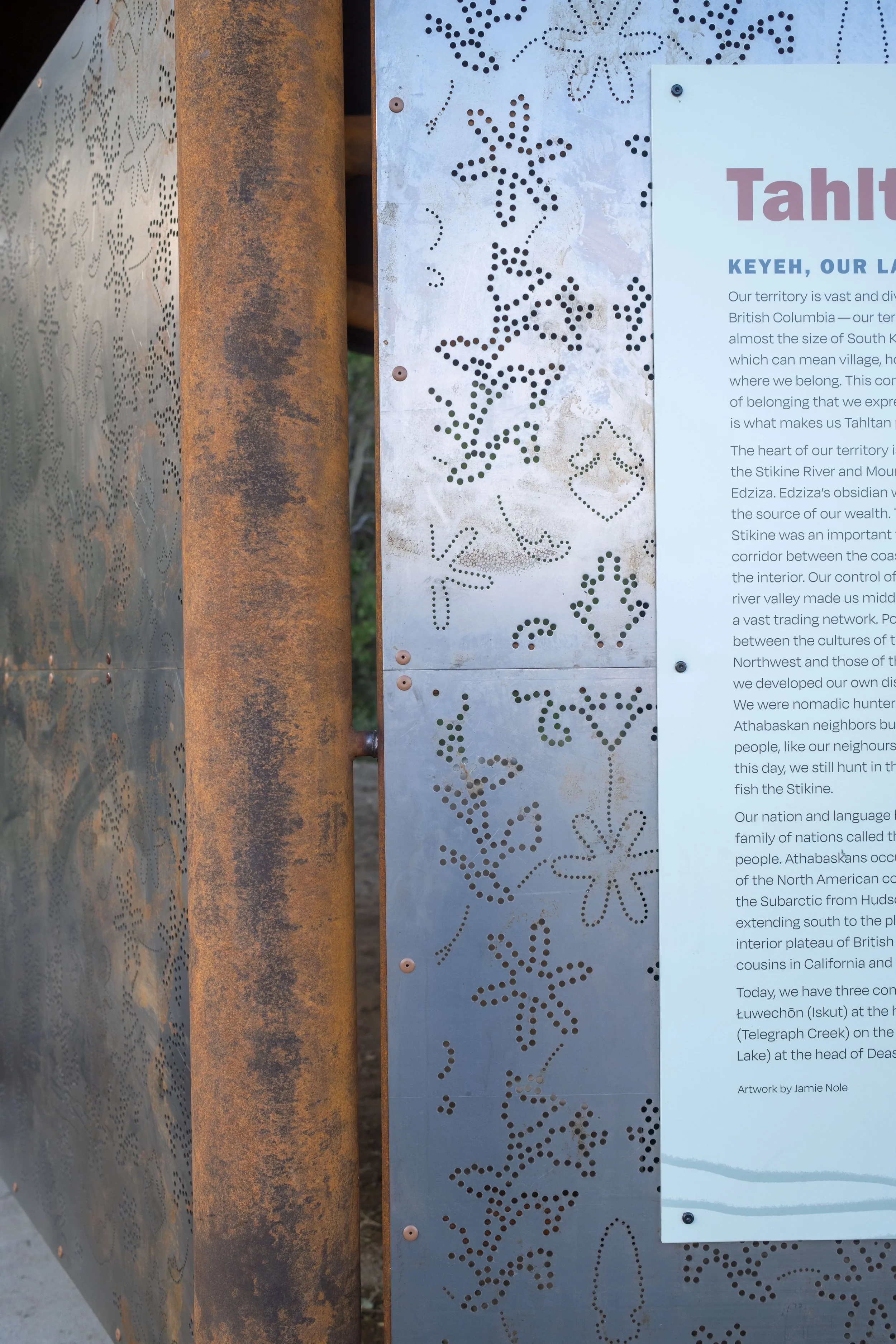
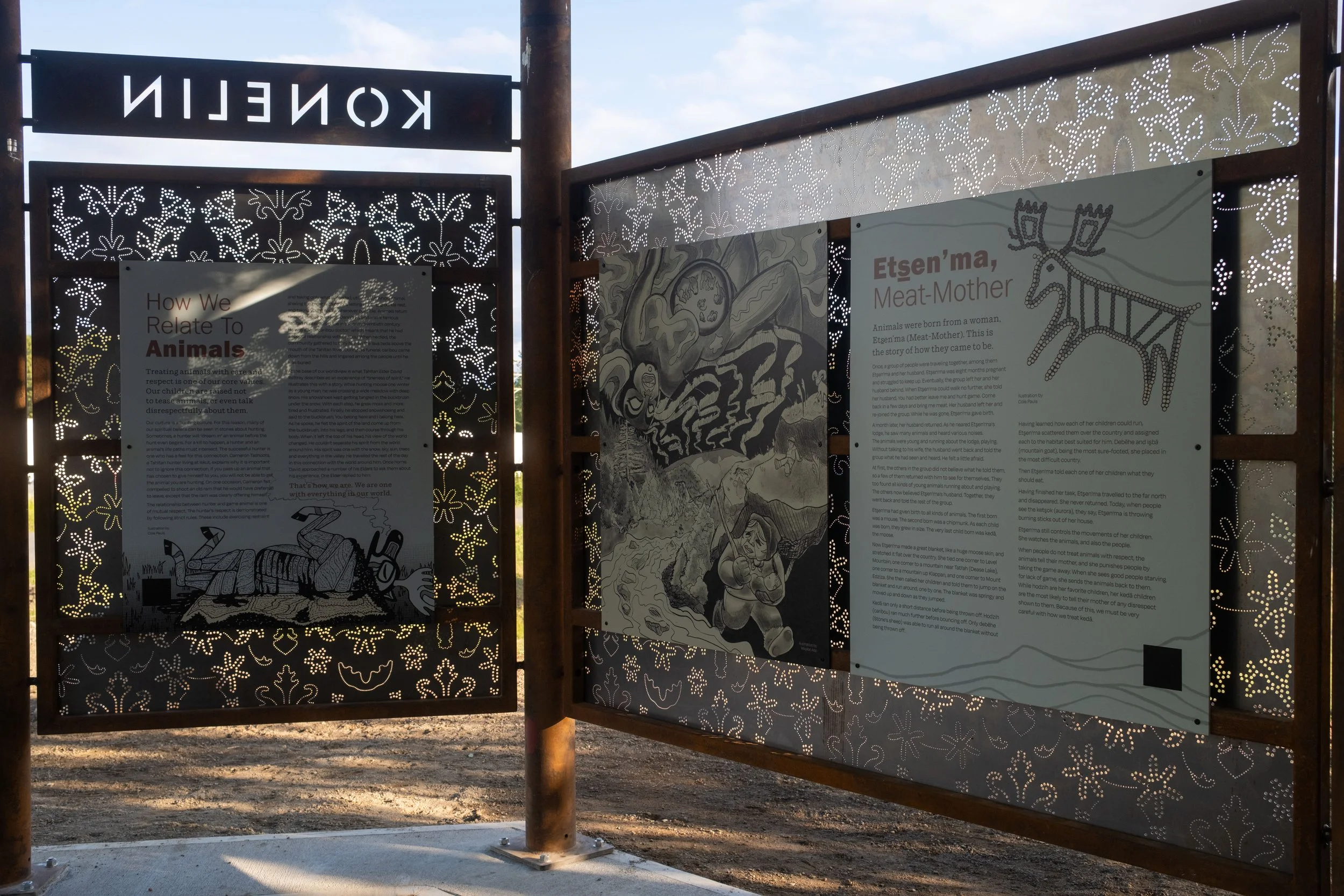
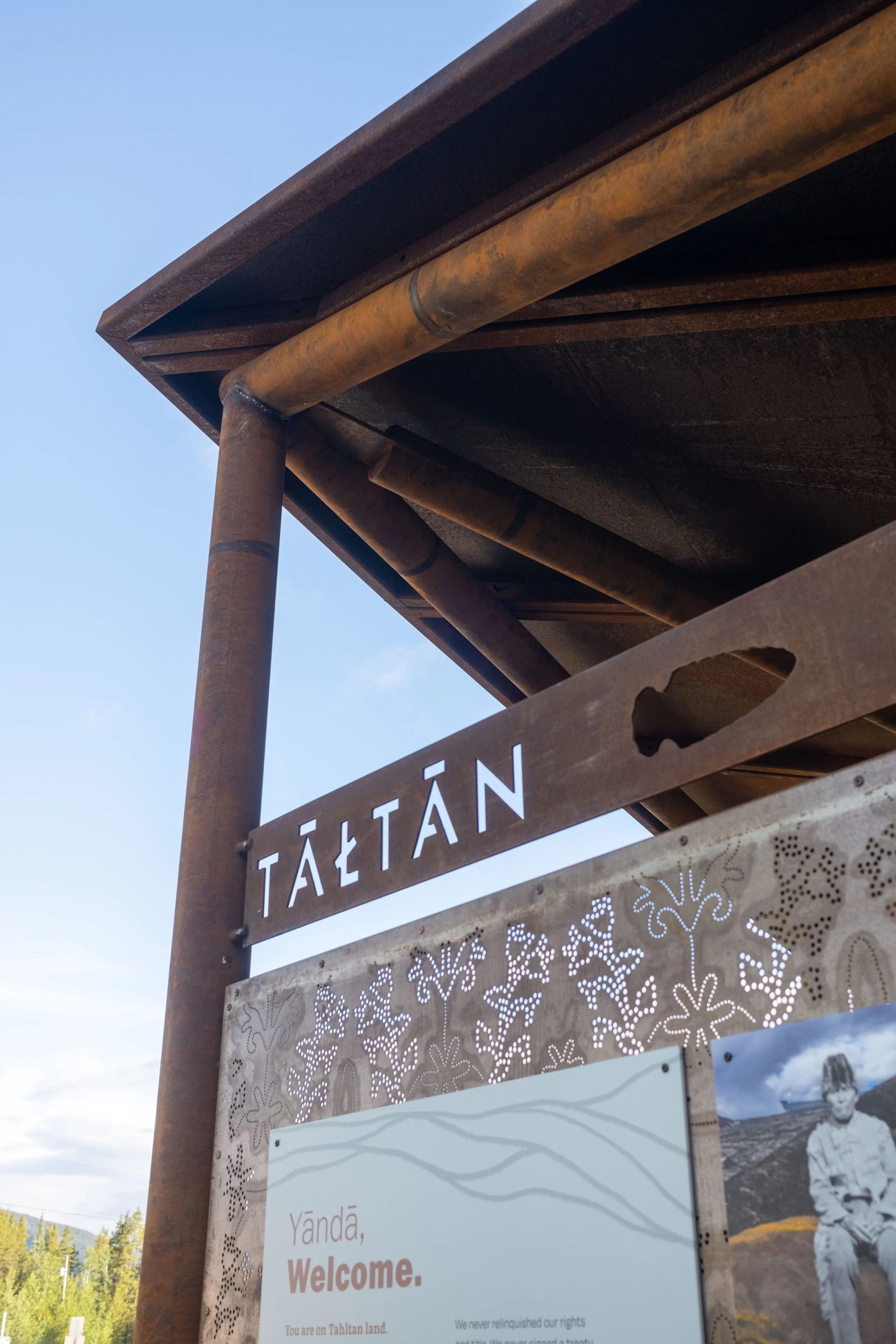
A custom-designed fretted bead pattern is cut into the corten steel wall skins of the pavilion, created from an archive of Ancestral Tāłtān beading shapes Tsema has been digitizing from regalia for close to 20 years. Another special detail of this pavilion is the large cut out signs flanking the front of the structure, reading: “Tāłtān” “Yanda,” welcome and Konalin, which means The Land is Beautiful, in Tāłtān language.
Corten Steel
Weathering Steel
Dease Lake, BC, Canada
Fabricated by Starmaker Coustom Welding and Fabrication Ltd., Parker & Johnston Ltd. & LKMē Metal Products
Designed by Miscellaneous Arts Activities Inc.
Commissioned by Tahltan Central Government, 2025, 2026
Artworks:
Hide Map, Tsēmā Igharas
Tahltan Shapes Fretwork, Tsēmā Igharas
Meat Mother, Waylon Asp
Hide Illustrations by Alysha Hawkins
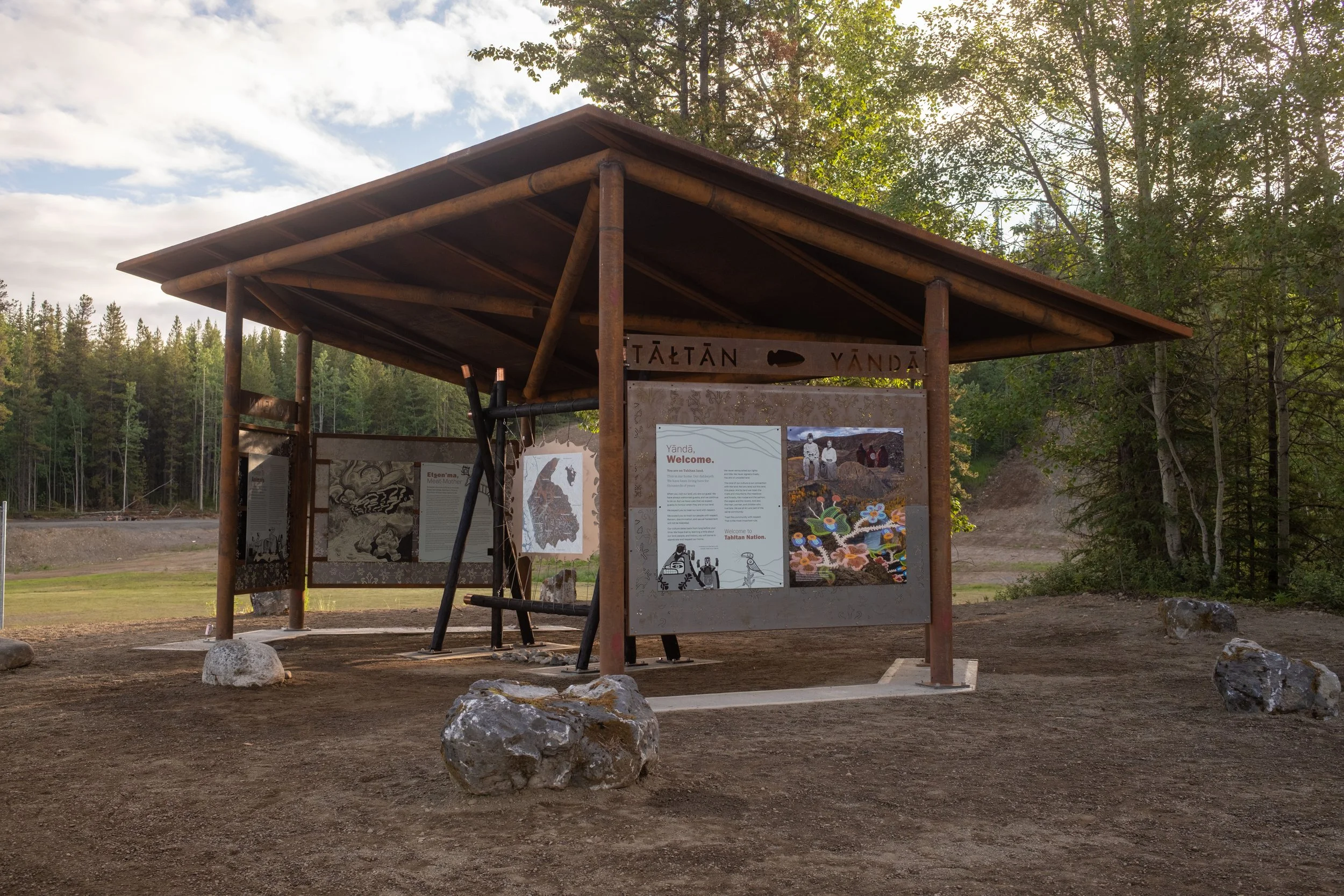
Full Credits and other commissioned structures can be found on Taltan Signs page.
This Tahltan Central Government Initiative was funded by the Province of British Columbia through the Ministry of Tourism, Arts, Culture and Sport, with generous donations of material and artwork production from Parker Johnston Ind. & LKMē Metal Products.