
Tāłtān Signs
Community Map Pavilions and Heritage Story Signs
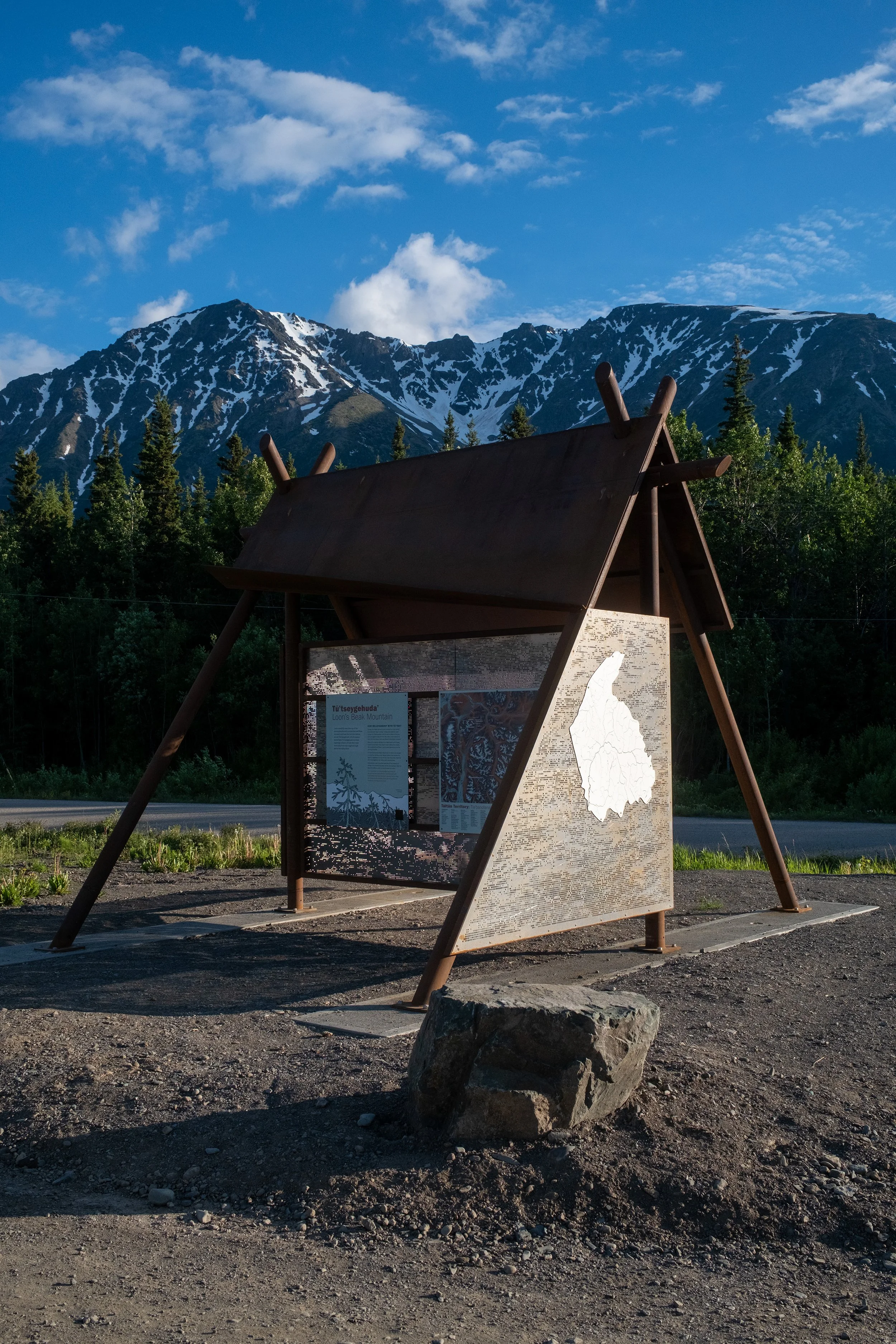
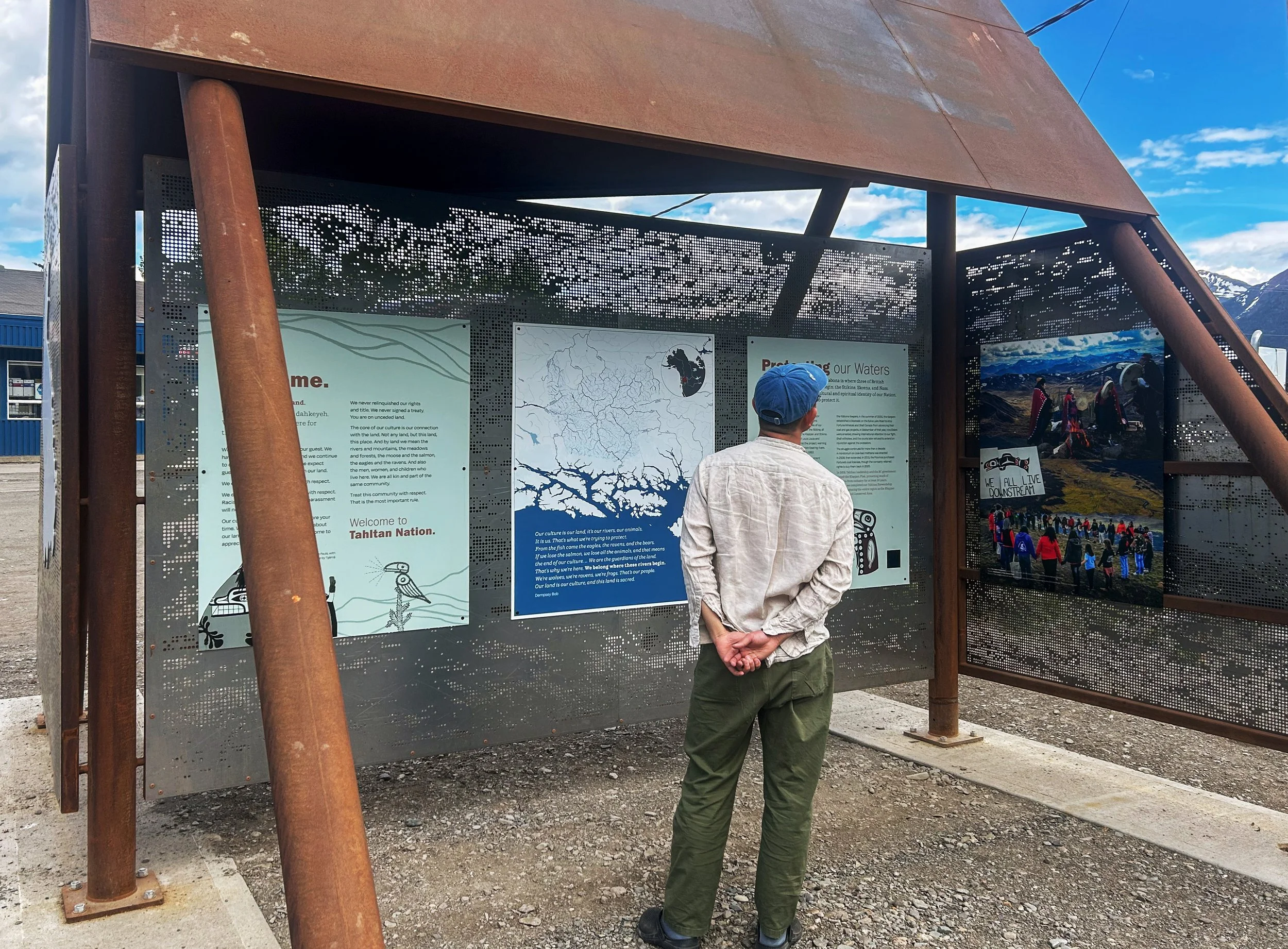
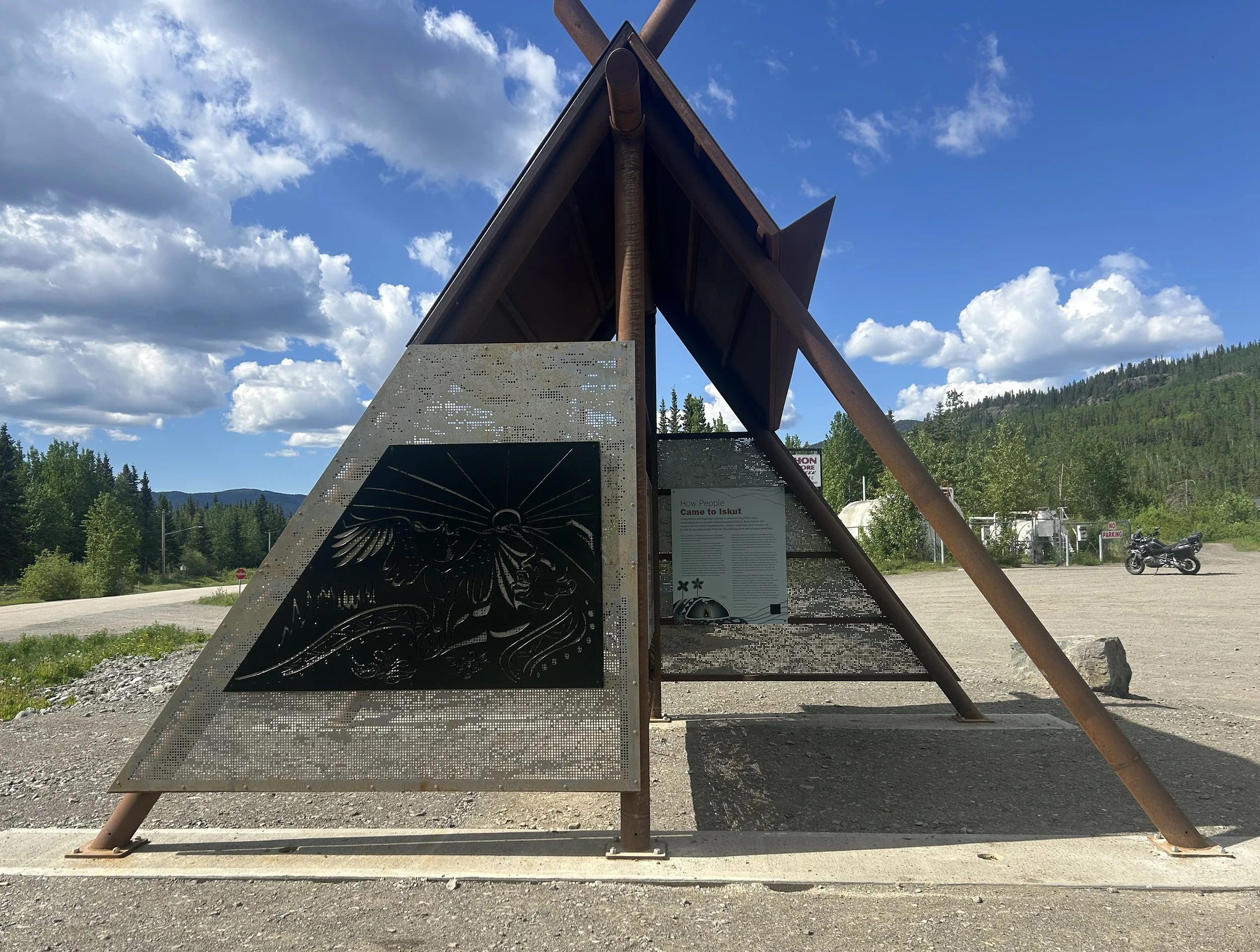
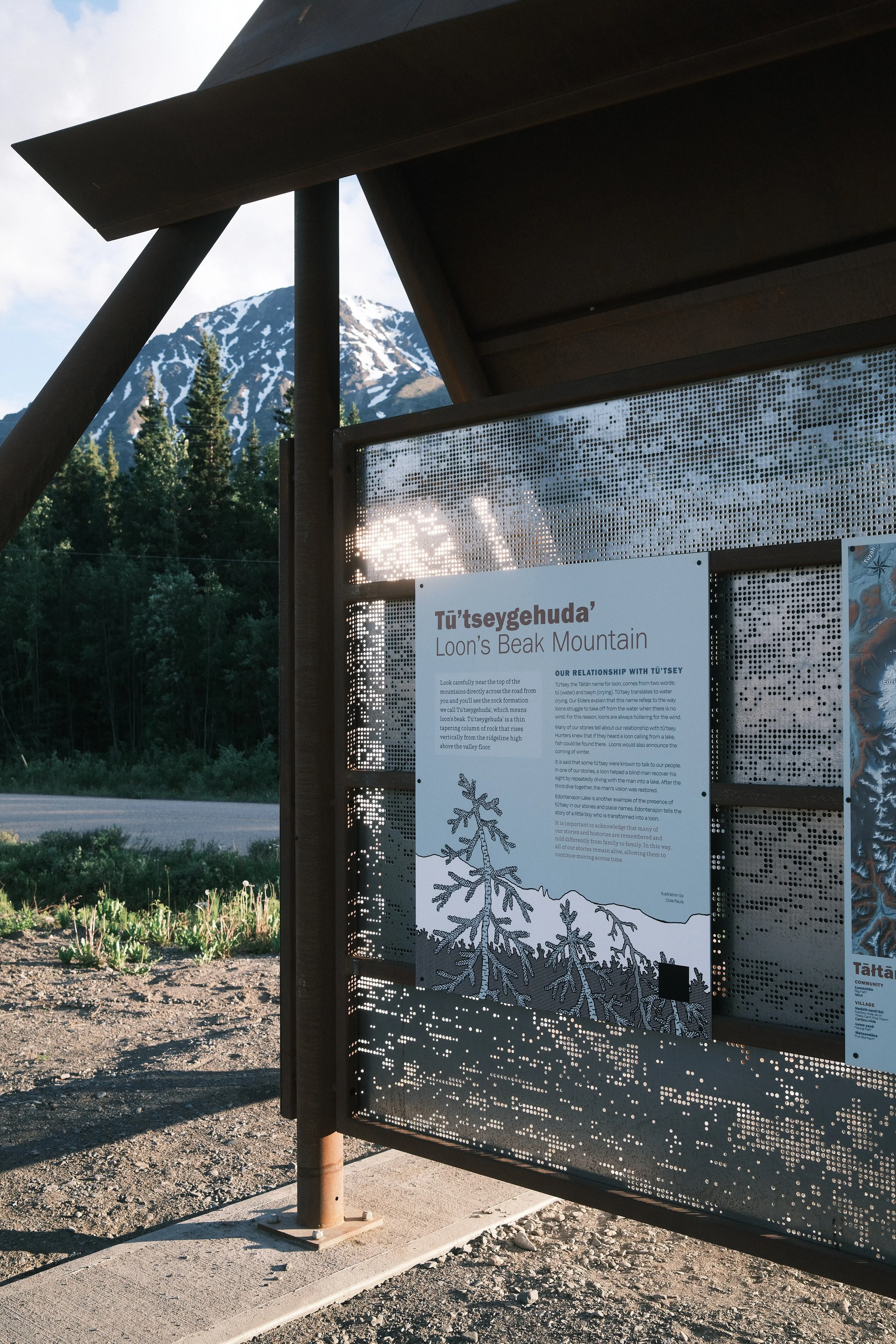
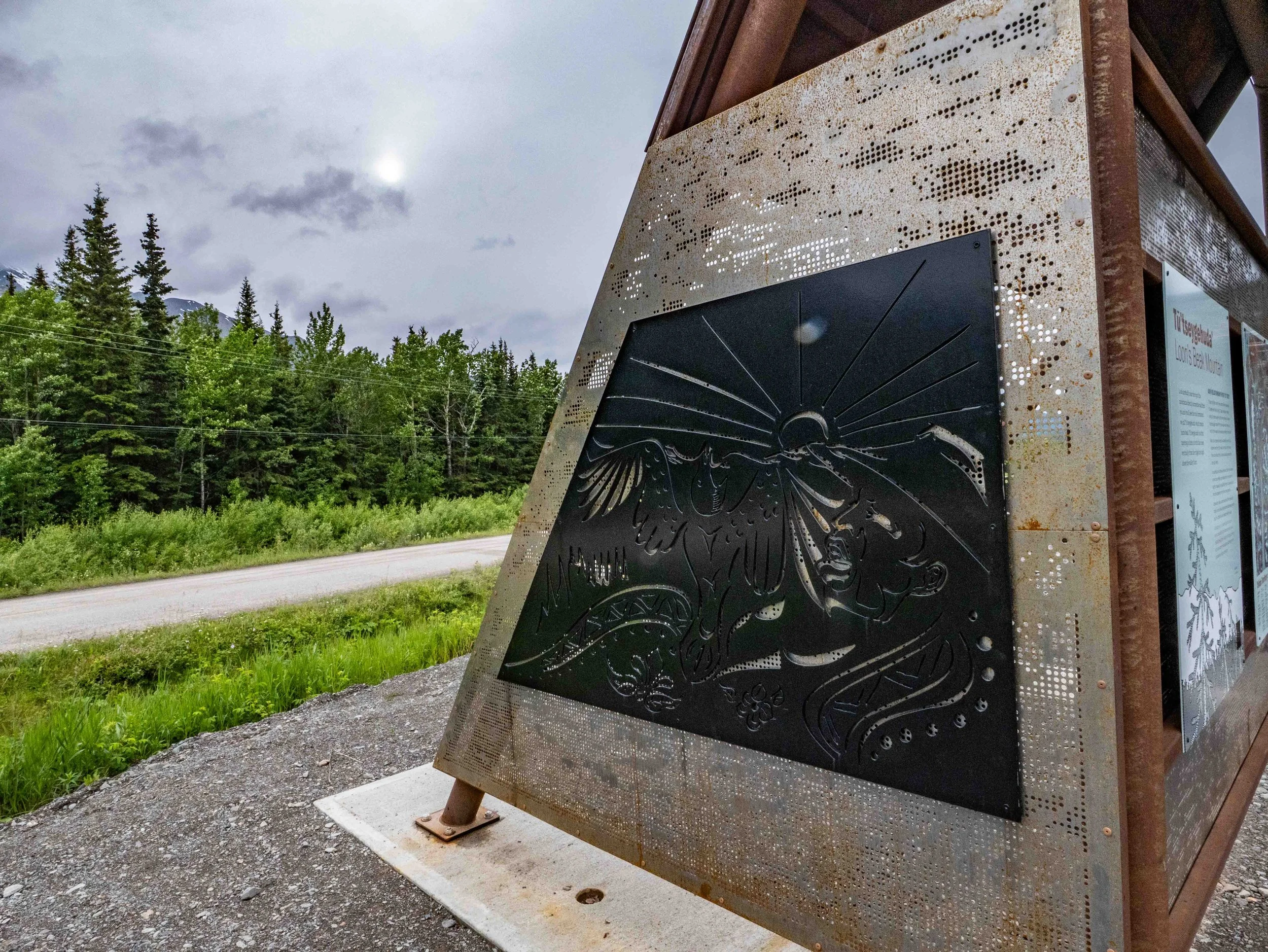
In December 2025, Tsēmā was brought onto the Tāłtān Signage Project team to produce Heritage Story Signs and Three Landmark Pavilions showcasing bespoke Indigenous Place-names maps, story panels that feature Tahltan artwork, Land, culture, and sovereignty. Each site is located adjacent to the present-day Tahltan communities of Tlēgōhīn (Telegraph Creek, BC), Tatl’ah (Dease Lake, BC), and Łuwechōn (Iskut, BC), and responds to themes identified by Tahltan Community members in consultation with Project Manager Craig Paulson.

Design Director:
Jonathan Igharas
Creative Director:
Tsēmā Igharas
Engineering:
Mike Herold (Herold Engineering)
Project Manager:
Craig Paulson
Fabricators:
Starmaker Welding, Parker & Johnston Ltd. & LKMē Metal Products
Team Members:
Adam Amir (TCG), Sophia Biedka, Jin He, Mike Herold
Installation:
Jim Skubovius (BV Bobcat)
Contributors:
Kyle Singbeil, Double Dare Design, Ria Kawaguchi, Kelly Edzerza-Bapty
Client:
Tahltan Central Government (TCG)
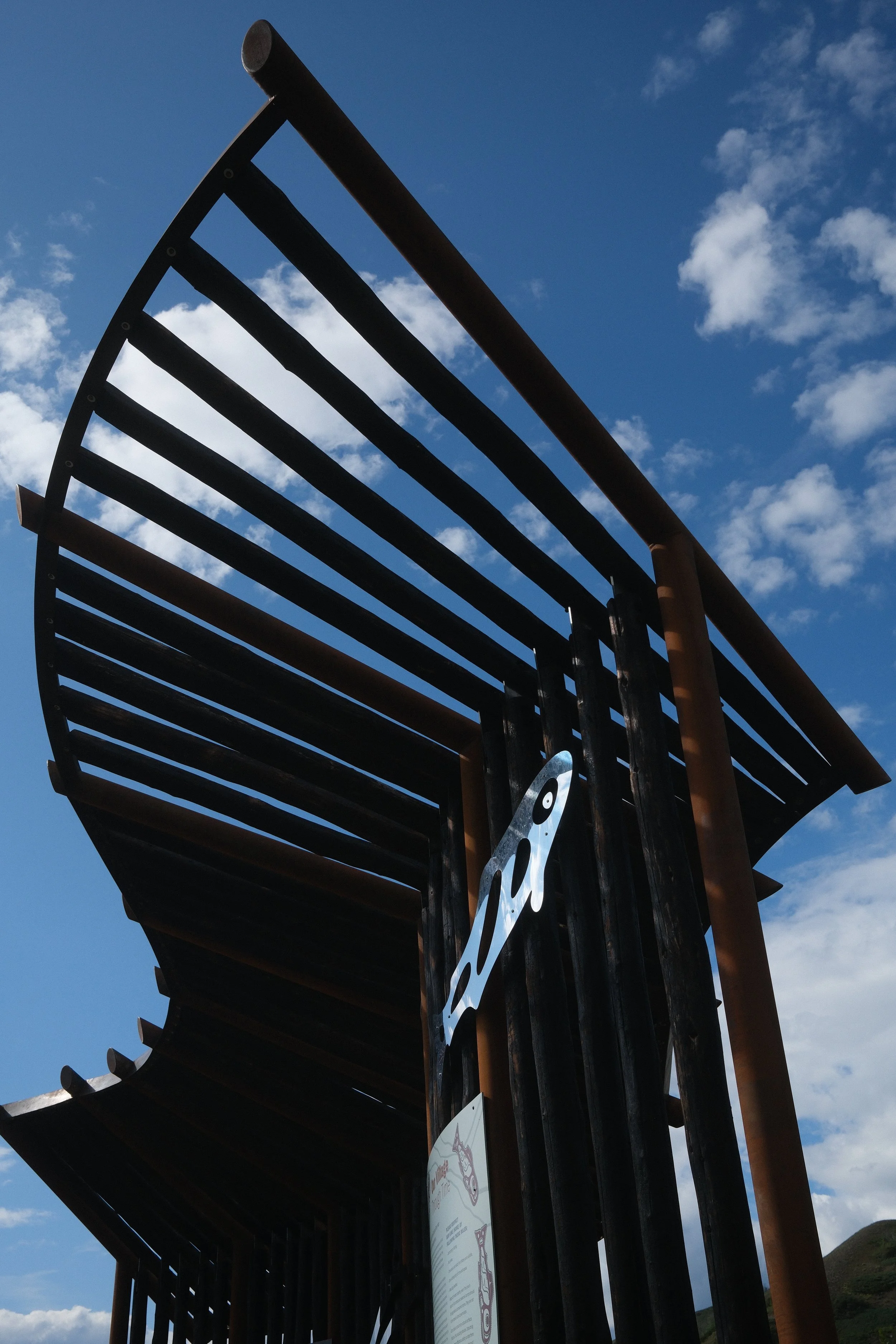
Kōjihge Pavillion / Dease Lake
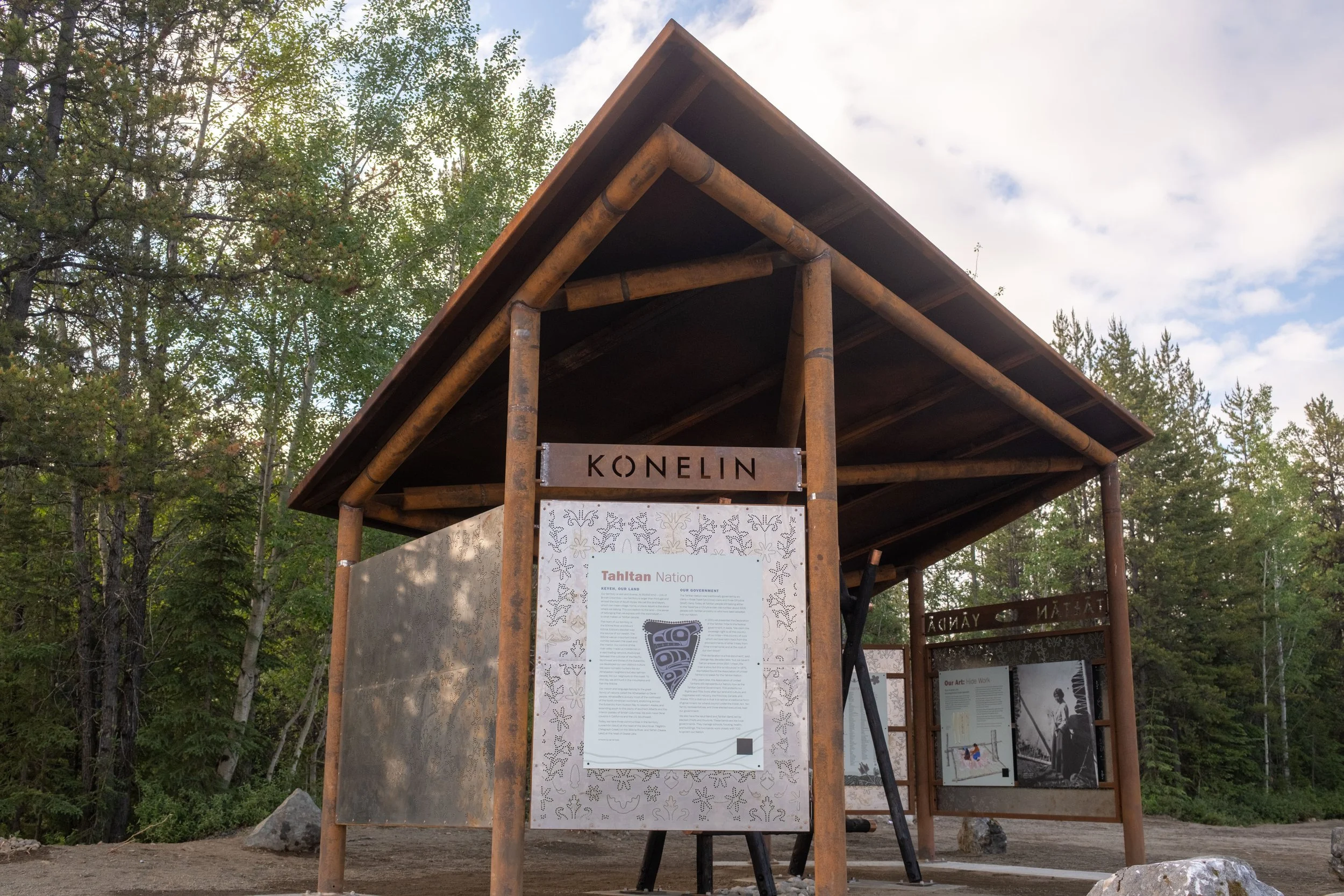
Jonathan Igharas, 2026
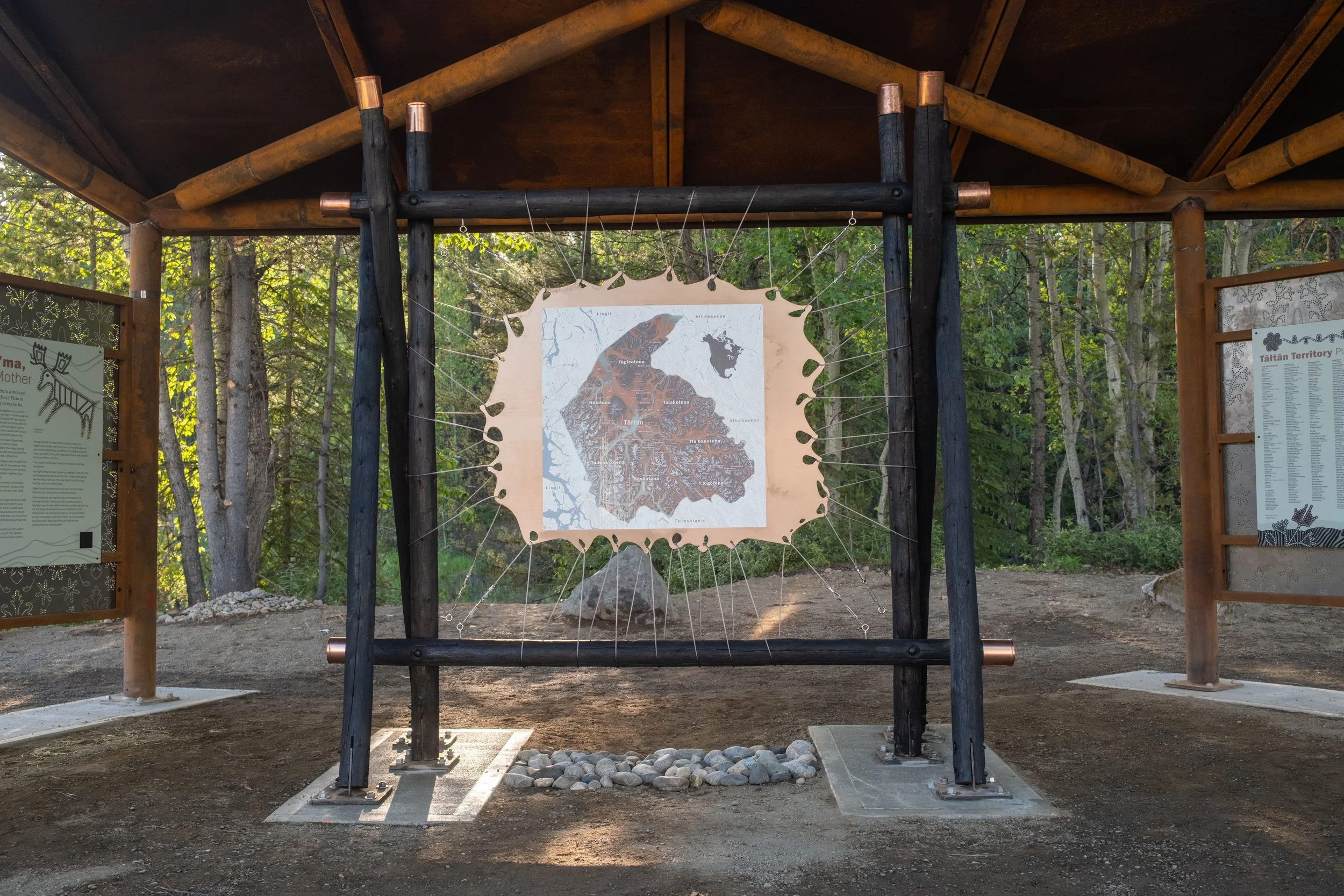
Jonathan Igharas, 2026
Estse Pavilion / Iskut
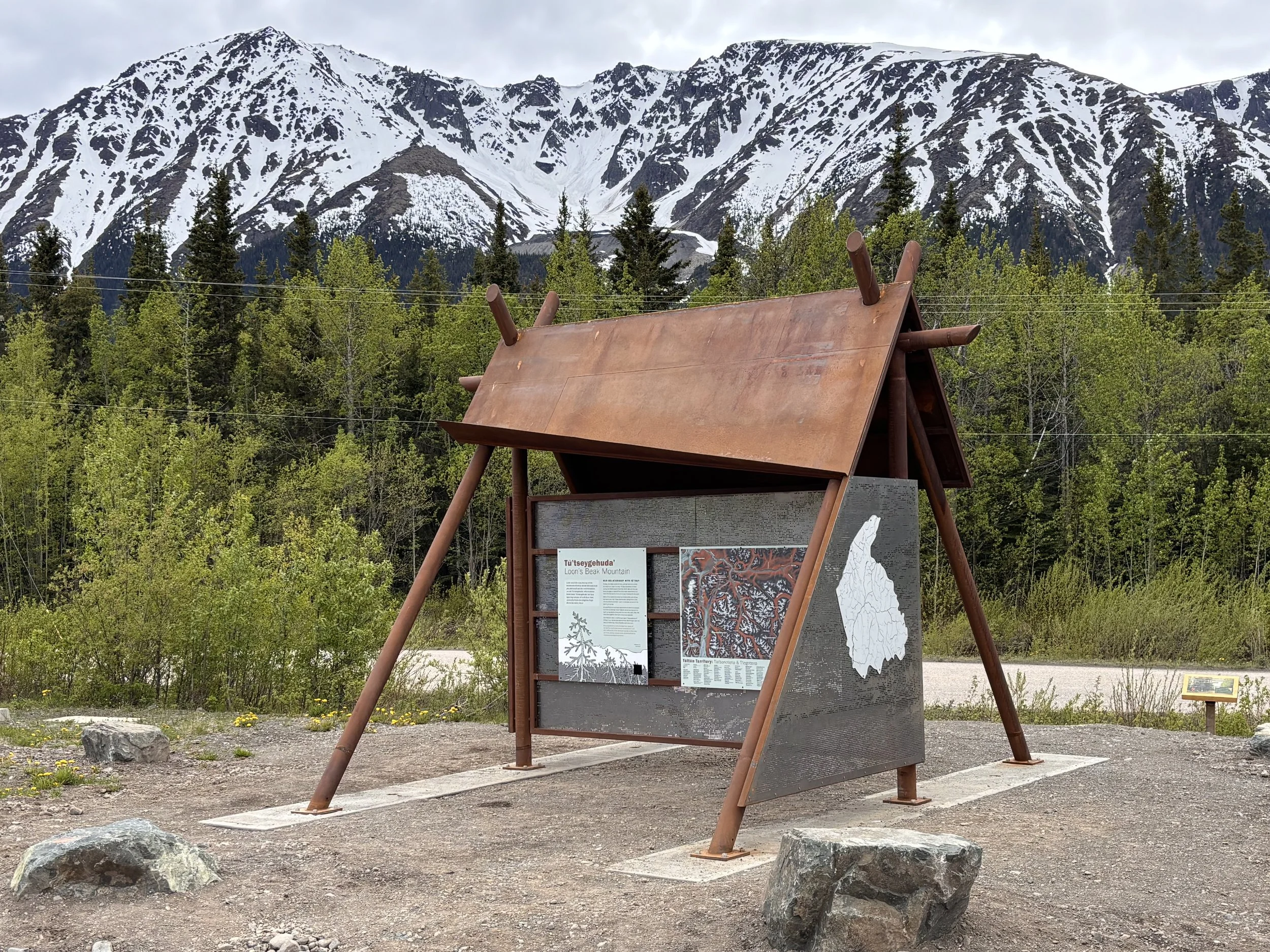
Adam Amir, 2026
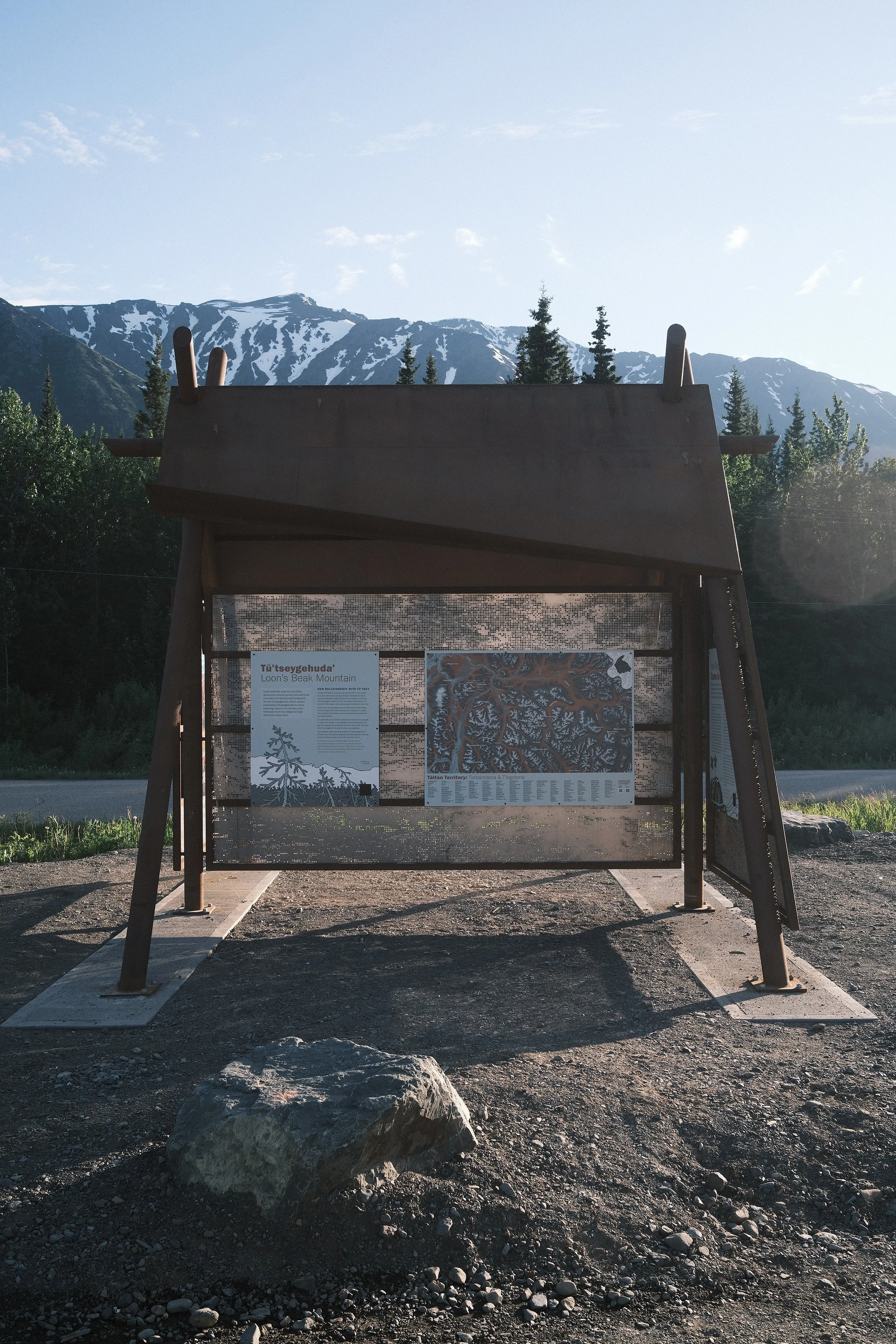
Jonathan Igharas, 2026
Tanadah Pavillion / Tahltan
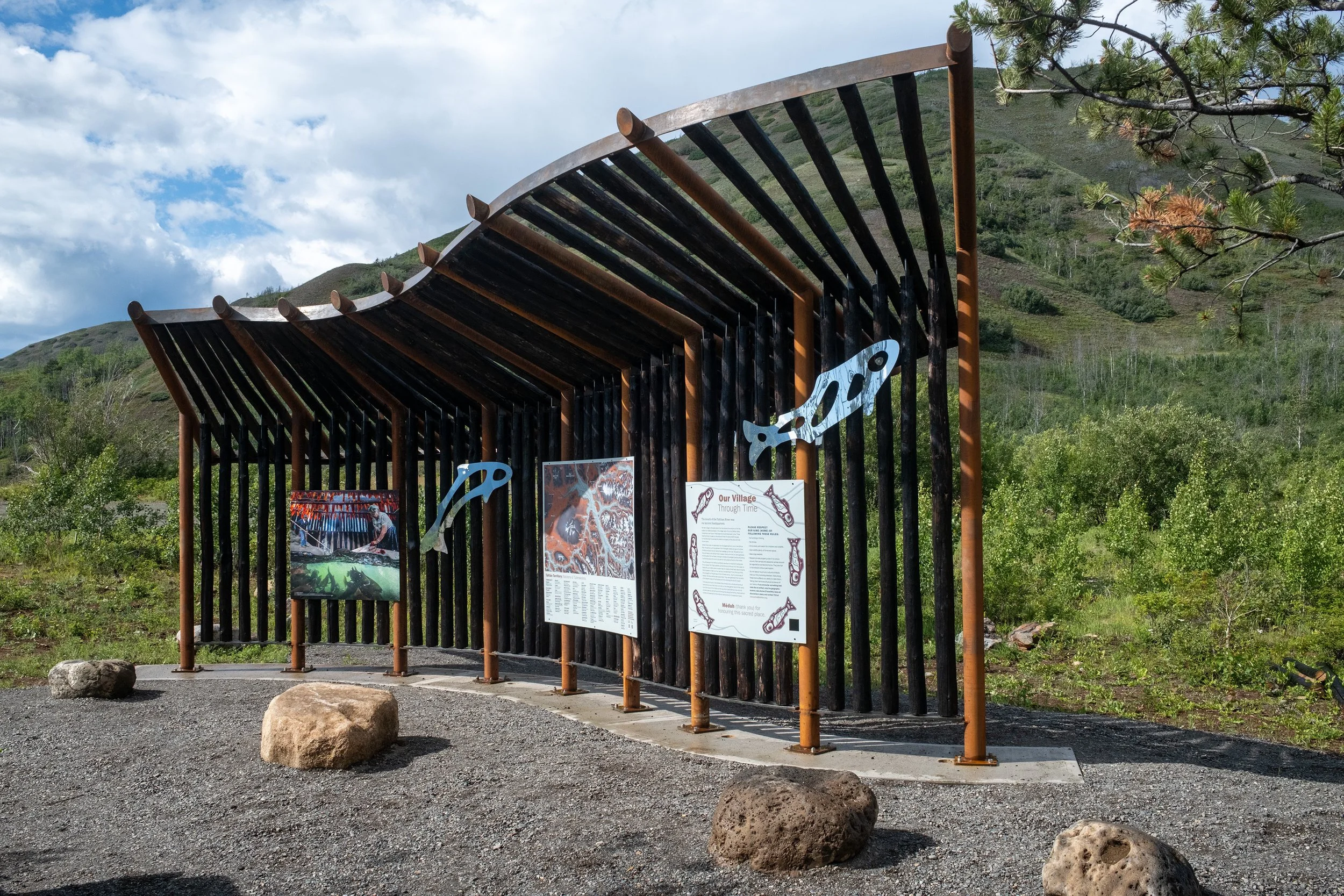
Jonathan Igharas, 2026
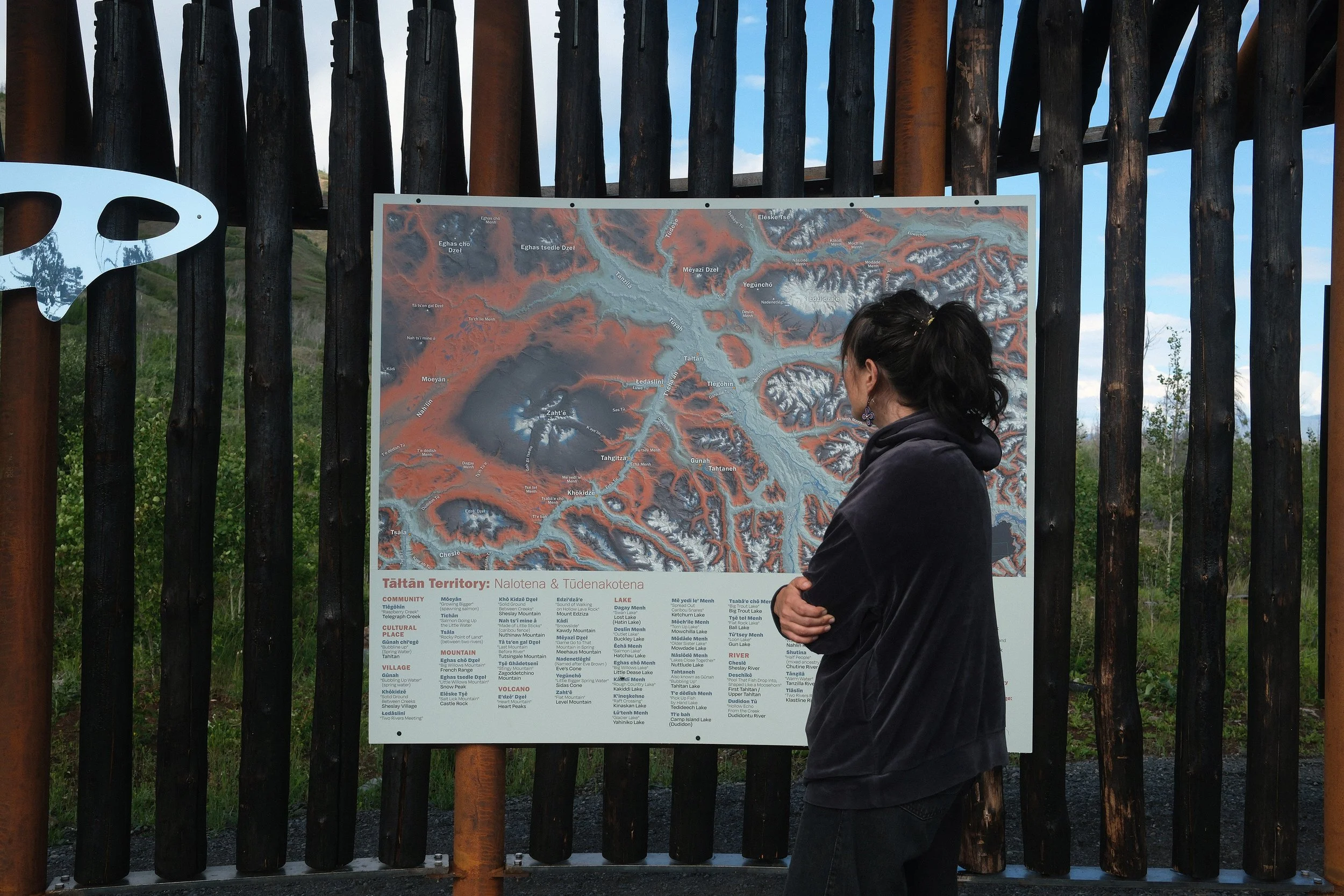
Jonathan Igharas, 2026
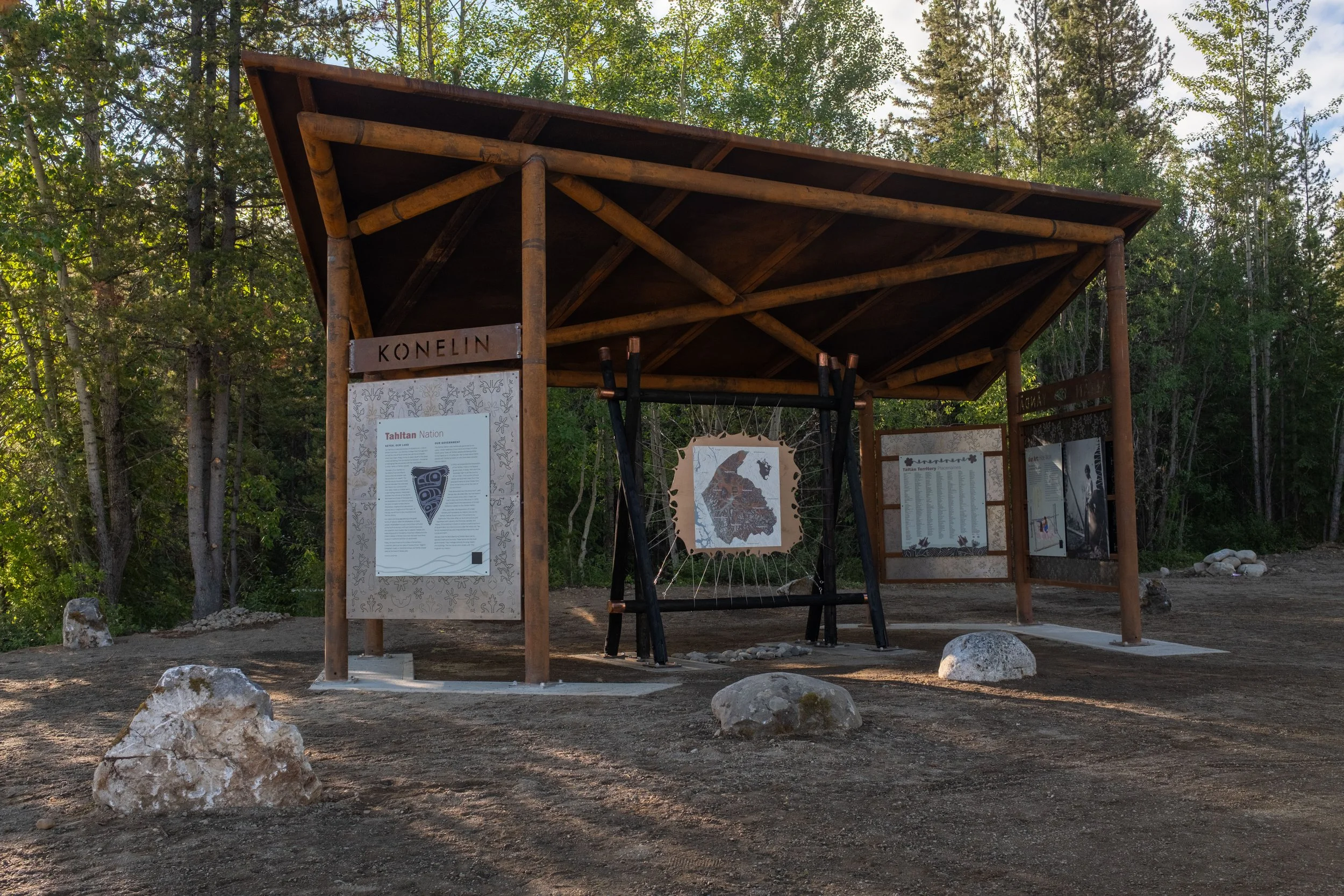
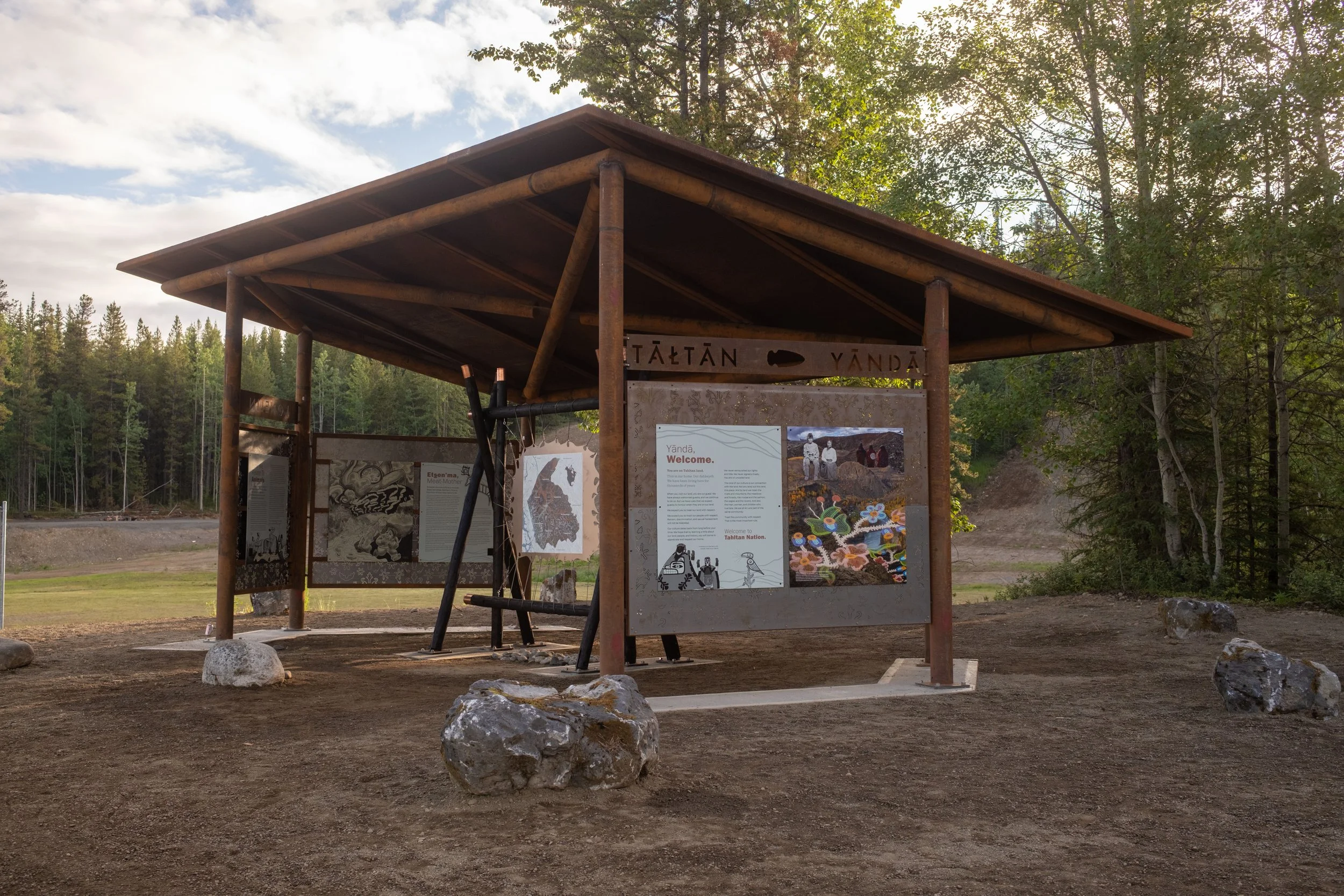
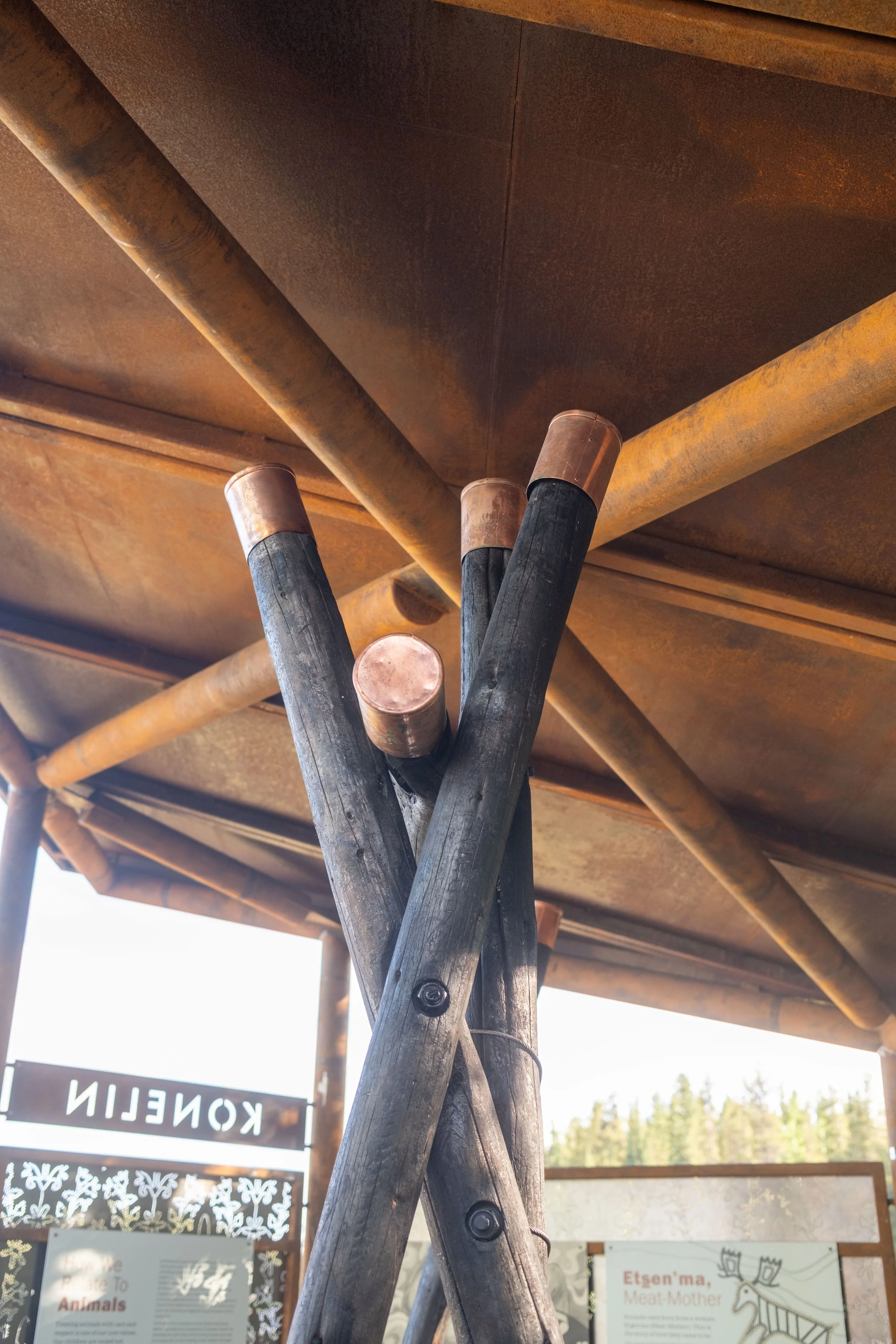
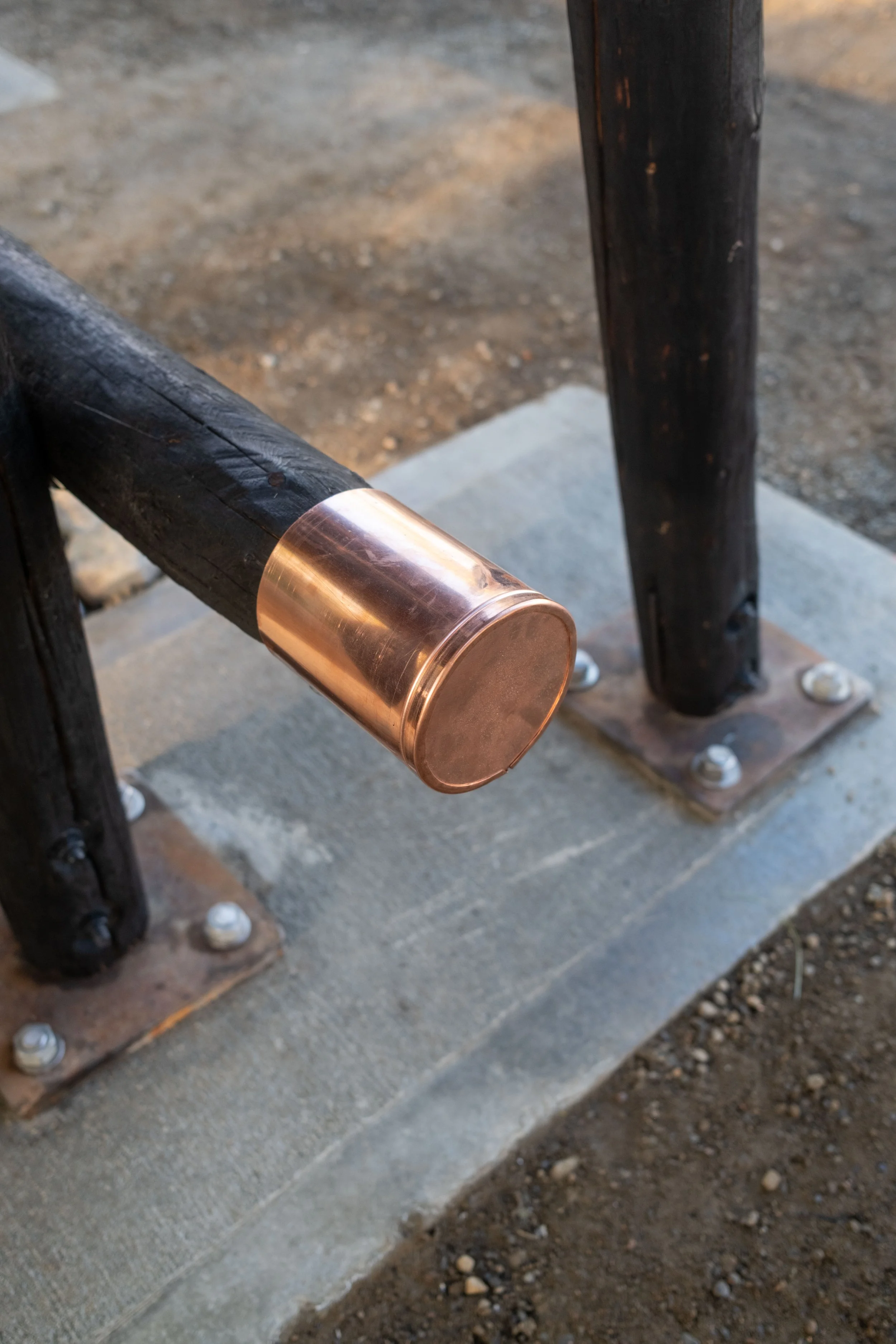
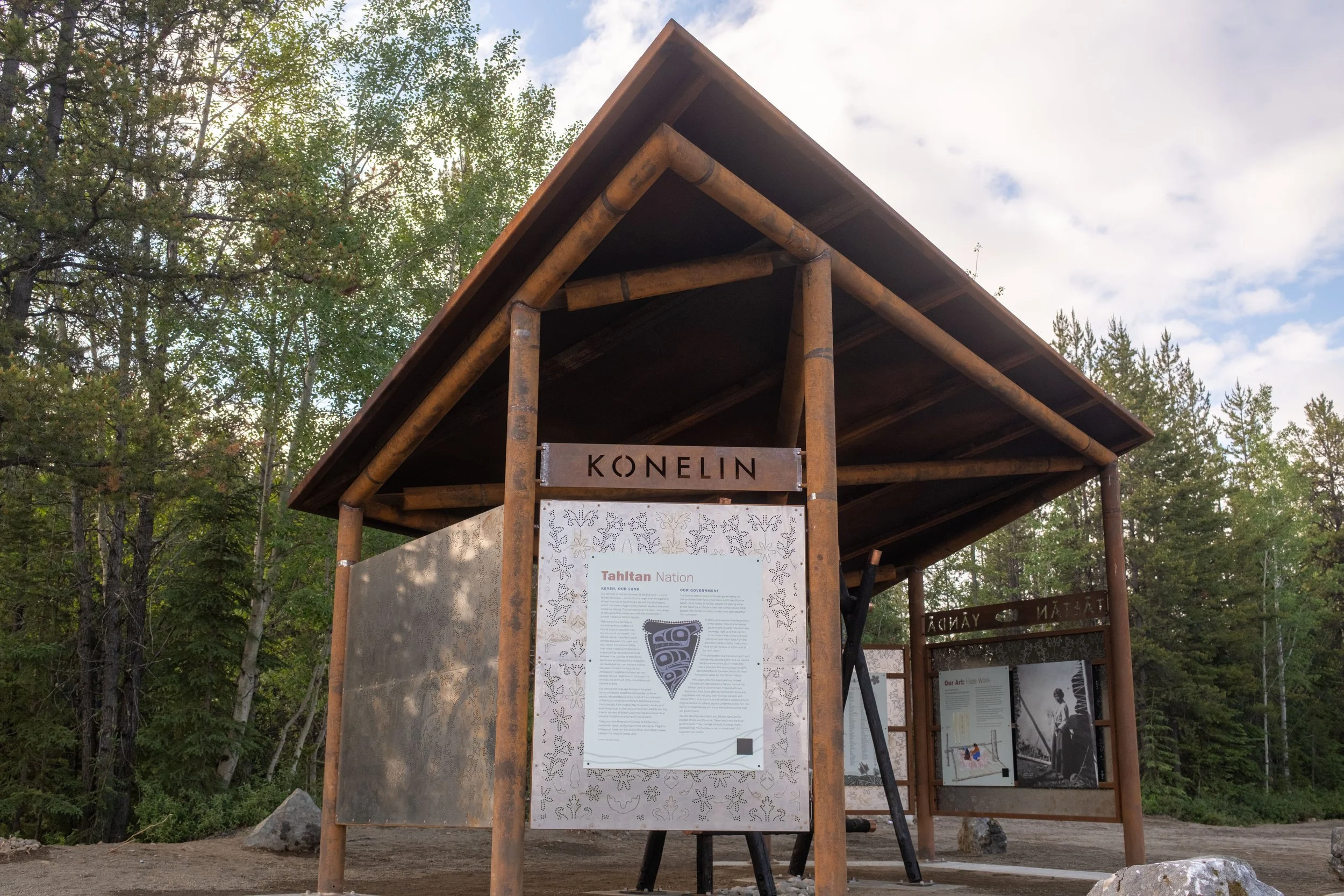
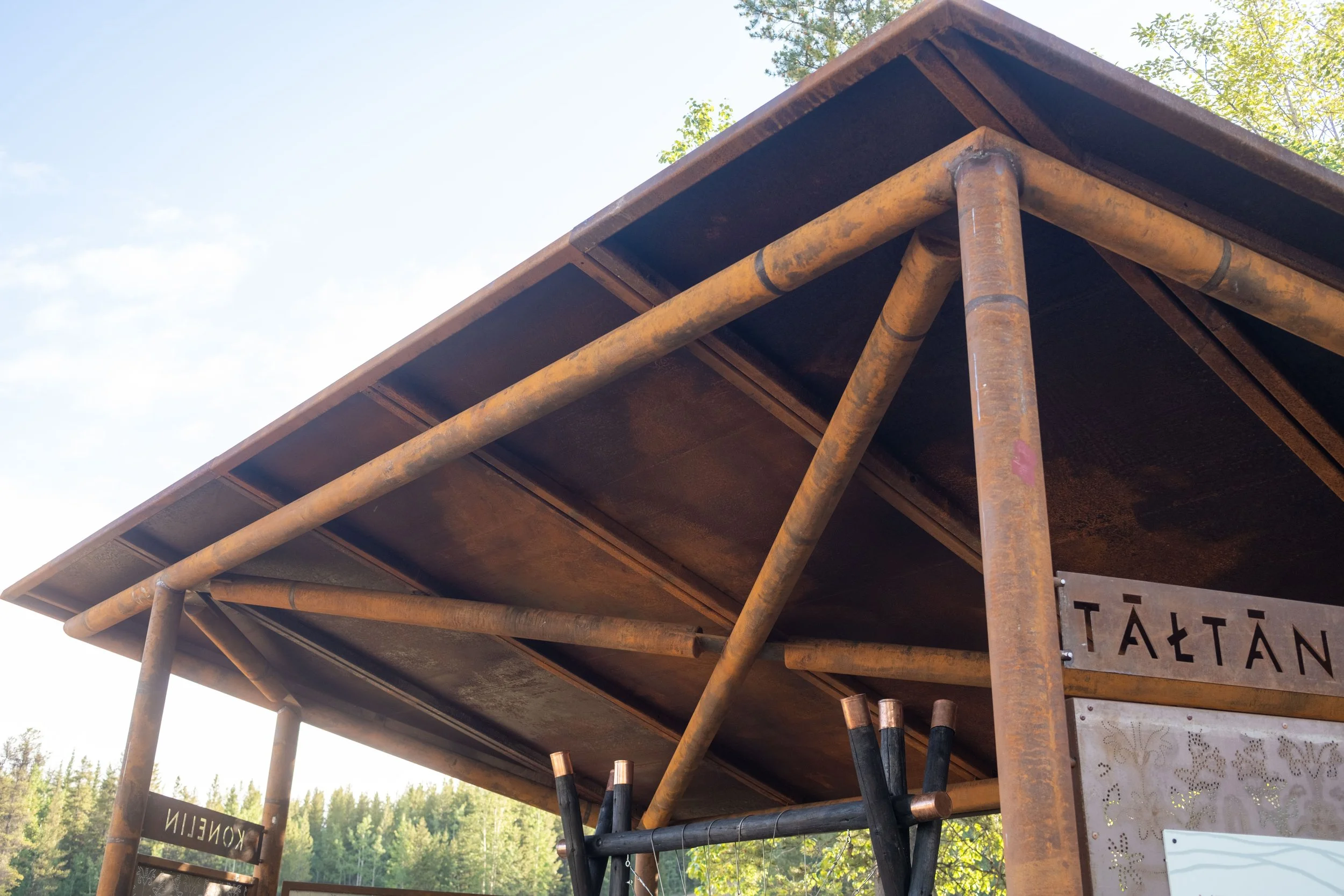
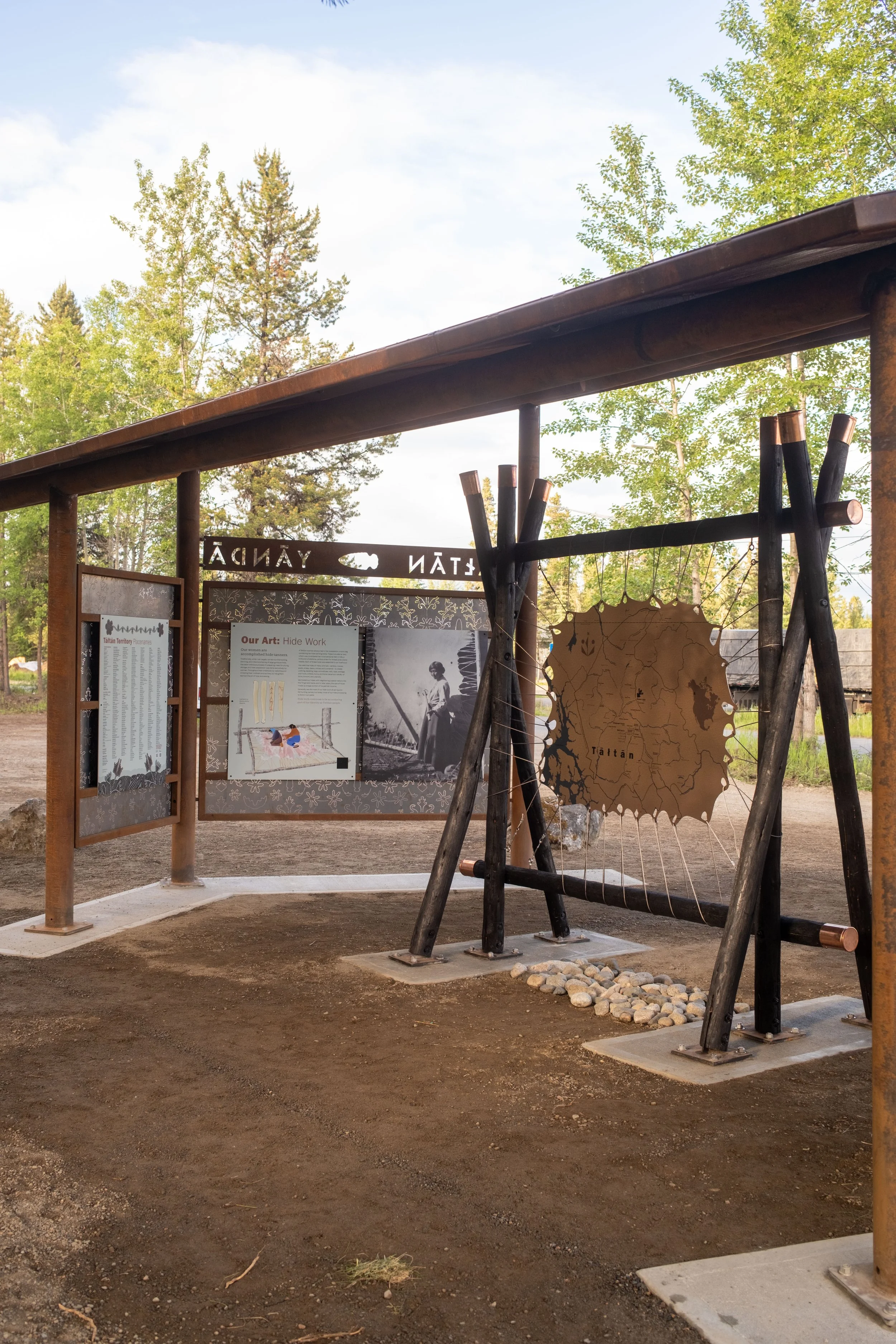
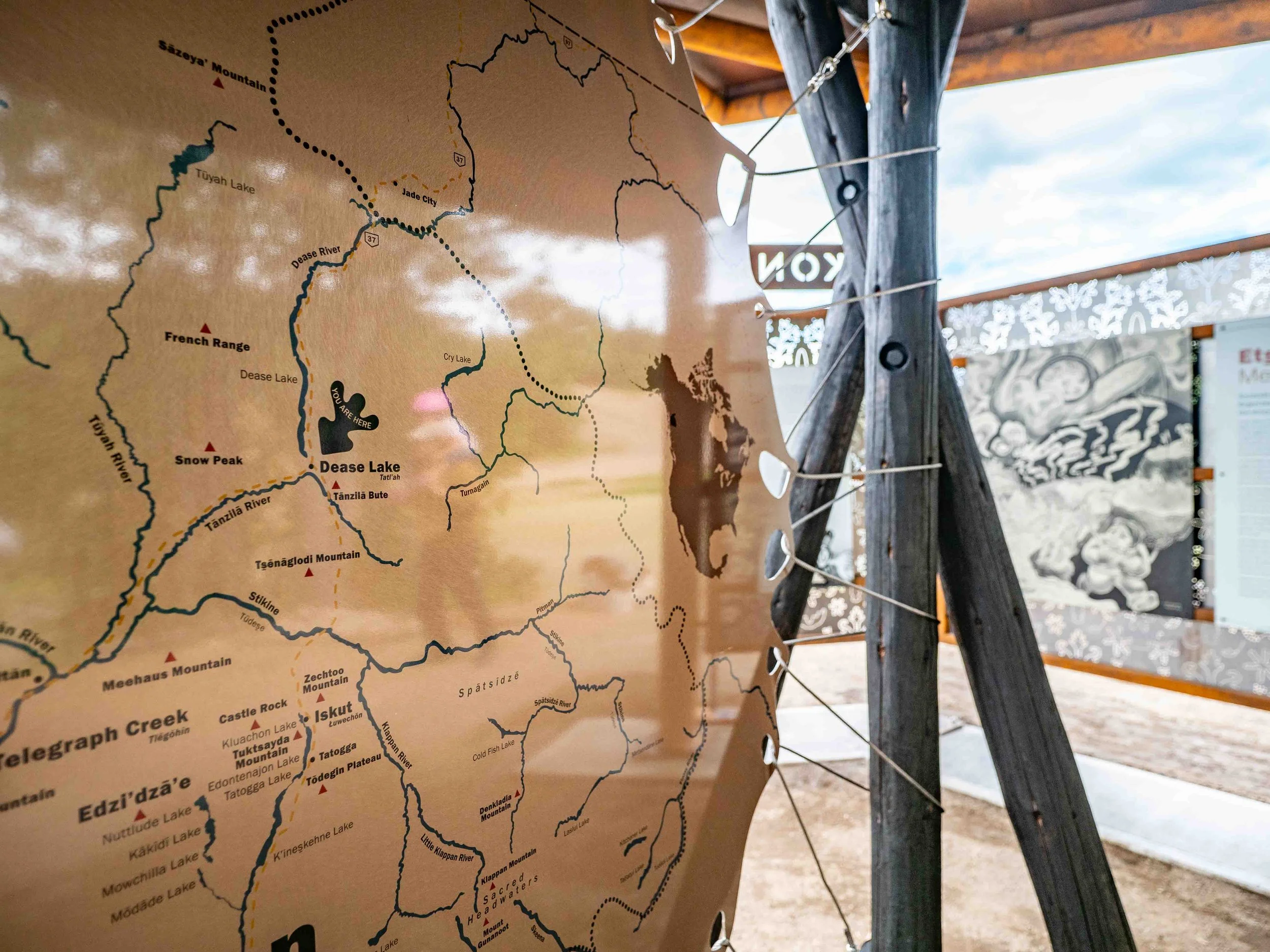
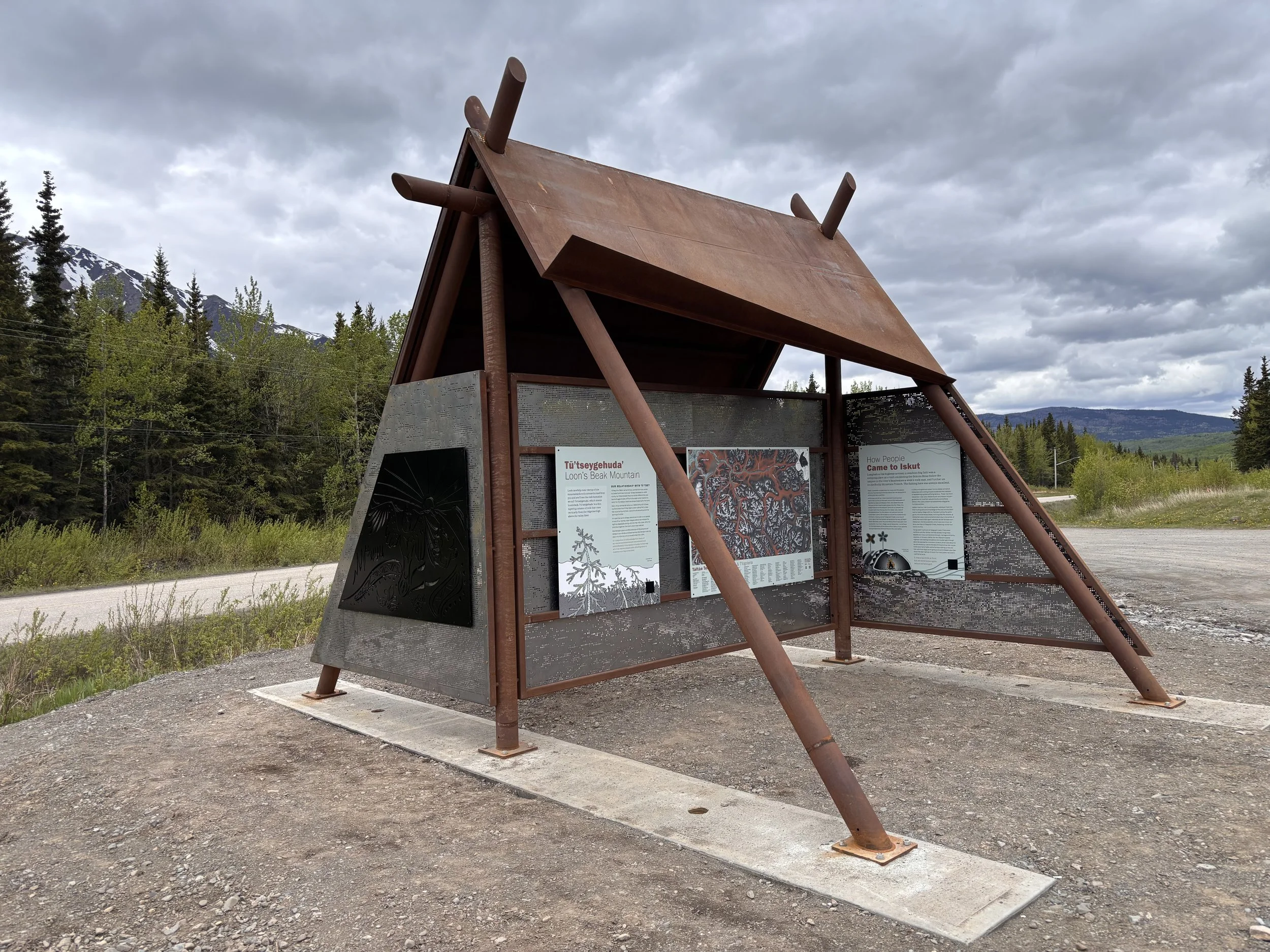
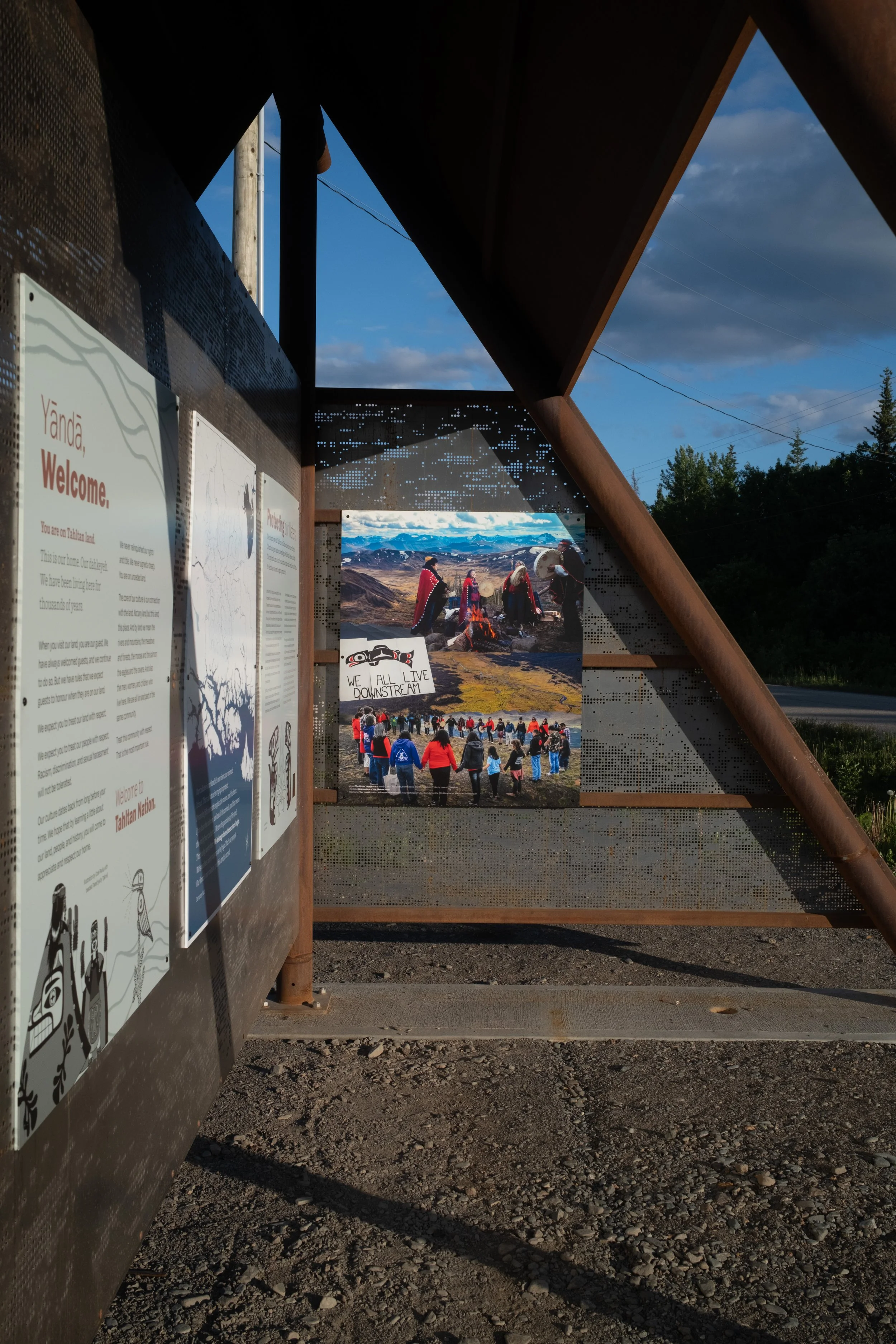
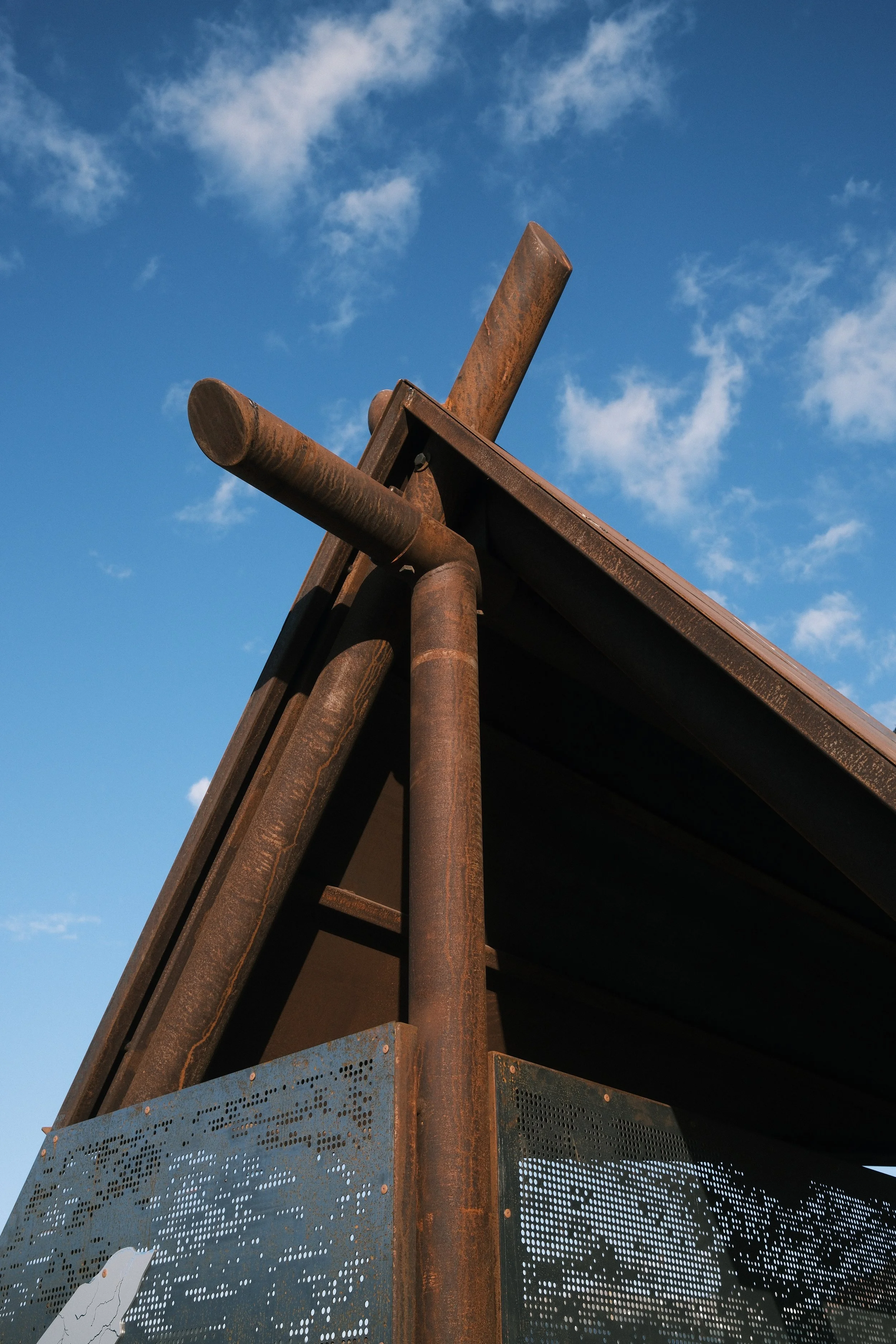
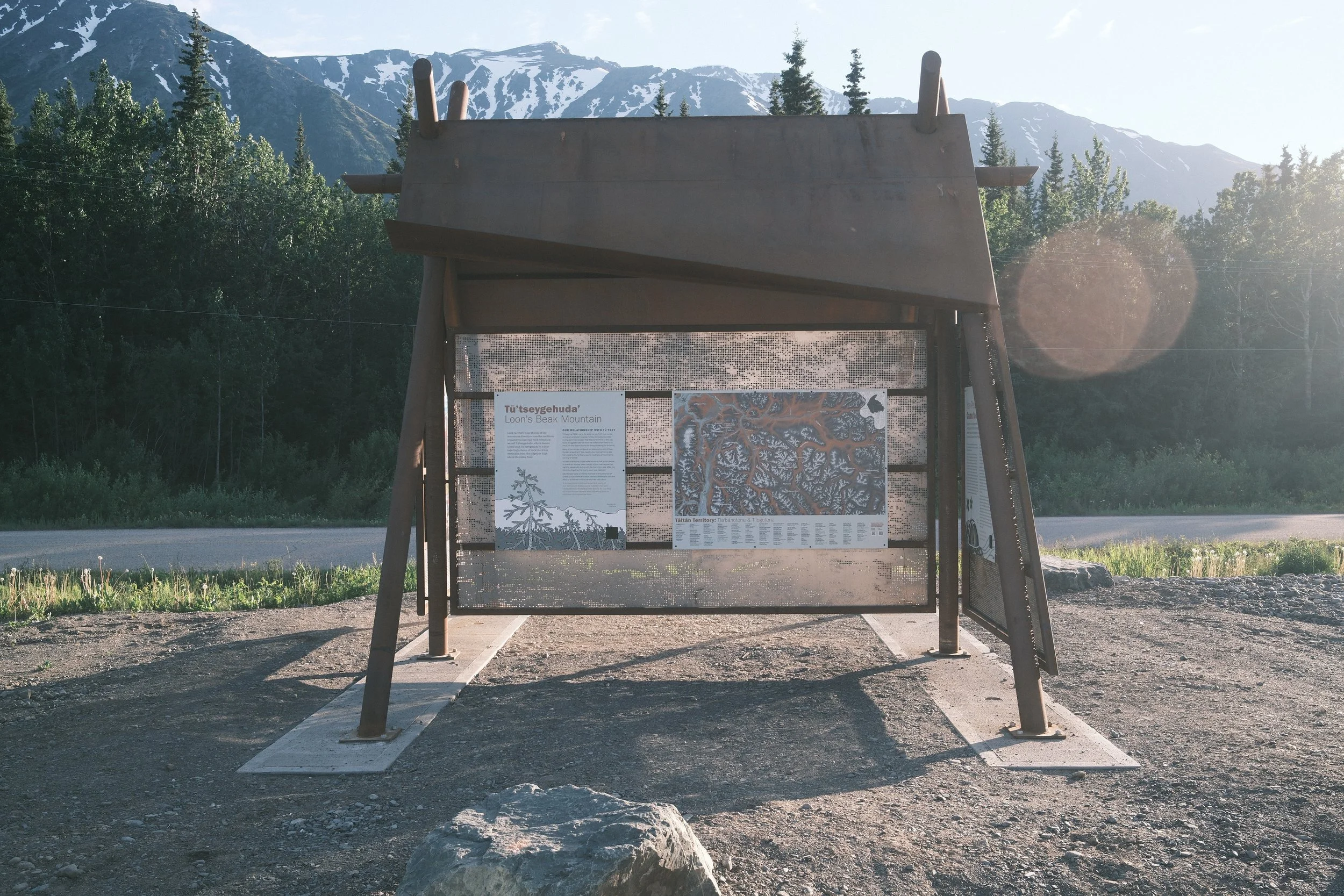
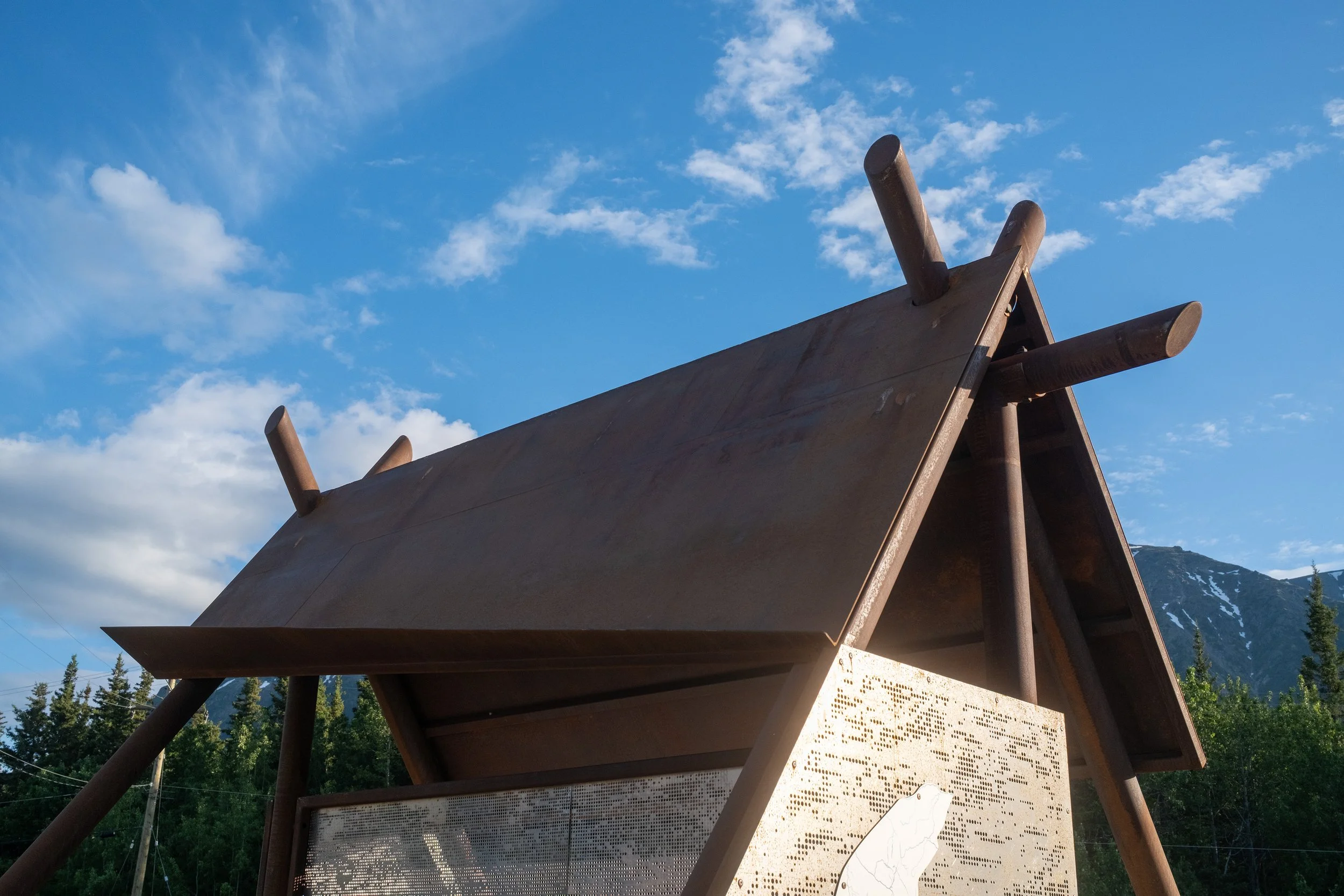
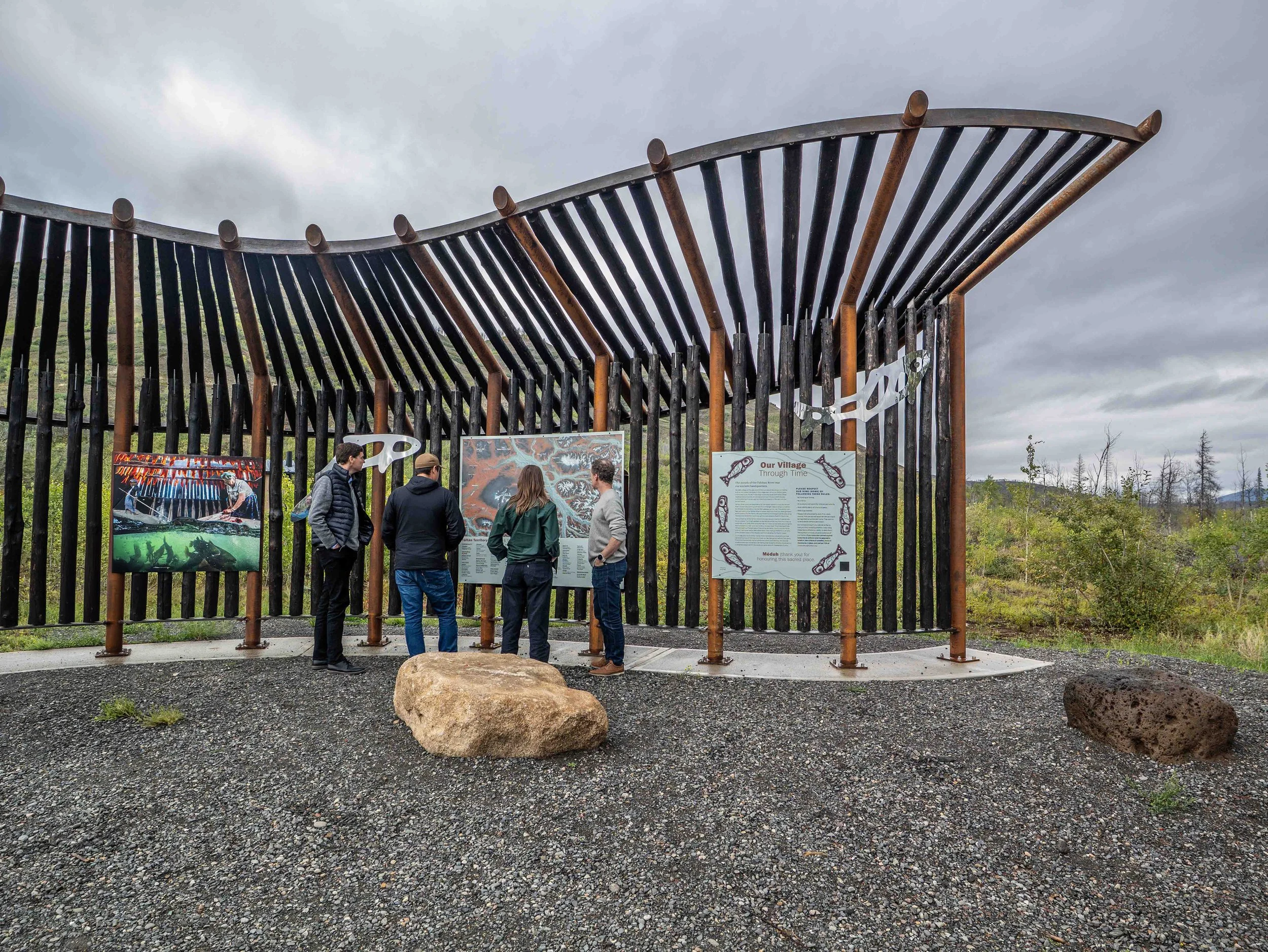
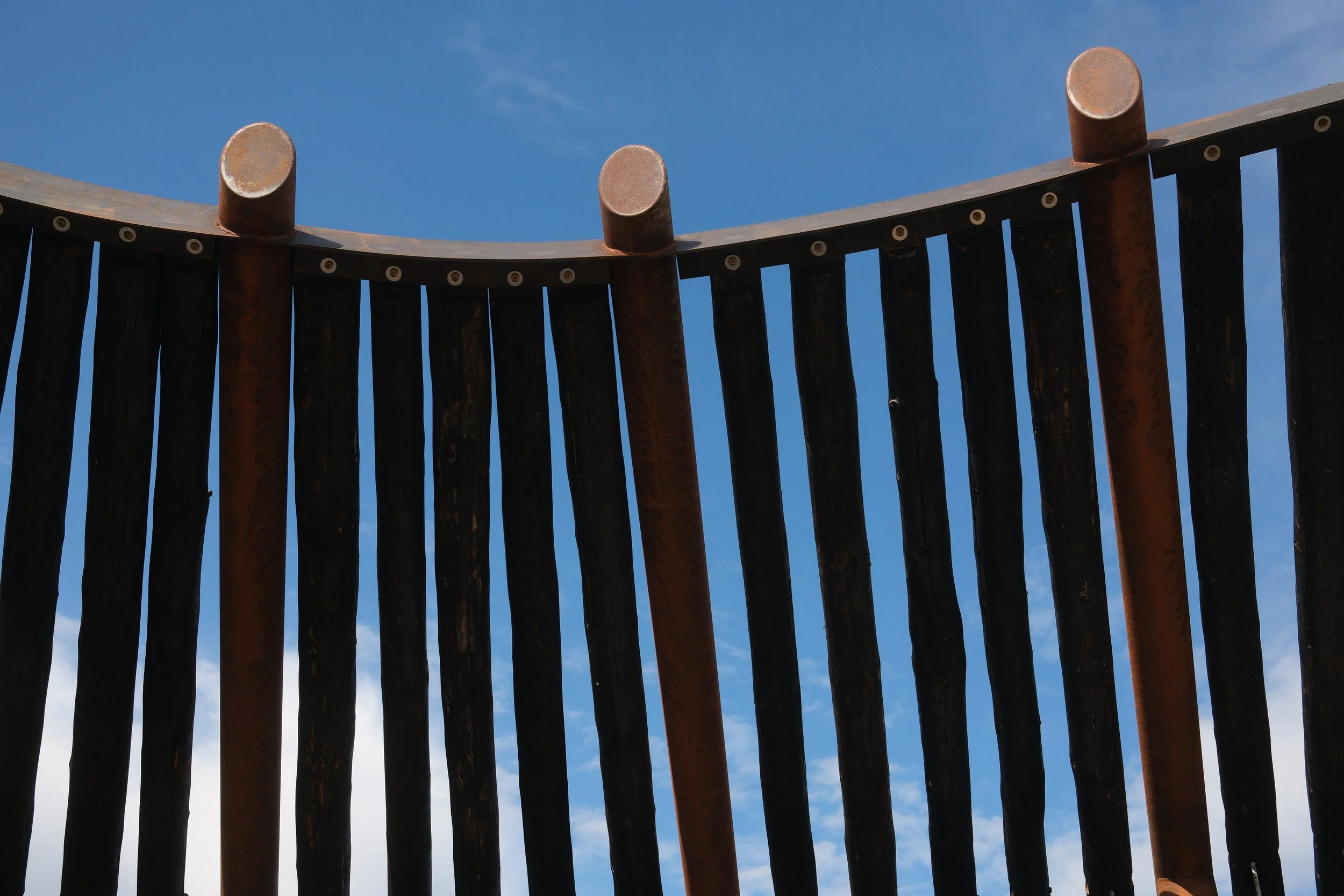
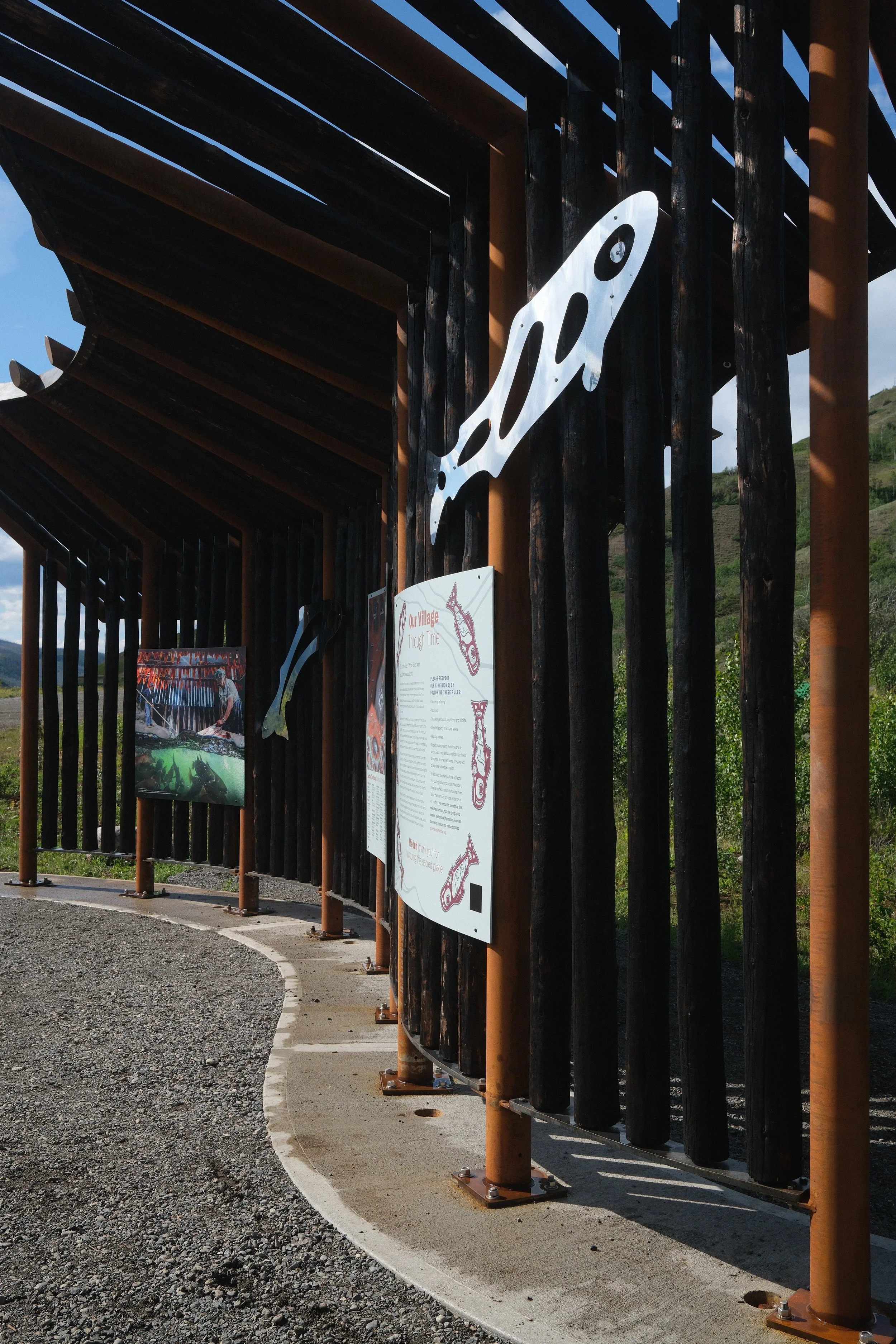
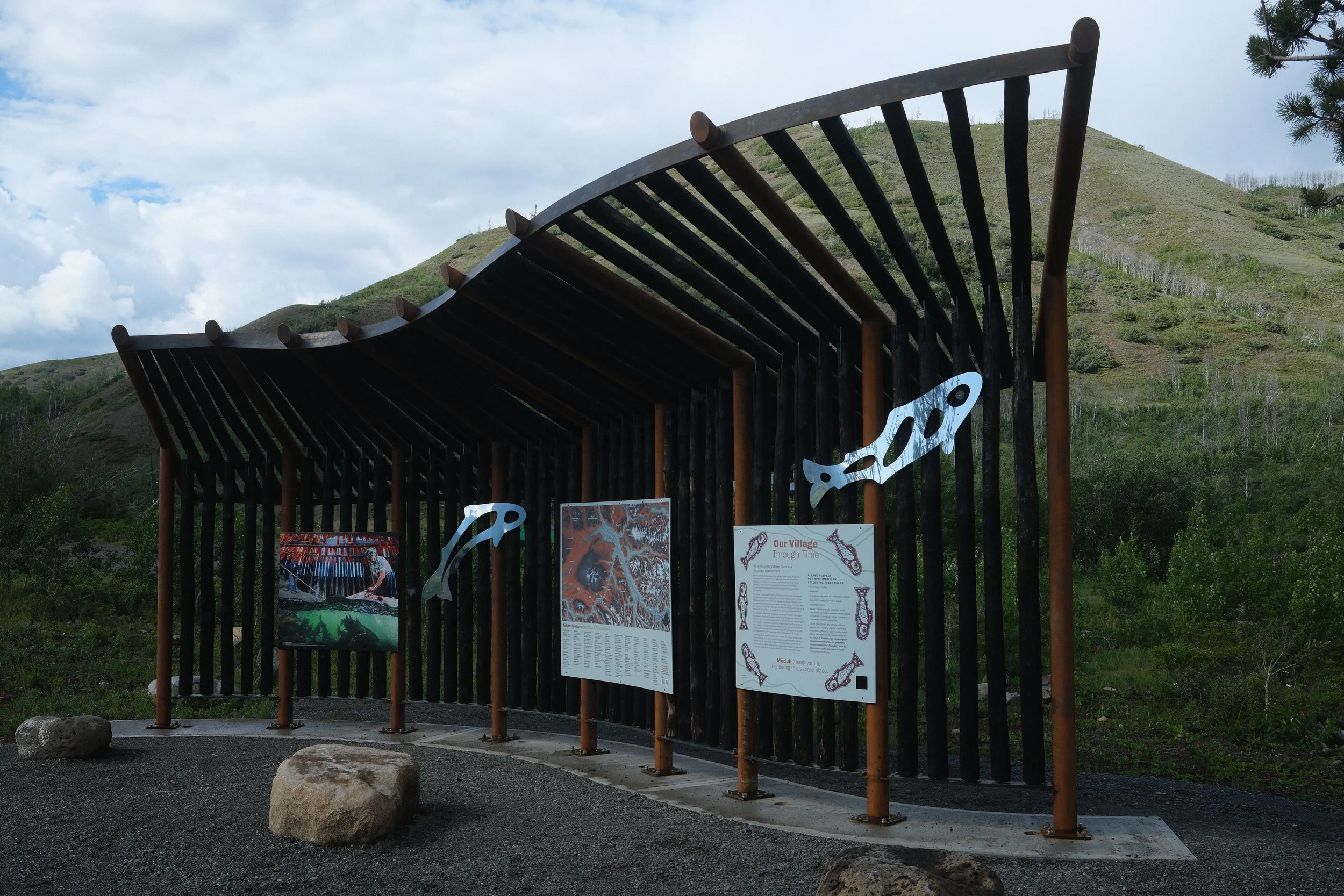
Each pavilion structure is especially designed to serve as an attractive rest stop, providing shelter and seating, alongside clear wayfinding (“You are Here!”) and site specific cultural information. The pavilions are easy to find from the highway, serving as iconic points-of-interest and a tribute to the Tahltan People.
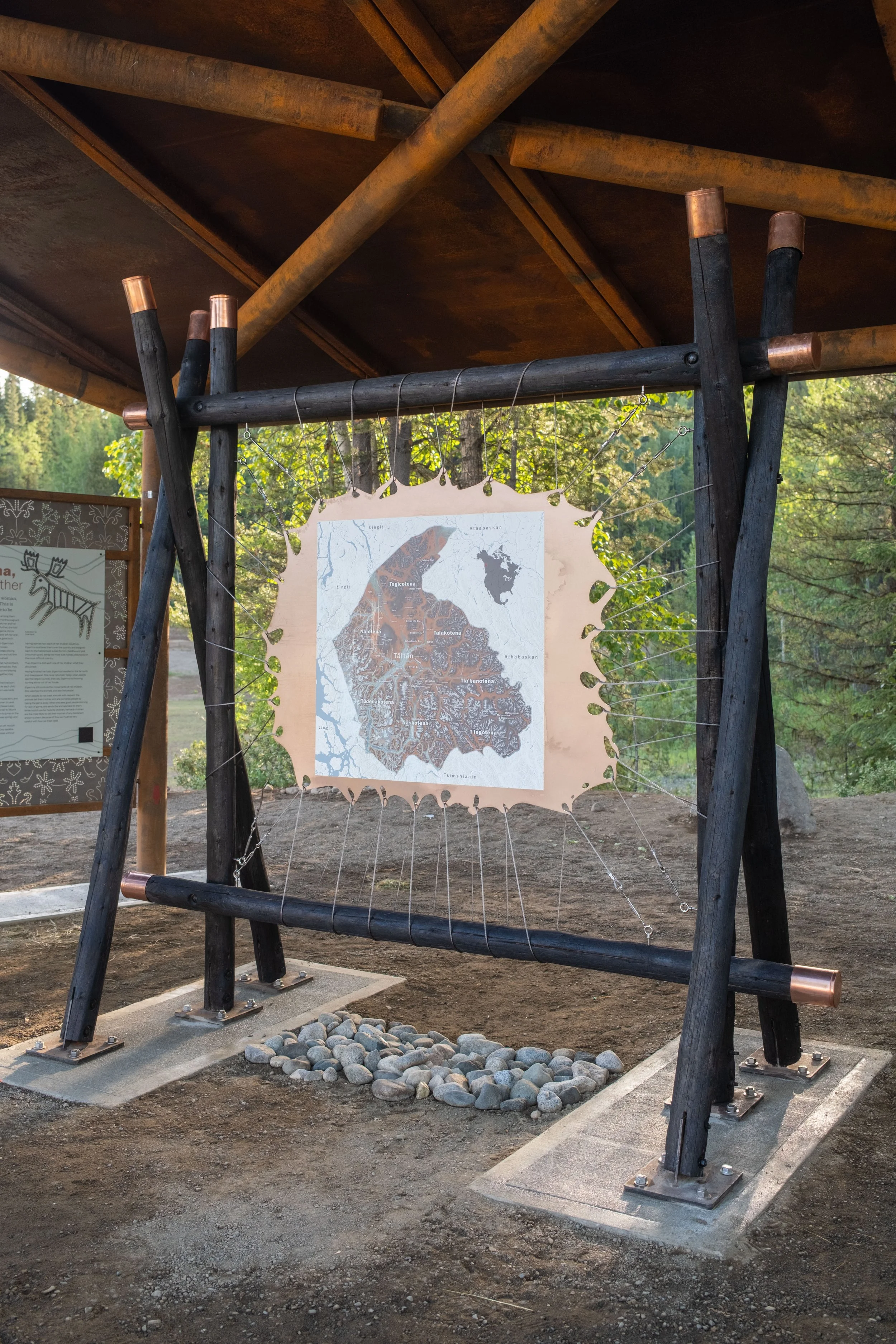
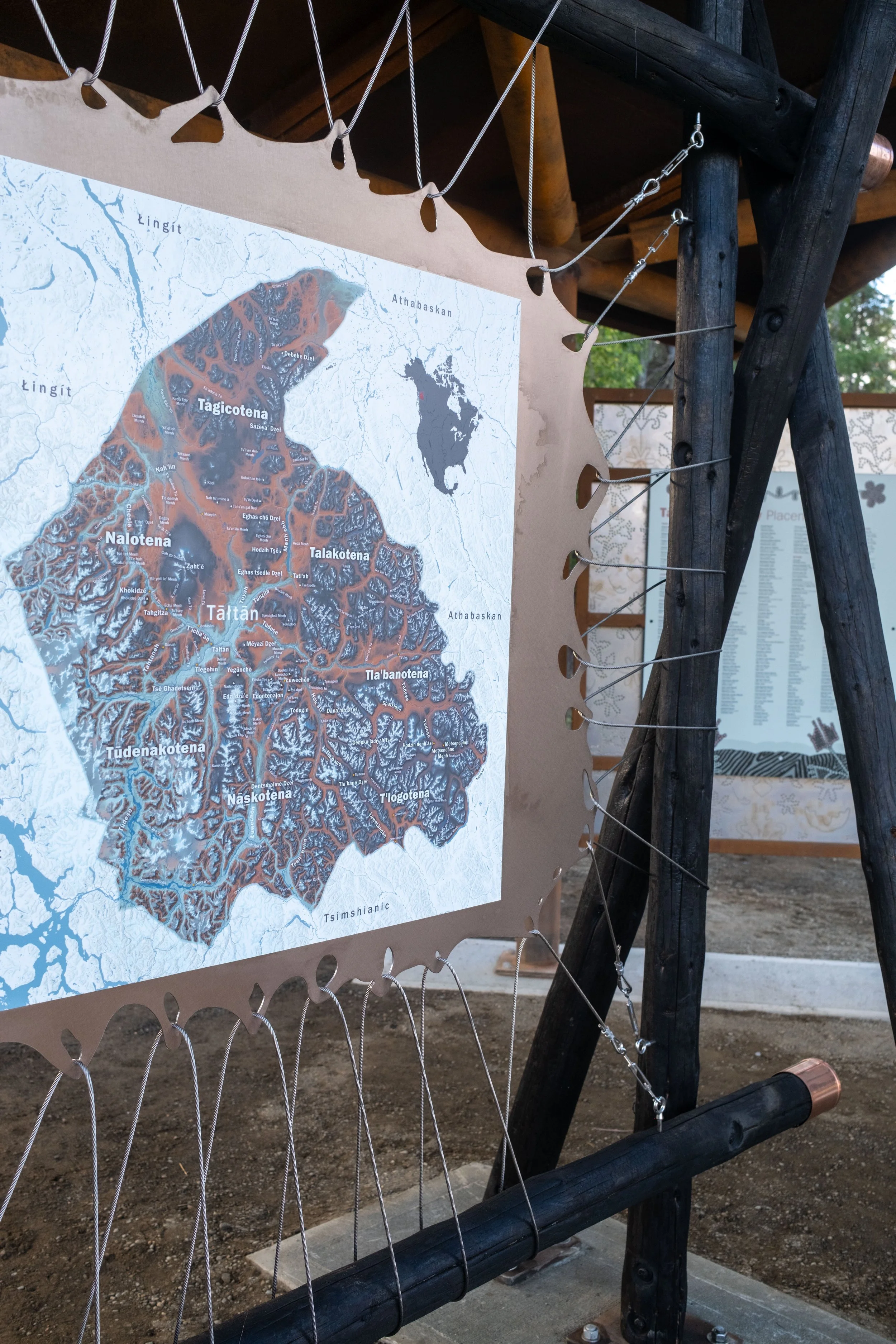
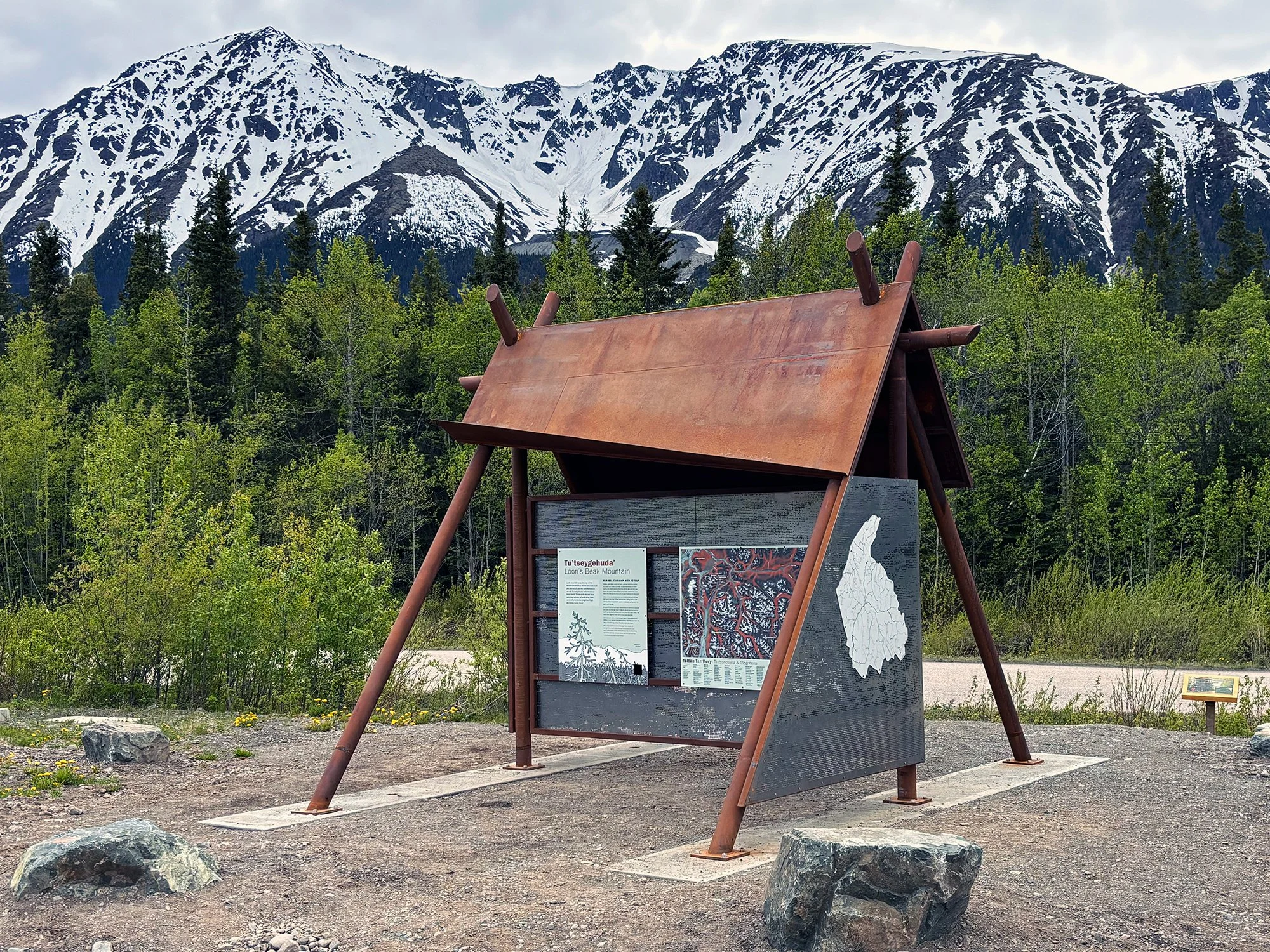
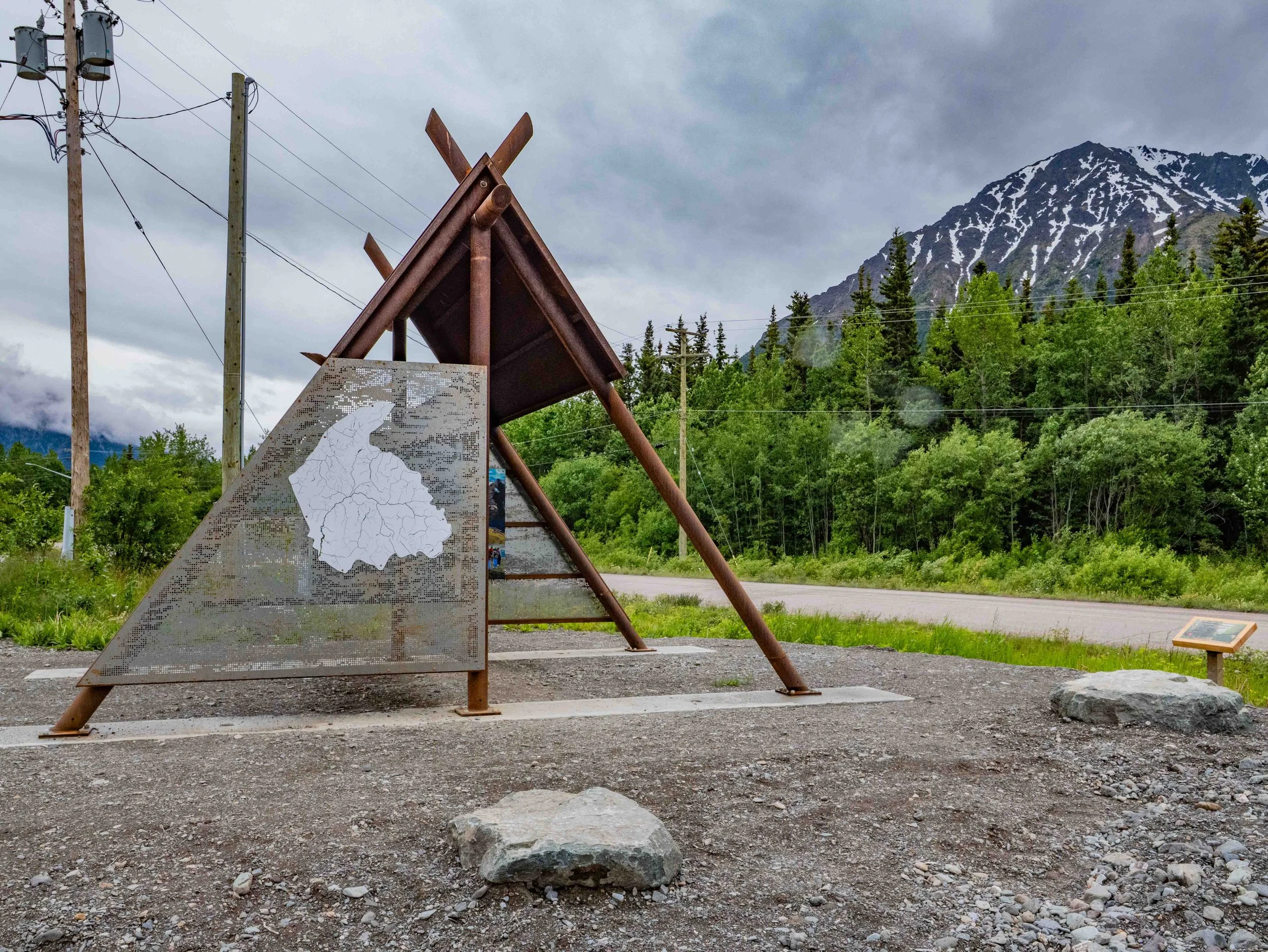
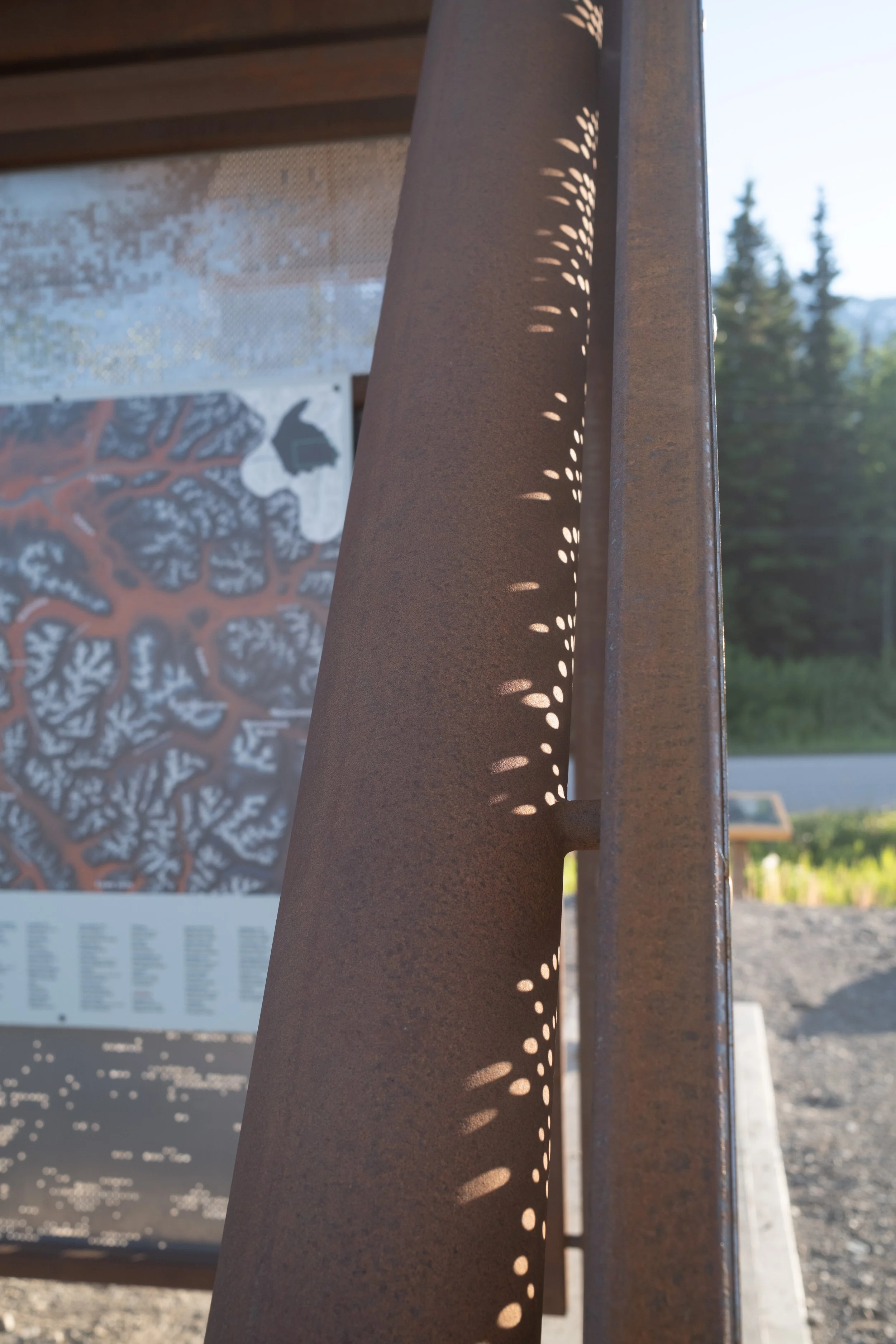
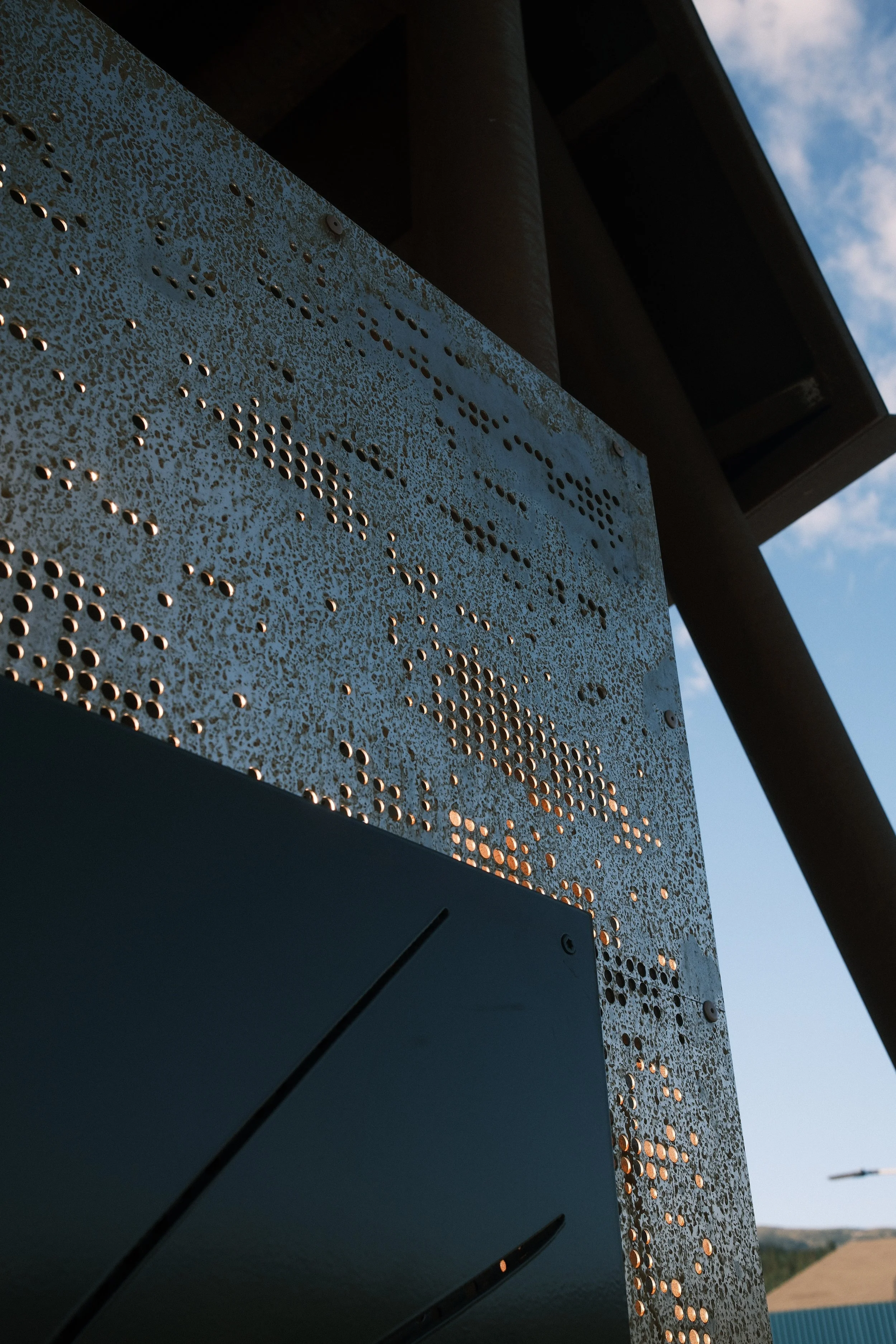
The central pavilion located in Tatl’ah/Dease Lake, Estse, and is inspired by Tāłtān hide tanning traditions and the respectful relationship Tahltans have with more-than human beings. South of Estse, in Łuwechōn/Iskut is Kōjihge, originally consisting of two structures, represents our nomadic camp homes: Tū Kime (Water House) has a water perforated corten steel skin and tells of the Tāłtān reverence for water, Nanh Kime (Land House) was conceived to have an obsidian perforated skin and tells stories from the land. Traveling the road to Tlēgōhīn/Telegraph Creek is Tanadah (Salmon Run) which is in the silhouette of a smokehouse, curved like the current of Tūdes̱e chō, the Stikine River.
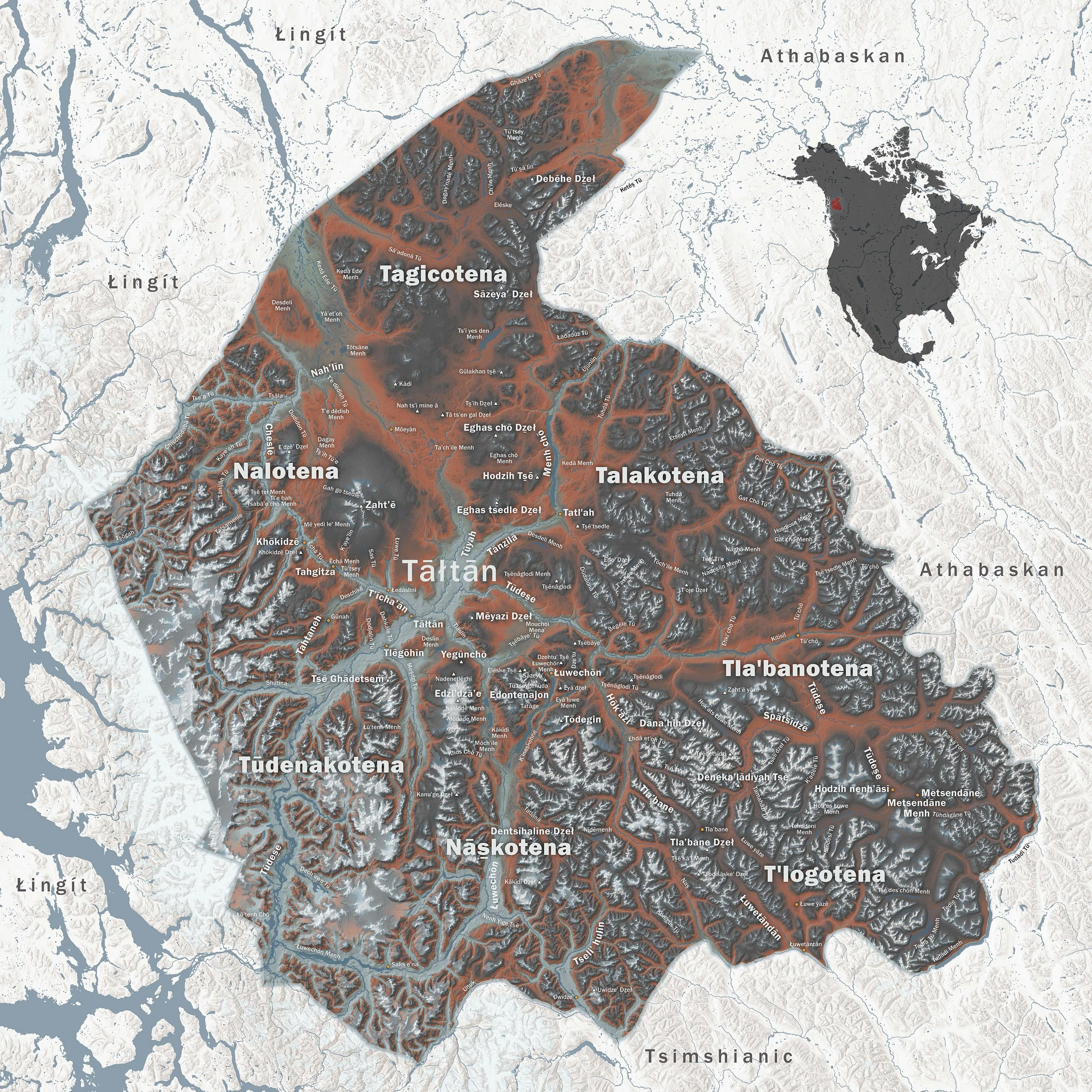
Tsēmā Igharas, Kyle Singbeil, 2026
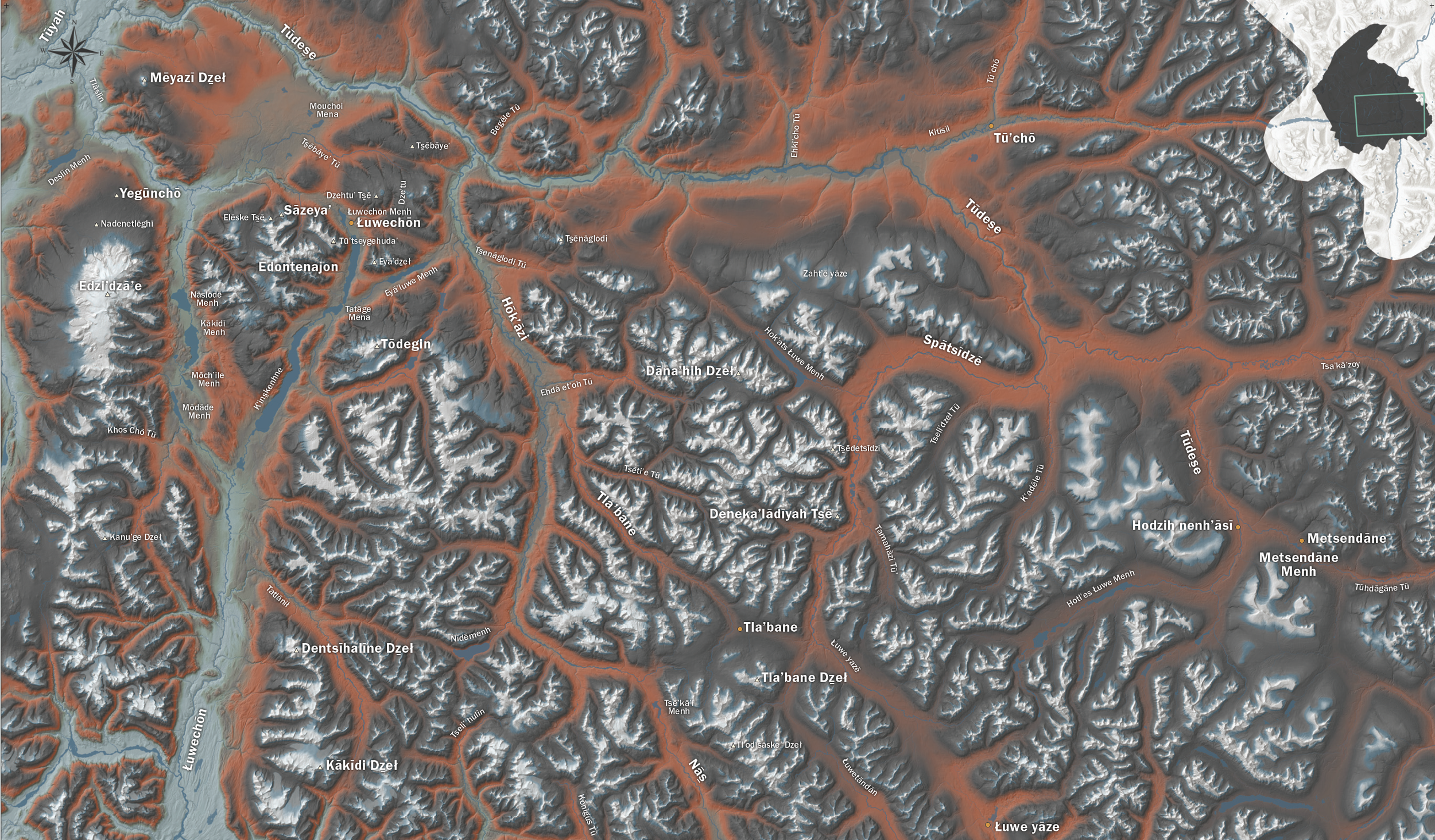
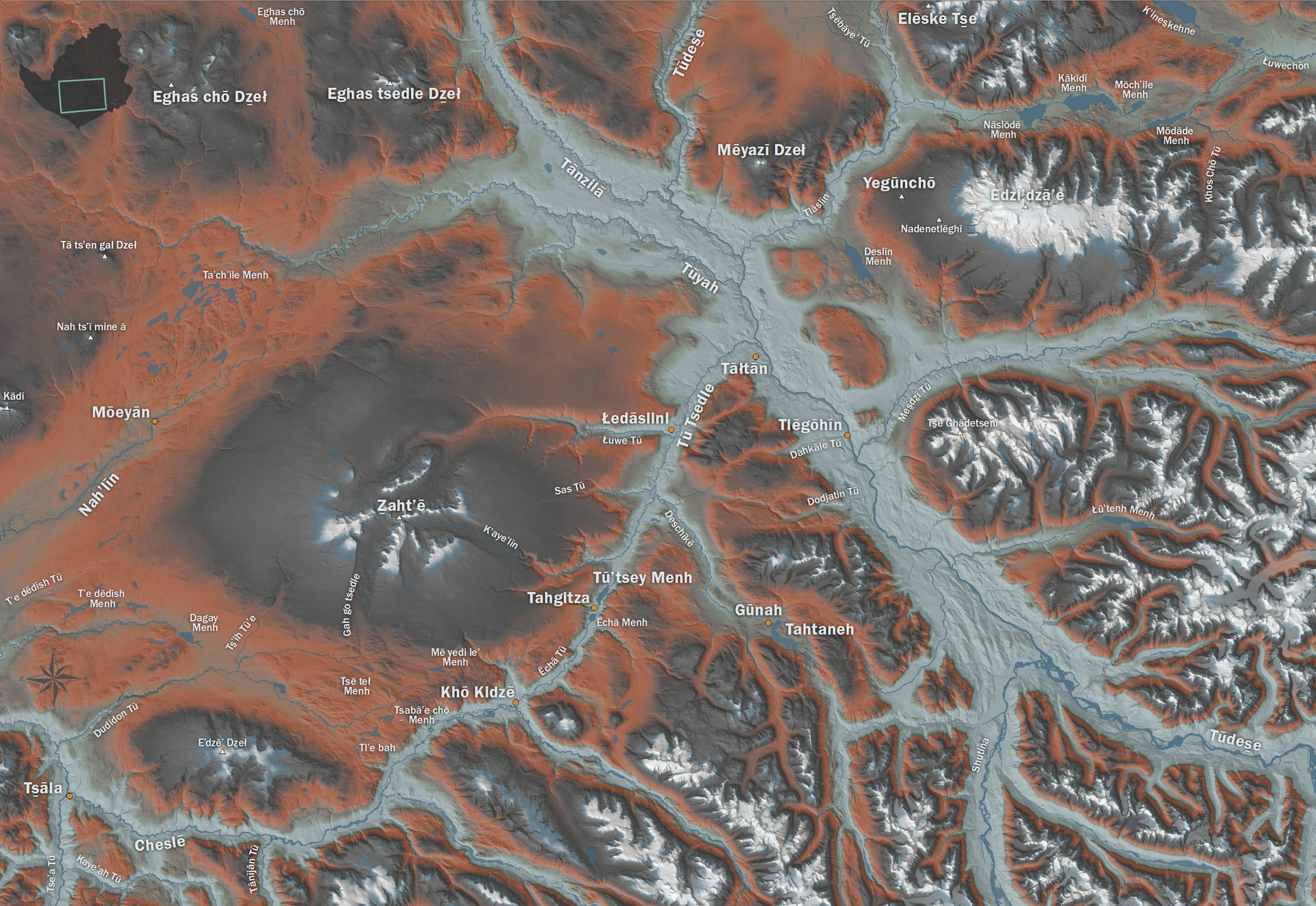
Creative Direction: Tsēmā Igharas, Cartographer: Kyle Singbeil, Designer: Ria Kawaguchi. Research: Rosemary Loring, Benjamin Jones, Kailea Loften, Curtis Rattray 2026
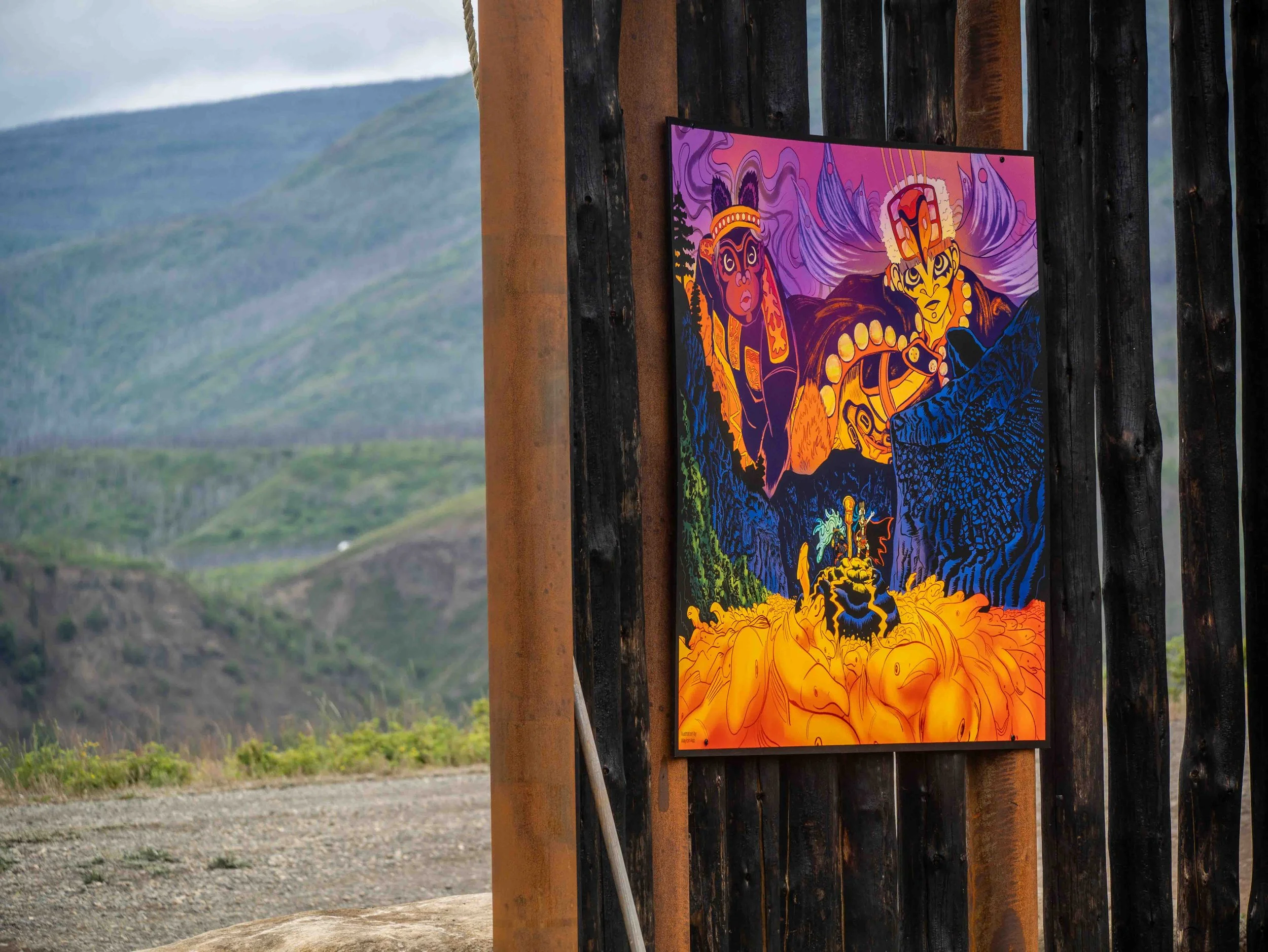
Edziza’s Obsidian Story sign installed at “The Burn” rest-stop, featuring information about Tāłtān obsidian and trade routes.
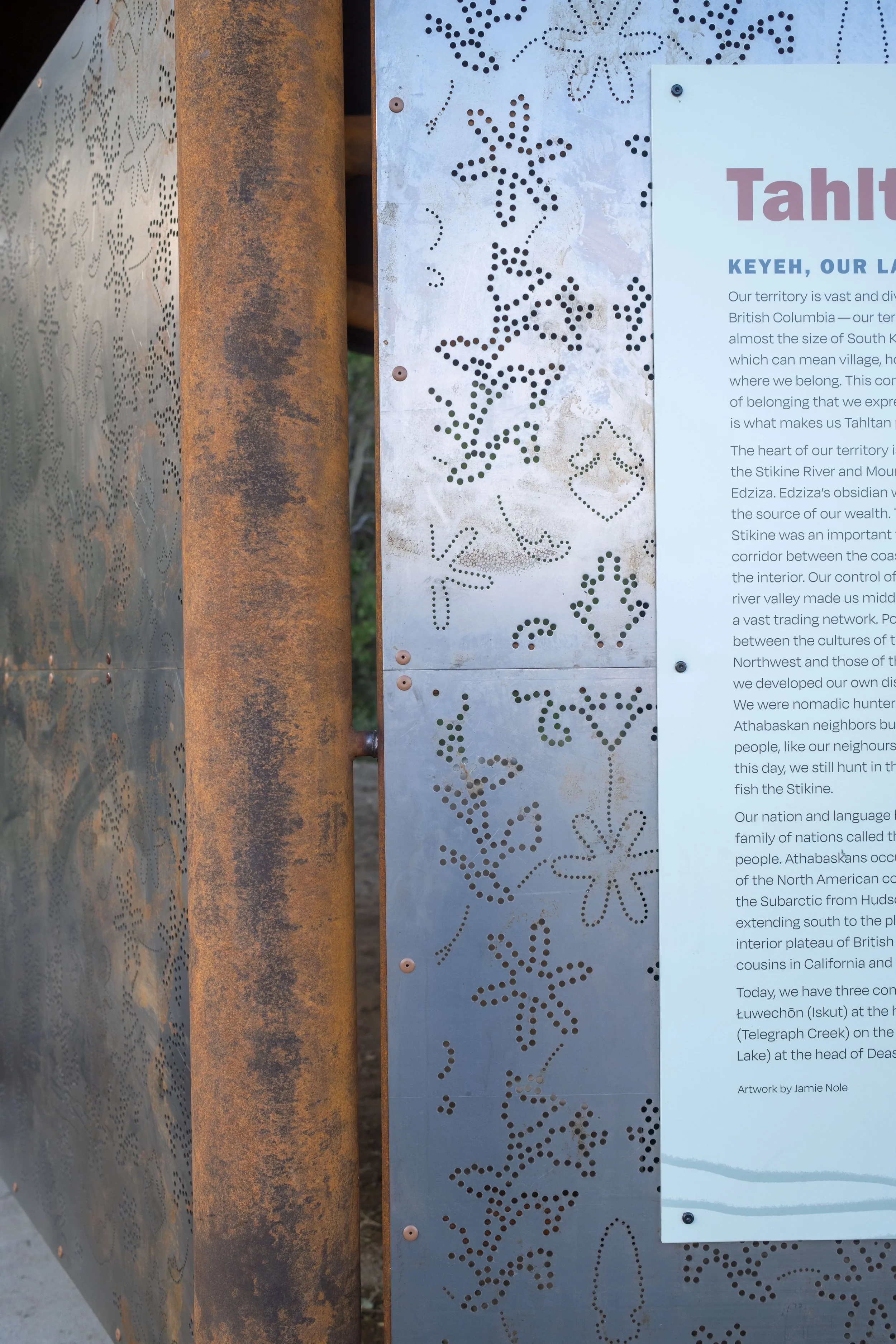
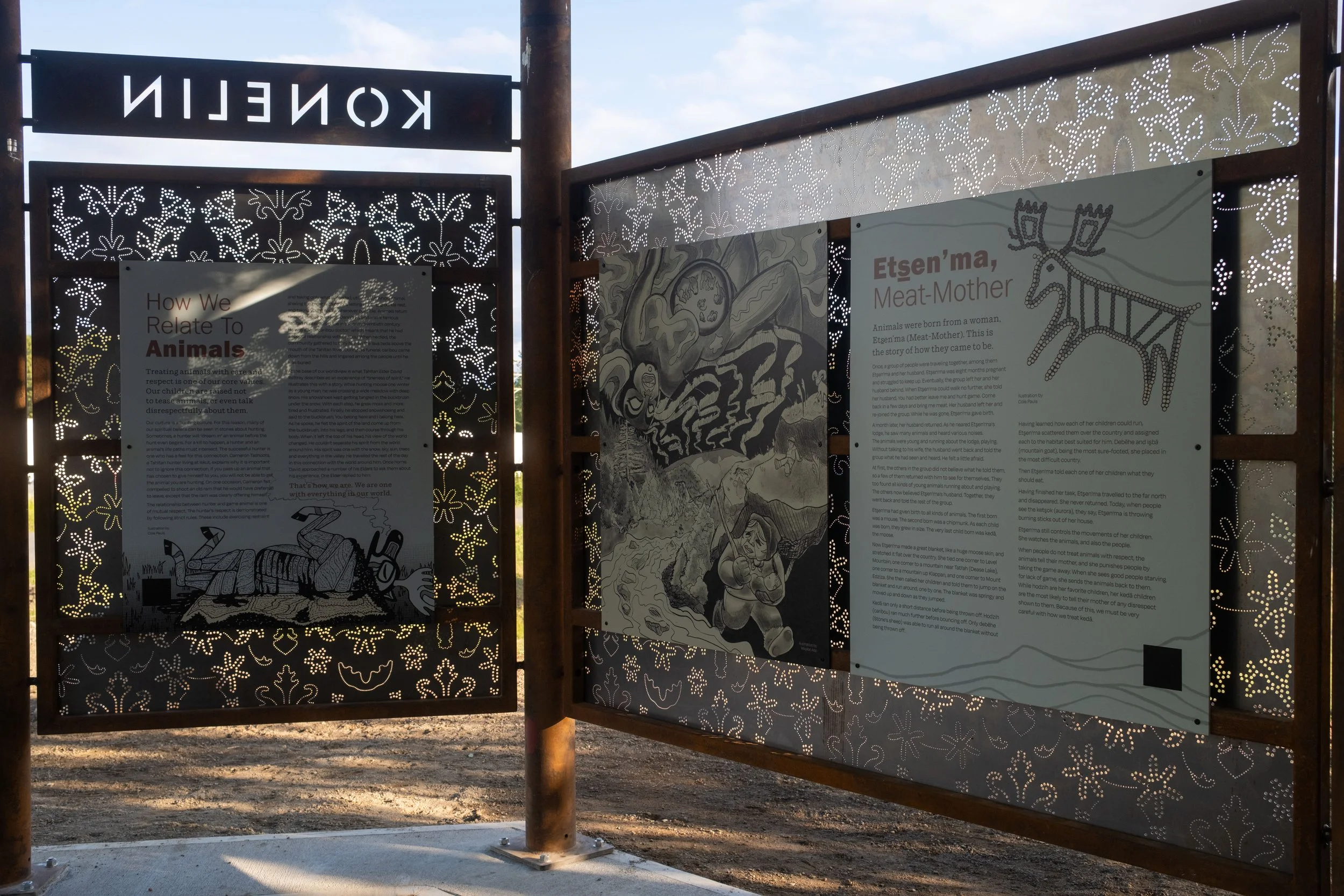
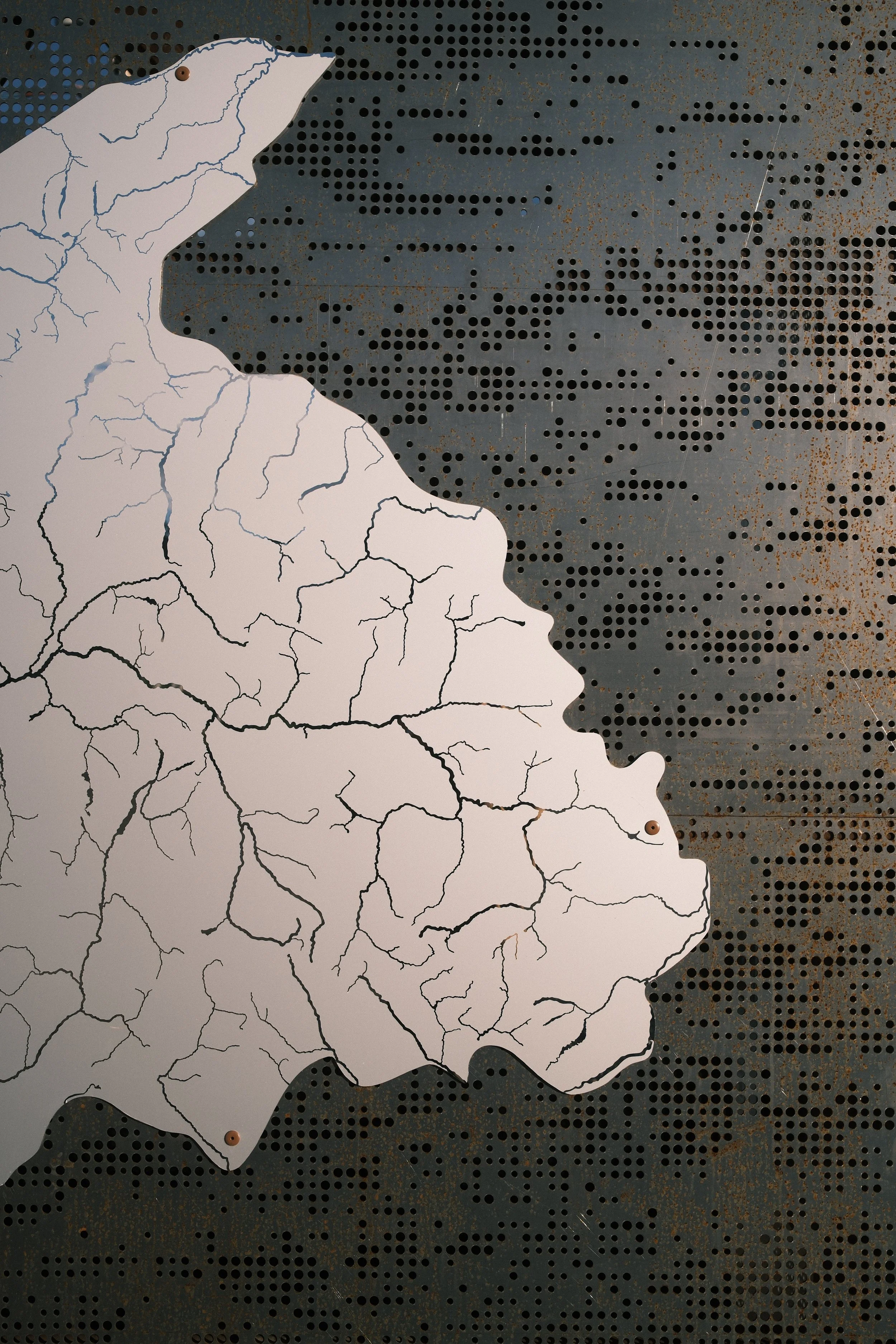
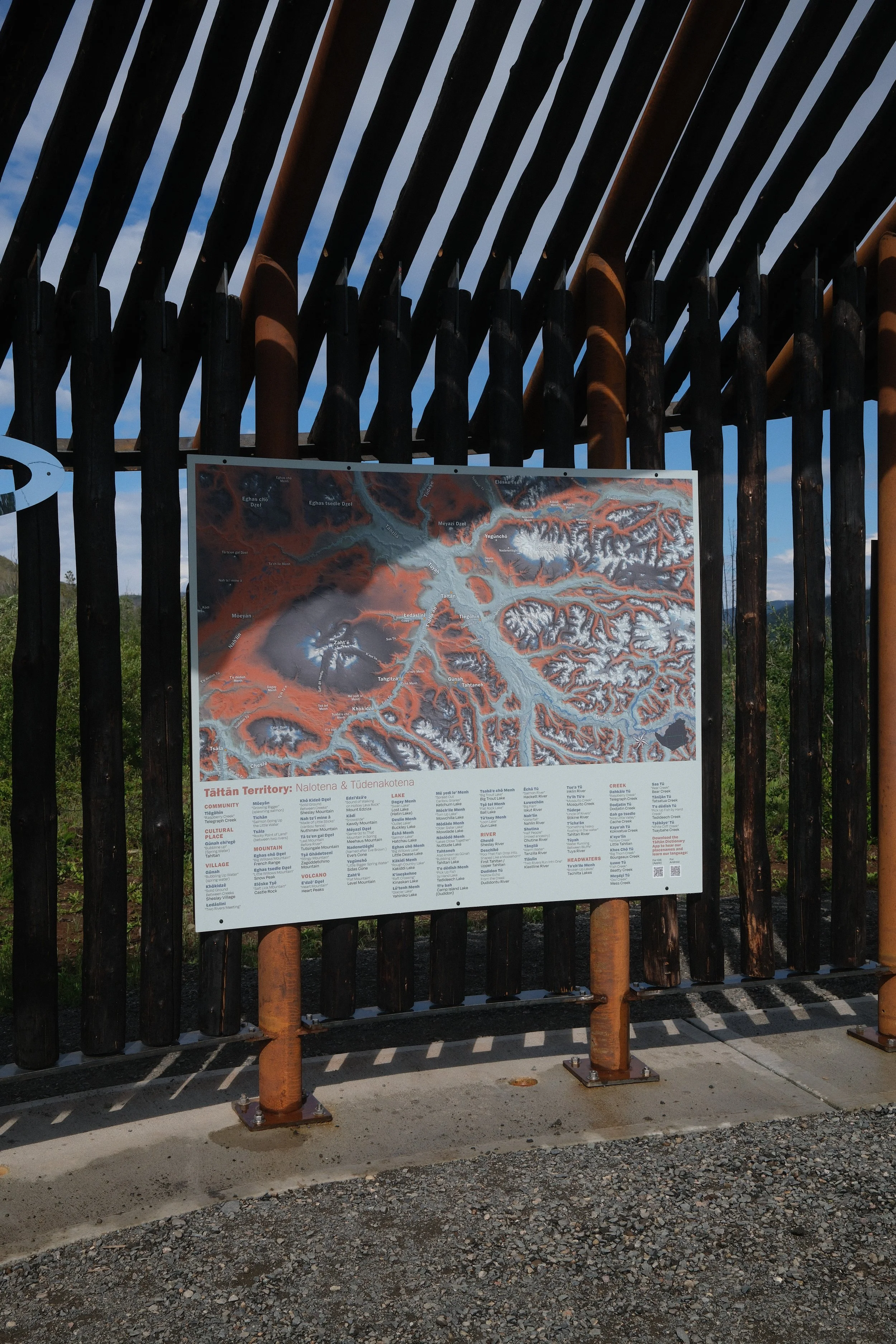
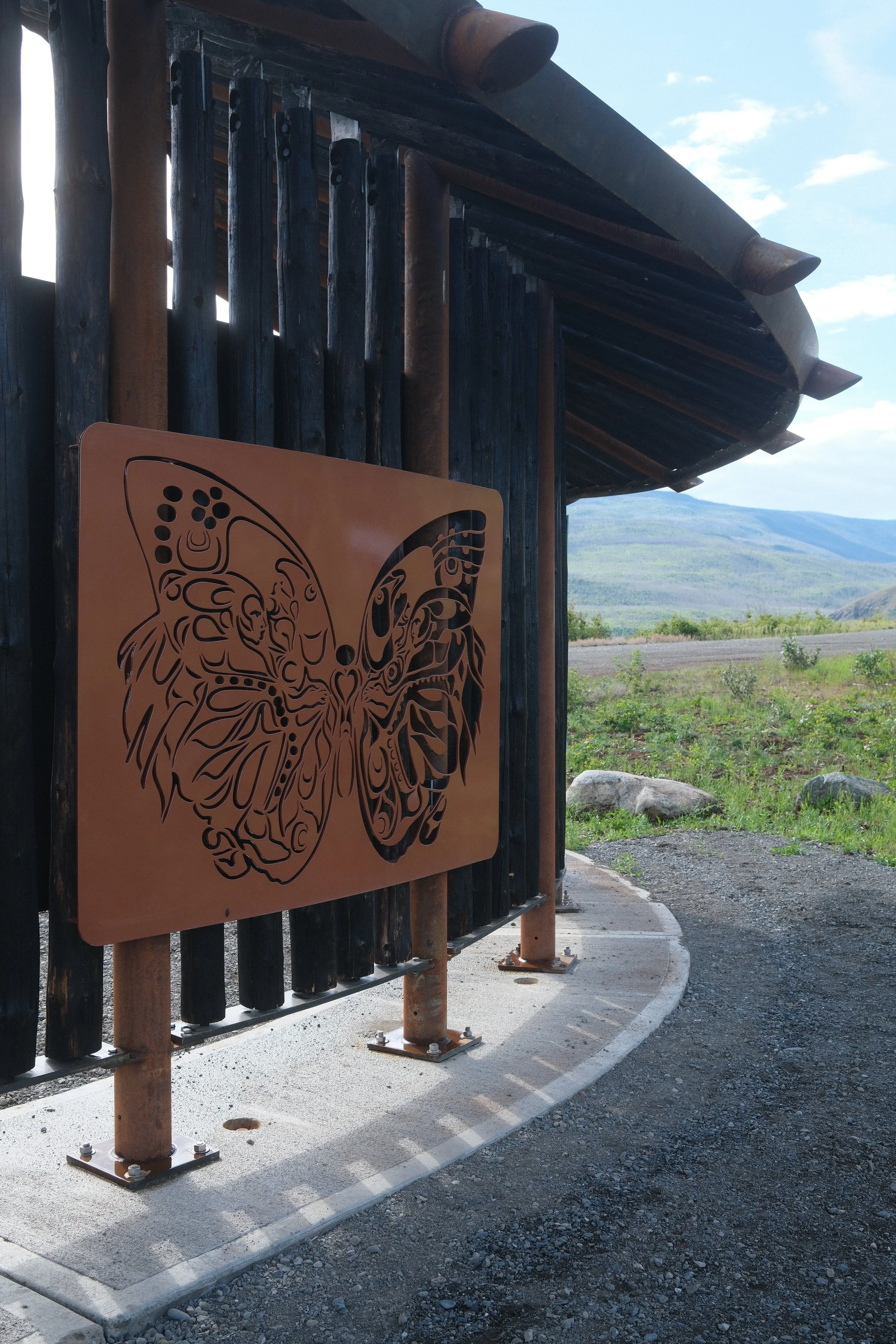
The Pavilions were designed to feature a showpiece territorial map displaying Tāłtān place names for points of significance. At Estse, the entire territory of mountains, rivers, lakes, communities, volcanoes, and more are displayed alongside a legend connecting the Tāłtān name to its meaning and English name. Adjacent to the map, special story panels showcasing land and culture are complemented with artworks commissioned by Tahltan artists. For Kōjihge and Tanadah, localized regional maps are featured at the center of the pavilions to show an in-depth representation of the area. The map colour palette draws on the colours of Obsidian as artistically rendered in Tsēmā’s series, Emergence: Obsidian Portraits. These colours were used to create a one-of-a-kind topographical style in an extraordinary collaborative effort to re-assert Ancestral names brought forward by historians Rosemary Loring and Benjamin Jones. Tū Kime also features Tūdesemā, River Mother, specially created for showing the rivers birthing in Tahltan territory and where those rivers travel. With the artistic direction of Tsēmā and Adam Amir (TCG), in collaboration with cartographer Kyle Singbell and graphic designer Ria Kawaguchi, these maps serve as legacy projects for the Tahltan nation.
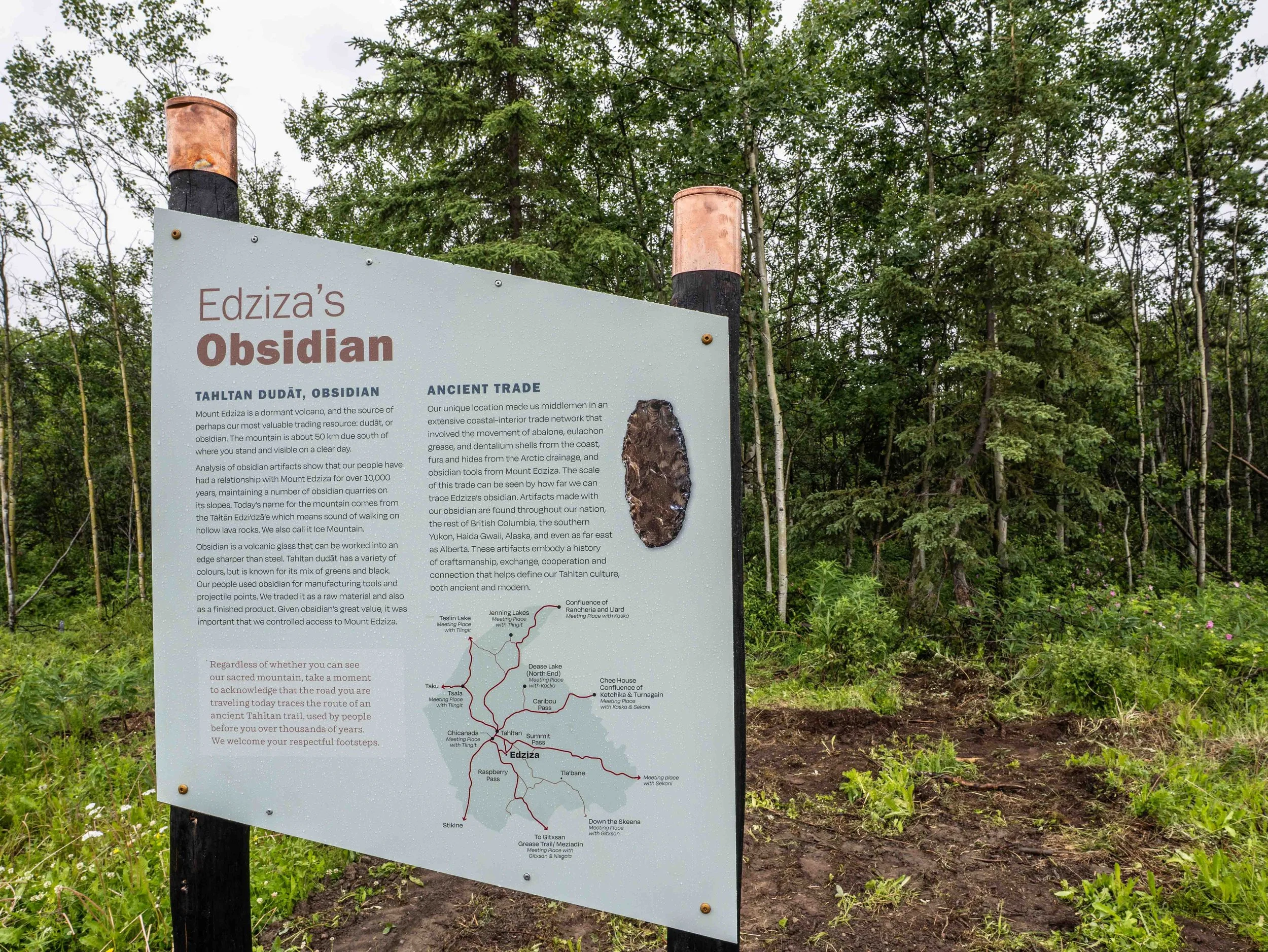
Image description placeholder
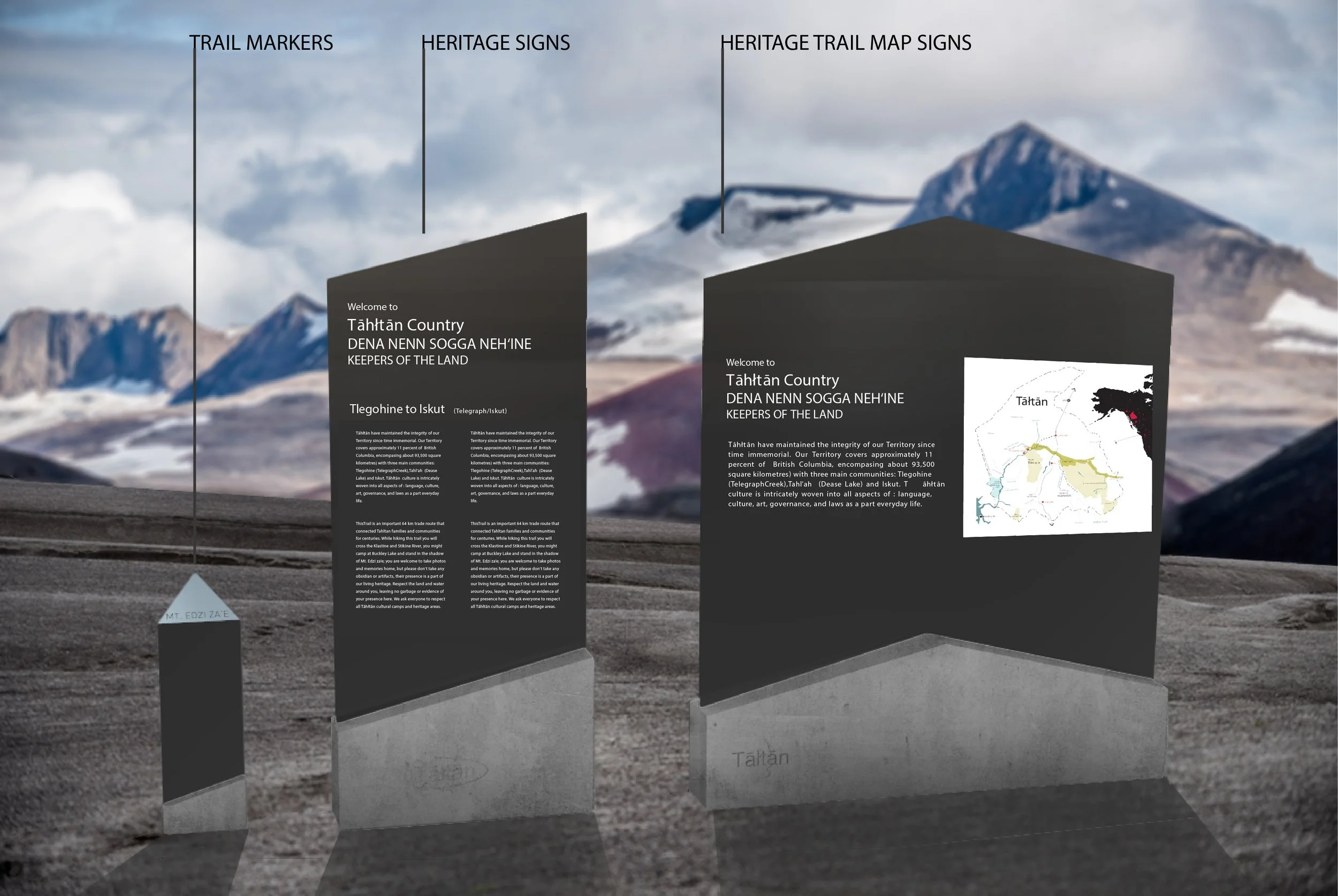
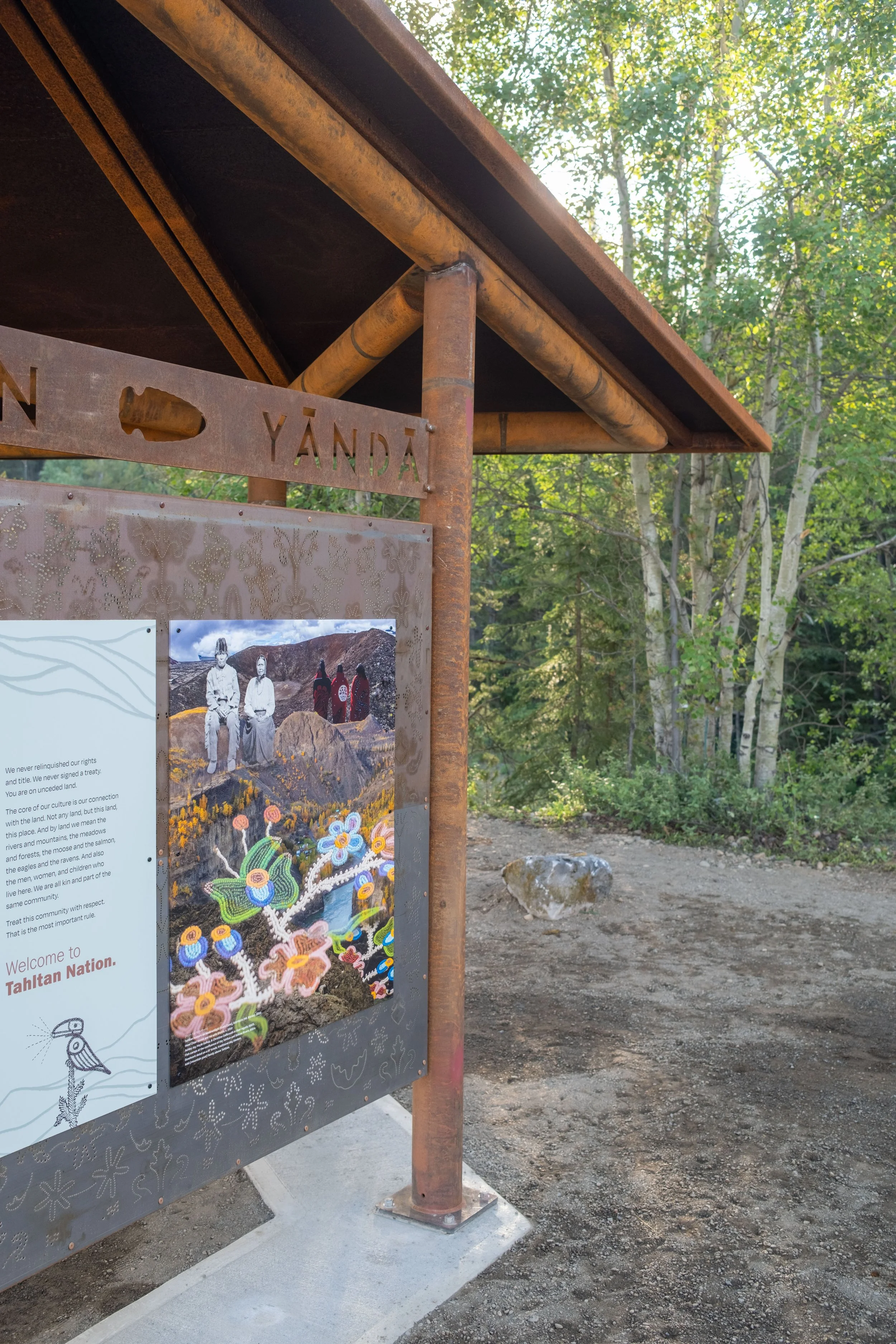
2018 Tāłtān Signs render of complimentary signage for the “Tahltan Nation” entrance sign used to inspire the design for the Story Signs. Design by Kelly Edzerza Bapty.
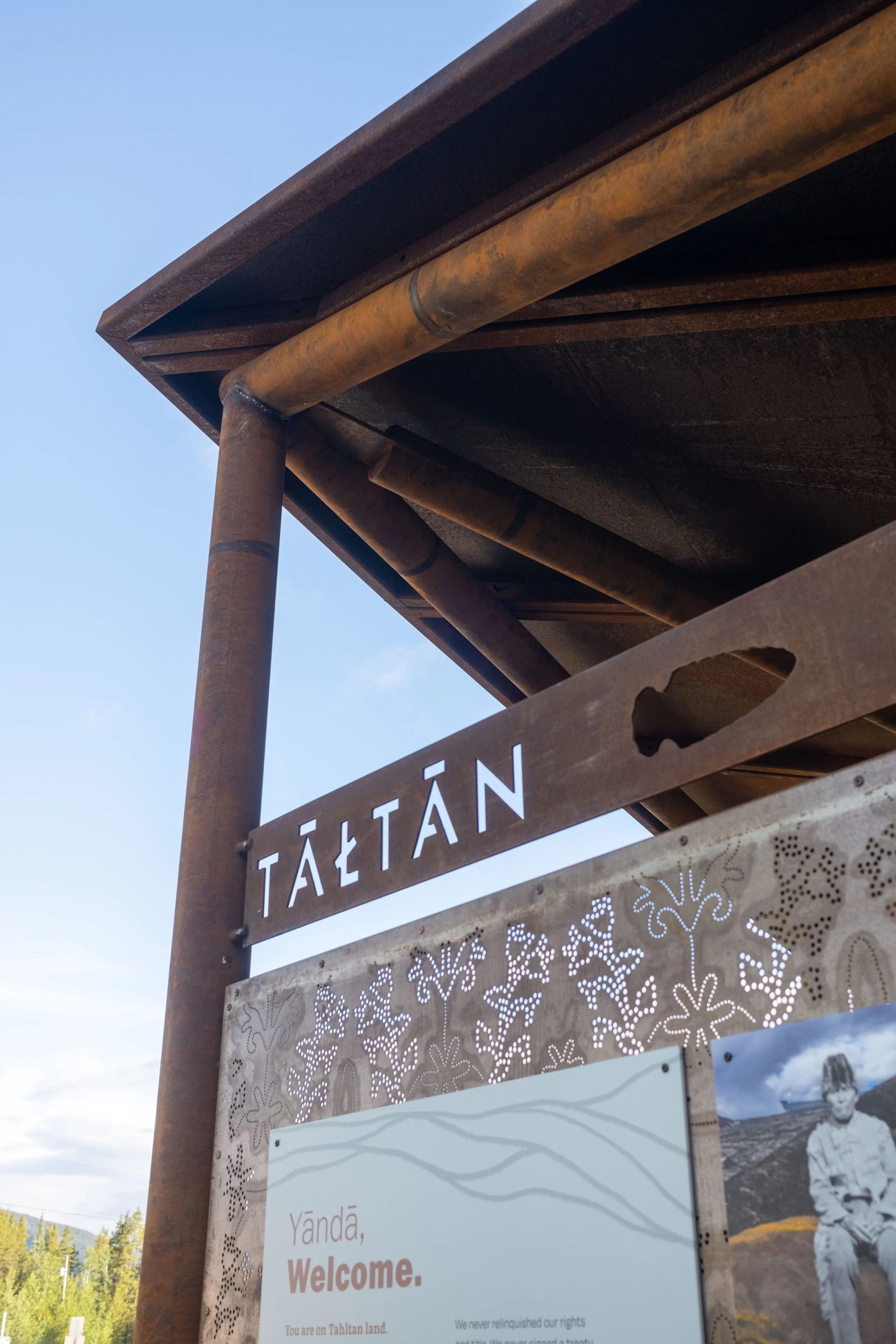
As an extension to the pavilions, Miscellaneous Arts Activities Inc. consulted on the creation of large heritage story signs, adapting the design of Tahltan Architect Kelly Edzerza-Bapty, Principal of Obsidian Architecture, who set a precedent designing the Tahltan southern border entrance sign and forecasting other Tahltan signs in the series.
Edzerza-Bapty served as project mentor, Obsidian Architecture’s Jin He prepared the construction drawings in consultation with creative director Tsēmā, lead designer, Jonathan Igharas and engineer, Mike Harold (Harold Engineering). Given the project's complex scope and compressed timeline, we could not have done it without the exceptional collaborative effort of our design and fabrication partners.



Tāłtān Signage Credits
These signs weave together many voices. The following list recognizes key contributors. We honor the ancestors who passed on this knowledge and the many generations who carried on our language, history and love of the land.
Community Contributors
Duncan Asp, Ed Asp, Vernon Asp, Waylon Asp, Kelly Bapty, Erma Bourquin, Jim Bourquin, Kitty Brown, Una Ann Campbell, Kerry Carlick, Louise Carlick, Carl Carpentier, Kathy Cottrell, Dayle Creyke, Justin Creyke, Chad Norman Day, Norman Day, Loretta Dennis, Mackenzie Dennis, Shana Dennis, Shaun Dennis, Shawn Ducharme, Allen Edzerza, Ken Edzerza, Pat Etzerza, Theresa Etzerza, Shannon Frank, Alice Hamlin, Richard (Rocky) Jackson, Maggie Dennis, Alysha Johnny Hawkins, Heather Hawkins, Pauline Hawkins, Ann Jack, Fannie Lindstrom, Kailea Loften, Rosemary Loring, Rosemary Loring, Kailea Loften, Bertha Louie, Dylan Louie, June Louie, Lesli Louie, Morris Louie, Patricia Louie, Regina Louie, Rita Louie, Tanya Louie, Kimberley Marion, Sandra Marion, Louine McPhee, Lillian Moyer, Jamie Nole, Jim Nole, John Nole, Ruby Nole, Lynda Palmer, Cole Pauls, Carol Quock, Edna Quock, May Quock, David Rattray, Flora Reid, Cameron Tashoots, Clements Pete Tashoots, BoDean Williams, Michael Williams, Henry Vance, Janet Vance, Verna Vance. Lān Mēduh to all the staff and staff and students of Łuwechōn Kots’ede’i Kime (Łuwechon House of Learning) and all those who participated in consultations and community engagements.
Production
Creative Lead
Artists
Vernon Asp, Waylon Asp, Alysha Johnny Hawkins, Tsēmā Igharas, Jamie Nole, Cole Pauls
Structural Design
Miscellaneous Arts Activities Inc. (Tsēmā & Jonathan Igharas, Misc inc Studio Assistant, Sophia Biedka); Obsidian Architecture (Kelly Edzerza-Babty, Jin He); Harold Engineering (Mike Harold)
Placenames:
Most of all, we would like to acknowledge the 63 Elders who shared their knowledge of the land and its history during the course of the 1980s Tahltan Ancestral Study. They gave us these place names. We would also like to acknowledge the Tahltans— Pat Edzerza, Willie Bob, James Dennis, Ed Asp, and others— who organized this study and carried out the interviews.
Mēduh to Kitty Brown, Kathy Cottrell, Pat Edzerza, Theresa Edzerza, Pauline Hawkins, Lesli Louie, Regina Louie, Morris Louie, Patricia Louie, Jim Nole, Ruby Nole, Clements Tashoots, Henry Vance, Janet Vance, and Verna Vance who helped us check and confirm these placenames, their translations, and their spelling in our contemporary orthography.
Placenames Research, Transcription and Translation
Rosemary Loring, Benjamin Jones, Kailea Loften
Historian
Benjamin Jones
Research, Production, and Coordination
Adam Amir
Graphic Design
Double Dare Design Inc.; Kiko Communication Design (Ria Kawaguchi); Tahltan Central Government
Cartography
Fabrication
Parker & Johnston Ltd. & LKMē Metal Products, Starmaker Custom Welding and Fabrication Ltd.
Construction & Site Services
BV Weed Busters/Bobcat Services Ltd. (Jim Skubovius), Cordillera Archaeology Inc., Justin Creyke, Shauna D Contracting Ltd., Tahltan Nation Development Corporation
Engineering
Lambert Consulting Services Ltd., Toop Design Ltd.,Herold Engineering Ltd.
Project Management
Craig Paulson
TCG Signage Steering Committee
Adam Amir, Alex Buri, Shannon Frank, Mariko Waite
TCG Supporting Staff
Ursula Abramczyk, Kathy Cottrell, Shawn Ducharme, Pamela Labonte, Lesli Louie, Ombrielle Nara, Tina Ryan, Bobby Whang
Partners & Patrons
We gratefully acknowledge the financial support of the Province of British Columbia through the Ministry of Tourism, Arts, Culture, and Sport that awarded the grant to Tahltan Central Government for the production of Tahltan Cultural Signage.
Lān Mēduh to Rod Parker and his company, Parker and Johnston Industries Ltd. and their partner company LKMē for their donation of materials and fabrication, which greatly enhanced the artwork for our Tāłtān Signage pavilions.
A special recognition to BV Weed Busters/Bobcat Services Ltd. for the partial donation of machine time, labour, and company bookkeeping (Colleen Skubovius).
Mēduh to Tahltan Nation Development Corporation (TNDC) for the donation of signage storage, tools and materials during installation.
This signage project is the result of a long-term vision shared by many community members and Tahltan Leaders to celebrate and share elements of Tāłtān language and culture. We extend Mēduh Chō, a big thank you, to the many people who have contributed to this project over time. This is a partial and evolving list of credits. Many contributors are not listed here but their work is equally felt.
This Tahltan Central Government Initiative was funded by the Province of British Columbia through the Ministry of Tourism, Arts, Culture and Sport, with generous donations of material and artwork production from Parker Johnston Ind. & LKMē Metal Products.